Remote Viewing Security Cameras: A Metals Recycling Case Study (And Why PTZ Pays Off Beyond Surveillance)
Remote viewing security cameras turn a video system from a passive insurance policy into an active business operations tool. With the right HD IP cameras, PTZ controls, and a secure mobile app, owners and managers can pull up any feed from anywhere and make real decisions in real time.
We work with a metals recycling client in the Birmingham metro area that puts this to work in a way that pays for the cameras every single week. Their story is a quick read and a clear example of how the right surveillance system saves time, reduces friction with customers, and tightens up operations.
In this article, we will break down the case study and show how the same playbook applies to manufacturing, mining, biotech, and almost any commercial site.
Table of Contents
- The Metals Recycling Case Study: Remote Viewing in Action
- How PTZ and Optical Zoom Make Remote Viewing Work
- Why Remote Viewing Beats an On-Site Trip
- The Frictionless Negotiation Advantage
- Beyond Metals Recycling: Other Industries That Win with Remote Viewing
- Building a Remote-Viewing-Capable Camera System
- Frequently Asked Questions
The Metals Recycling Case Study: Remote Viewing in Action
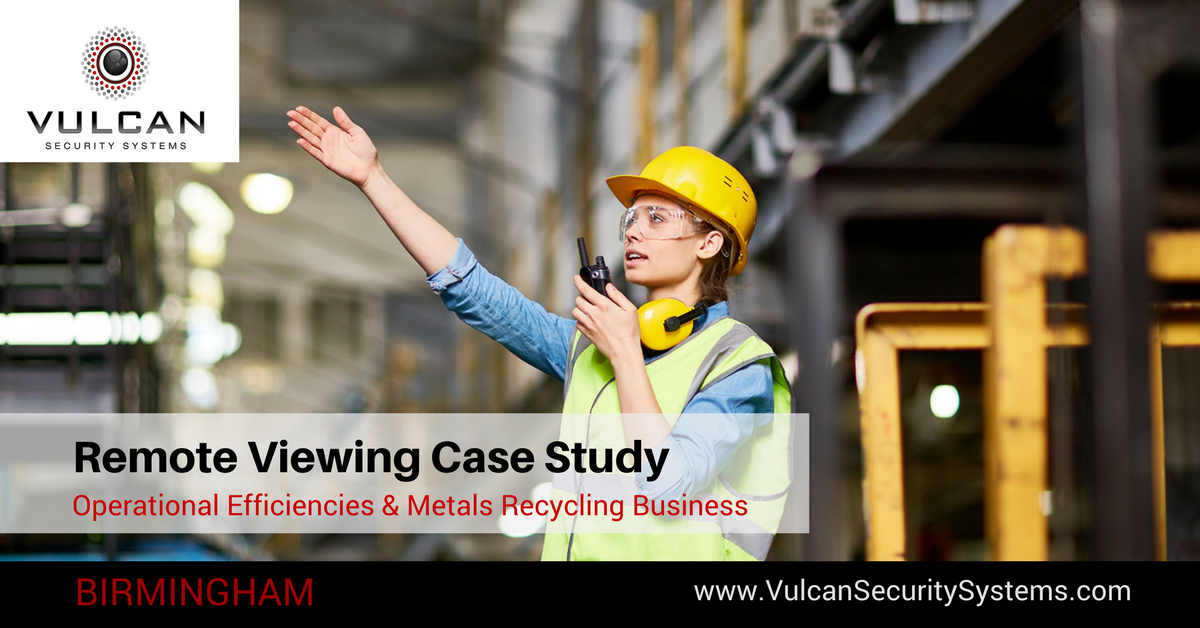
Here is how it plays out at our metals recycling client’s facility almost every week. A prospective customer rolls onto the yard with a load of scrap metal for sale. Sometimes the metal type, quality, and volume are obvious and the on-site purchasing manager can quote a price on the spot. Other times, the load is mixed, oversized, or borderline, and the purchasing manager needs a second opinion from one of the owners before making an offer.
That is where remote viewing changes the game. The flow looks like this:
- The purchasing manager messages the owner with a quote-guidance request
- The owner pulls up the live security camera feed on a phone, tablet, or laptop
- The owner uses PTZ controls to pan, tilt, and zoom in on the truck or trailer
- The owner evaluates metal type, mix, and approximate volume directly from the feed
- The owner texts or emails the on-site manager with the approved terms
- The on-site manager presents the offer to the seller and closes the deal
The whole exchange takes a few minutes. The customer barely waits. The owner never leaves their desk. The decision quality stays high because the owner is actually looking at the load instead of relying on a verbal description over the phone.
How PTZ and Optical Zoom Make Remote Viewing Work
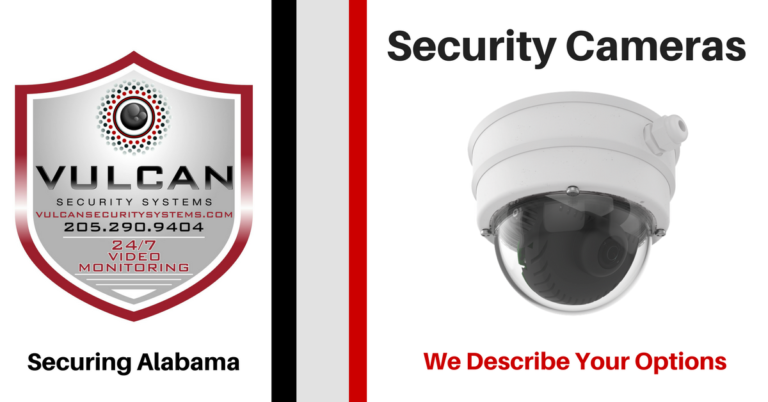
Not every camera can pull this off. The system has to give the remote viewer a clear, controllable picture. That is why our recycling client uses a security camera with PTZ (pan, tilt, and zoom) capabilities instead of a fixed dome or bullet camera.
The two features that matter most:
- PTZ control: the remote viewer can move the camera in real time to follow a vehicle or focus on the bed of a trailer
- High-resolution optical zoom: the image stays sharp as the viewer zooms in, so the owner can actually identify the metal type
- HD baseline: 6MP and up means the wide shot already has detail before any zooming happens
- Mobile and desktop access: the live feed needs to load fast from anywhere, on any device
- Secure login: multi-factor authentication and encrypted streams keep the system locked down
Skip any one of these and the workflow falls apart. A digital-zoom-only camera turns into pixelated mush at the moment you need detail most. A non-PTZ camera might miss the trailer angle entirely. A laggy stream means the customer is standing there waiting while the owner squints at a frozen frame.
Why Remote Viewing Beats an On-Site Trip
For owners who run multiple ventures or manage geographically separated locations, time is the scarcest resource. Driving to the scrap yard for a 10-minute look at a load is a half-day commitment by the time you factor in traffic, the visit itself, and the round trip back to the office.
Remote viewing flips that math:
- The owner can be present at a dozen locations a day without leaving a desk
- Decisions happen in minutes instead of hours
- On-site teams get the answers they need fast, which keeps the line moving
- Customers spend less time waiting, which raises satisfaction and repeat business
- Owners can be actively engaged in multiple business ventures without burning out on windshield time
That kind of operational leverage is exactly the angle we covered in our piece on non-obvious ways video security saves businesses money. The cameras are paying you back in ways that have nothing to do with theft.
The Frictionless Negotiation Advantage
One of the more interesting side effects of this workflow is what it does for the negotiation itself. From the seller’s side of the transaction, the process looks completely normal. There is no obvious back-and-forth phone call between the on-site manager and the boss. There is no visible huddle. The on-site manager simply walks back with a price, and that is the offer.
That matters more than it might sound. A lot of negotiation friction comes from the seller picking up on the fact that the buyer is unsure or deliberating. Once the seller senses that, they assume there is room to push for more. By keeping the consultation invisible, the offer lands as a final, considered number instead of an opening bid. The conversation gets shorter and the outcome gets cleaner.
It is a small detail with a real impact on margin, deal speed, and the customer experience on both sides of the table.
Beyond Metals Recycling: Other Industries That Win with Remote Viewing
The playbook our metals recycling client uses translates to almost any commercial operation where a senior decision-maker occasionally needs to weigh in on something happening at the shop, lab, yard, or floor. A few examples:
- Manufacturing: engineers can remote into the line to troubleshoot a stuck machine or quality issue before sending anyone to the floor
- Biotech and labs: senior staff can verify protocol questions and inspect equipment without breaking gowning, suiting, or cleanroom procedure
- Mining and aggregates: the chief engineer can advise on an equipment problem from headquarters, avoiding a long site trip when remote guidance is enough
- Distribution and warehousing: managers can verify load condition, dock activity, or inventory counts in real time, similar to our distribution center inventory control case study
- Retail and food service: owners can confirm staffing levels, line speed, and customer flow during peak hours without an in-person visit
- Construction and contracting: project managers can review jobsite progress and safety compliance across multiple active sites in one sitting
If your business has a step where a senior person needs to “come take a look” to keep things moving, remote viewing is probably worth a serious look. For more on this theme, see our overview of how video security cameras are being used in business operations.
Building a Remote-Viewing-Capable Camera System
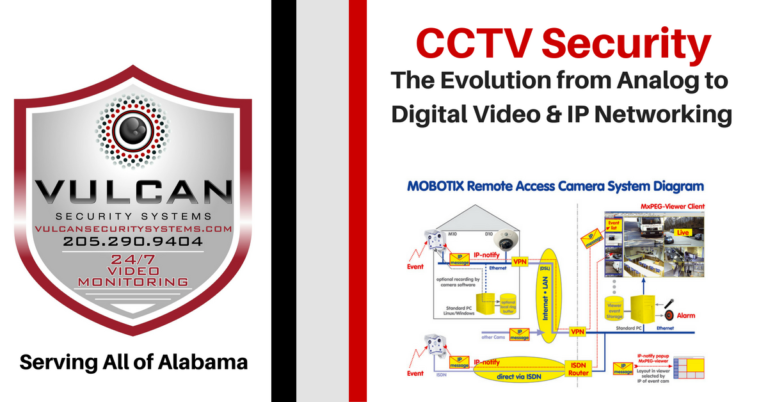
Not every existing system can do what we just described. A traditional analog CCTV setup that only records to a local DVR is not going to deliver a live PTZ feed to your phone in the field. The system needs to be built for it from day one.
The non-negotiables:
- HD IP cameras with PTZ and true optical zoom at the locations where remote decisions happen
- Wide-angle fixed cameras to cover everything else and provide context
- Sufficient network upload speed at the site to support live mobile streaming
- A modern VMS (video management system) with secure mobile and desktop apps
- Strong access control, multi-factor authentication, and role-based permissions
- Reliable storage and timestamps for the times you need the footage for evidence too
Vulcan Security Systems standardizes on MOBOTIX cameras, which are made in Germany, run on non-proprietary software, and pass strict QA before they ship. Non-proprietary software matters because it gives you flexibility on integrations and remote access without locking you to a single vendor app. We design and install commercial video surveillance systems for industrial, commercial, and municipal clients across Alabama, with free initial consultations available statewide.
If you are curious how a remote viewing setup would look at your facility, contact Vulcan Security Systems and we will walk the site, identify the camera angles where remote viewing pays off, and design a system around the way you actually run the business.
Frequently Asked Questions
What is remote viewing for security cameras?
Remote viewing is the ability to log into your security camera system from a phone, tablet, or laptop and see live footage from anywhere with an internet connection. With PTZ cameras, you can also move the camera and zoom in to focus on specific details, all without being on-site.
What is a PTZ security camera?
PTZ stands for pan, tilt, and zoom. A PTZ camera can be controlled remotely to rotate horizontally, tilt vertically, and zoom in for closer detail. This makes it ideal for large yards, parking lots, scrap floors, and any environment where you need to actively follow activity rather than just capture a fixed view.
Why does optical zoom matter more than digital zoom?
Optical zoom uses the camera lens to magnify the image while preserving sharpness and resolution. Digital zoom just crops and enlarges the existing image, which makes it pixelated. For remote viewing where you actually need to identify metal type, license plates, or equipment details, optical zoom is the only one that holds up.
Is remote camera viewing secure?
When configured correctly, yes. A well-designed system uses encrypted connections, multi-factor authentication, and role-based permissions so only authorized users can access the feed. Working with a professional installer is the difference between a secure system and one that is accidentally exposed to the internet.
Can remote viewing replace on-site management?
No, but it makes on-site management dramatically more efficient. Remote viewing handles the moments where a senior decision-maker needs to weigh in for a few minutes, freeing them up for the work that genuinely requires being on the floor.
What industries benefit most from remote viewing security cameras?
Metals recycling, manufacturing, biotech, mining, distribution and warehousing, retail, food service, and construction all see strong ROI. Any operation where a senior person needs to “come take a look” to keep things moving is a good fit.
How do I add remote viewing to my existing camera system?
It depends on what you already have. Modern HD IP systems can usually be upgraded with PTZ cameras and a new VMS. Older analog systems typically need to be replaced. Contact Vulcan Security Systems for a free consultation, and we will tell you exactly what your setup needs.