Thermal Camera Applications: Sensor-Equipped Uses for Industrial and Commercial Sites
Most operations leaders understand the basics of modern video security, but awareness drops fast once the conversation turns to what sensor-equipped thermal cameras can actually do. Thermal camera applications now reach well beyond perimeter surveillance. In the right deployment, a single thermal camera can act as a fire watch, a predictive maintenance sensor, a process monitor, and a perimeter sentry at the same time.
This article walks through the most practical thermal camera applications for industrial, commercial, and environmental sites in 2026, and where a sensor-equipped deployment typically pays for itself fastest.
Table of Contents
- What Makes Sensor-Equipped Thermal Cameras Different
- Predictive Maintenance and Machinery Health
- Fire Prevention in Recycling, Waste, and Storage Facilities
- Battery Storage and Electrical Infrastructure Monitoring
- Industrial Manufacturing and Process Control
- Environmental Monitoring: Water Flow, Seepage, and Thermal Pollution
- Health Screening in Hospitals, Schools, and Workplaces
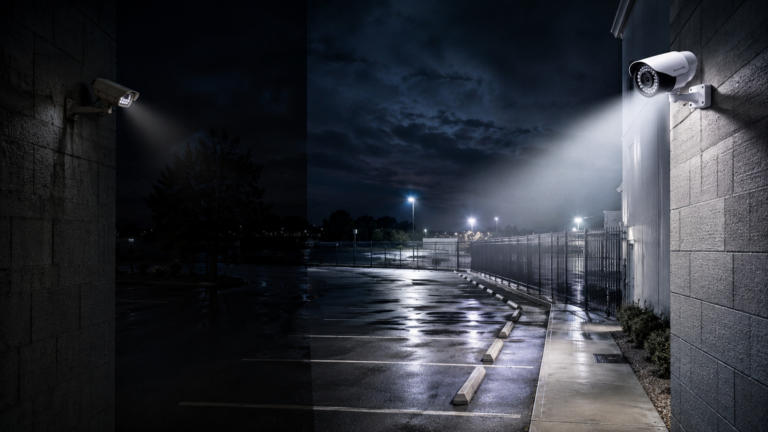
- Perimeter Security in Low Light and All Weather
- How to Plan a Thermal Camera Deployment
- FAQ
What Makes Sensor-Equipped Thermal Cameras Different
A modern digital camera is essentially a networked computer with a lens. It can see visually, it can see other parts of the spectrum using on-board sensors, and it can be programmed to take action when it detects a defined condition. Thermal cameras push that capability further because they pick up heat signatures the human eye cannot register.
Sensor-equipped thermal cameras bring three capabilities that traditional video security simply cannot match:
- See in any light condition. Total darkness, smoke, light fog, and glare do not slow them down.
- Measure temperature, not just image it. Radiometric models read actual degrees at every pixel.
- Trigger automated action. The camera can alert a monitoring center, sound an audio warning, or send a shutdown signal to connected equipment.
For a deeper technical breakdown, our post on how thermal sensors work in video security cameras explains the underlying technology. Thermal imaging has existed for decades, but the price point has shifted. What was once reserved for military and heavy industrial use is now practical for medium and smaller commercial properties, which is why the thermal camera applications list keeps growing.
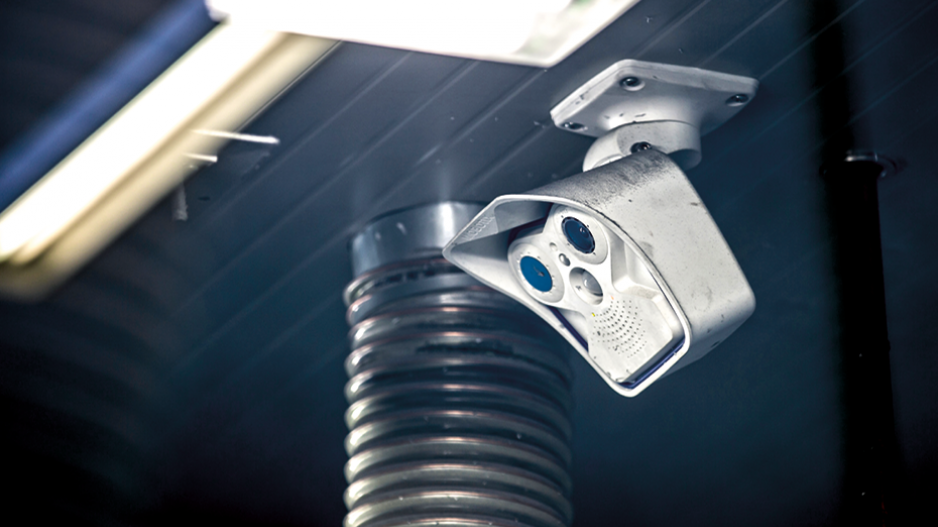
The platform matters as much as the sensor. At Vulcan, we standardize on MOBOTIX, built by MOBOTIX AG, because their thermal cameras run analytics on the camera itself and hold up to the conditions industrial sites actually face: heat, dust, weather, and years of uptime without service calls.
Predictive Maintenance and Machinery Health
Mechanical and electrical failures almost always announce themselves as heat anomalies long before they shut a line down. A thermal camera pointed at critical equipment flags those anomalies automatically and notifies maintenance in time to act.
Common failure signals thermal cameras catch early:
- Overheating bearings and motors
- Loose or corroded electrical connections
- Failing cooling systems and blocked heat exchangers
- Overloaded transformers, breakers, and switchgear
- Friction buildup on conveyors, gearboxes, and pumps
The ROI is simple. One prevented failure, one avoided production stoppage, or one saved batch of inventory often covers the full cost of the camera system. Many industrial operators also feed thermal data into statistical process control, comparing a machine’s current temperature profile to its normal baseline and routing that signal into the maintenance workflow. Our post on thermal cameras for predictive equipment maintenance goes deeper on this use case.
Fire Prevention in Recycling, Waste, and Storage Facilities
Recycling centers, scrap yards, and waste management sites face constant fire risk. Thermal cameras watch for hot spots forming inside piles and storage bunkers, catching the rise in temperature before any flame appears. That early warning is often what separates a contained incident from a facility-wide fire.
Common ignition sources thermal cameras help catch:
- Lithium-ion batteries hidden in mixed waste streams
- Compacted paper, cardboard, and plastics generating internal heat
- Chemical residues reacting in storage drums or totes
- Friction and spark points on shredders, balers, and conveyors
We cover this in detail in our post on thermal camera applications for recycling and waste management facilities, and if you operate this type of site, our recycling centers and scrap yards security page outlines the broader system we typically recommend.
Battery Storage and Electrical Infrastructure Monitoring
Battery energy storage systems (BESS) are one of the fastest growing thermal camera applications on the market today. Thermal runaway in a lithium-ion battery produces heat long before it produces fire, and a thermal camera tied into the site’s monitoring platform can catch it early enough for operators to isolate the affected module and prevent a catastrophic event. See our battery storage thermal monitoring industry page for details on how the system is designed.
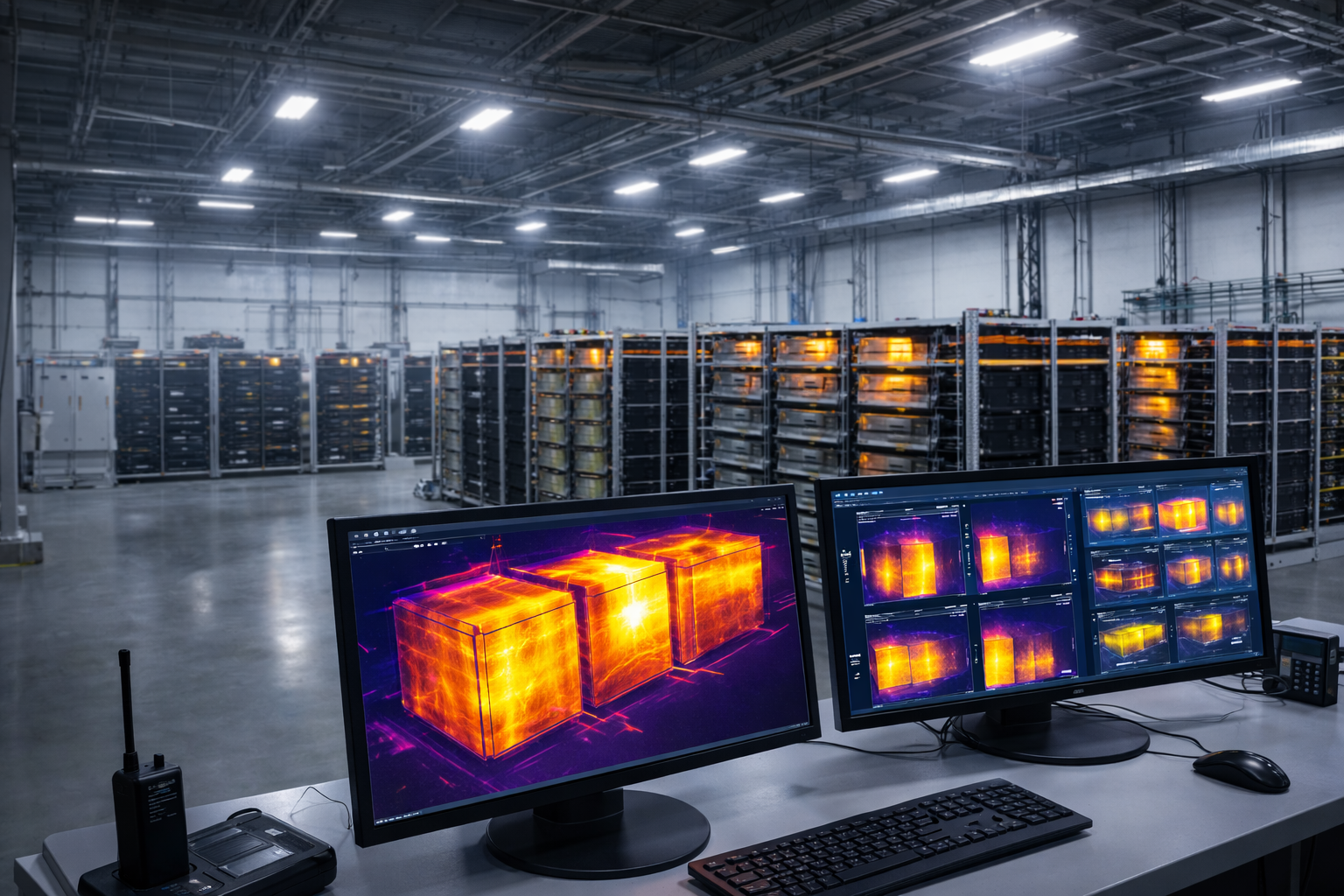
The same principle applies to the electrical grid infrastructure that keeps facilities running:
- Substations: identify hot joints, failing insulators, and loose bus connections before they fail
- Switchgear rooms: spot overloaded breakers and hot bus bars in enclosed spaces
- Transformer enclosures: detect cooling system issues and overloaded windings
- Solar inverters and DC combiner boxes: flag failing diodes, loose terminals, and panel-level faults
Industrial Manufacturing and Process Control
Every piece of process equipment has an expected thermal signature. When a camera sees that signature drift outside tolerance, it becomes an early warning for quality issues, wasted energy, or failing components. In metal fabrication, food and beverage, plastics, and heavy manufacturing, thermal cameras support both safety and yield.
Equipment thermal cameras are typically trained on:
- Furnaces, kilns, and heat-treat ovens
- Extruders, injection molders, and blow-mold tooling
- Welding cells, induction heaters, and curing lines
- Heat exhaust stacks and thermal oxidizers
- Cold storage rooms and refrigeration systems (to catch insulation failures)
If your facility falls in this category, our industrial security systems, manufacturing plant and factory security, and metal fabrication plant video security pages walk through the typical deployments. Many of the same sites also benefit from AI-powered surveillance layered on top, since the thermal feed and the visual feed together give operators far more accurate alerts than either does alone. For a closer look at how those two technologies work together on an industrial site, see our piece on practical AI video security analytics applications for industrial sites.
Environmental Monitoring: Water Flow, Seepage, and Thermal Pollution
Thermal imaging has become a standard tool for environmental monitoring. Municipalities, utilities, and industrial sites use it in several ways:
- Tracking thermal pollution in rivers, lakes, and discharge channels
- Mapping groundwater seepage around tailings, lagoons, and containment areas
- Measuring flow in channels where traditional instrumentation is impractical
- Inspecting dams, levees, and earthworks for temperature-driven signs of failure
Our article on using thermal cameras to monitor water flow, seepage, and quality covers the technique in more detail.
Health Screening in Hospitals, Schools, and Workplaces
Thermal imaging moved into mainstream public health use during the pandemic and stayed there. Facilities now commonly deploy it as a first-pass elevated skin temperature screening tool, flagging visitors for follow-up before they enter a shared space.
Typical settings for thermal health screening:
- Hospitals, urgent care clinics, and dental offices
- Long-term care and assisted living facilities
- Schools, universities, and daycares
- Large workplaces, distribution centers, and manufacturing plants
Our post on thermal cameras as a healthcare screening tool covers FDA guidance, camera placement, and what a compliant deployment actually looks like, and our private schools and daycares security page explains how thermal fits into a broader campus security plan.
Perimeter Security in Low Light and All Weather
This is still where most buyers first consider thermal. Traditional cameras struggle where thermal thrives:
- Total darkness with no supplemental lighting
- Heavy fog, rain, and blowing dust
- Glare, backlighting, and rapid light changes
- Camouflage, dark clothing, and concealment in foliage
Thermal cameras detect a person, vehicle, or animal entering a restricted zone based on the heat they emit, which means none of those conditions defeat them.
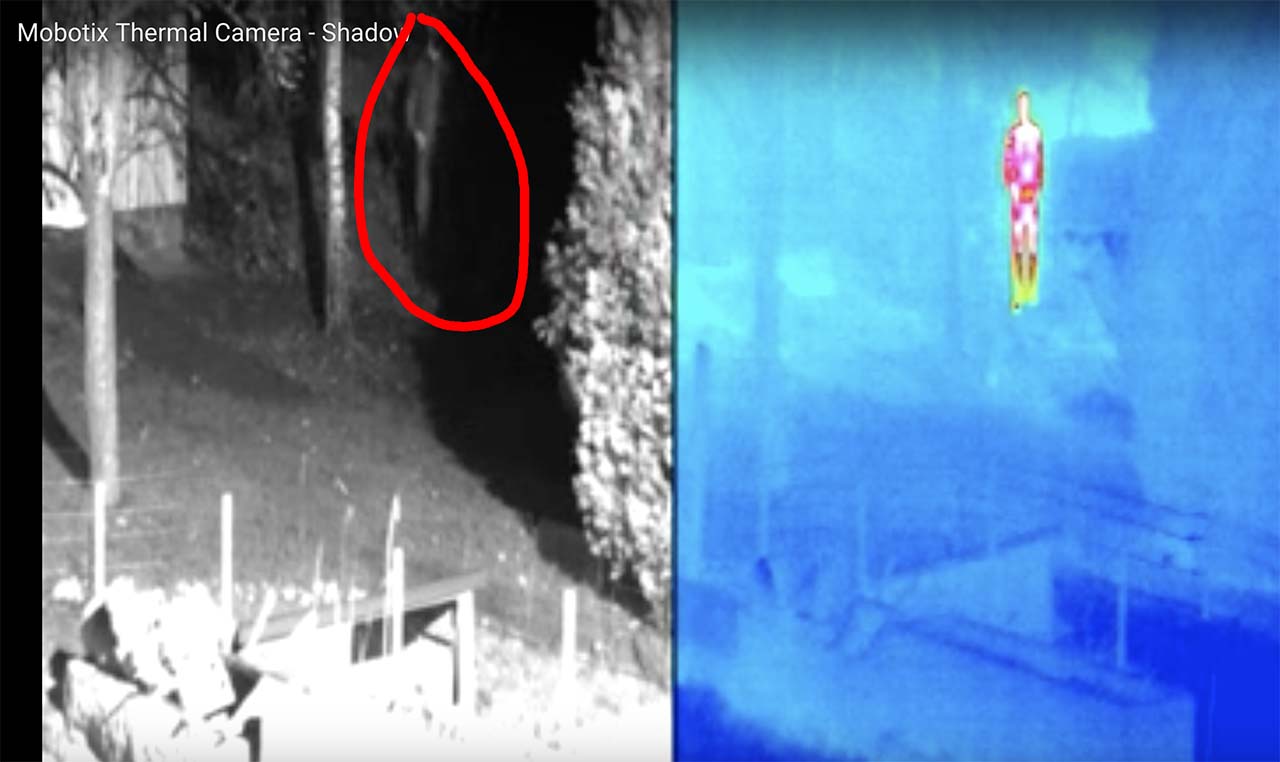
Thermal is most effective as part of a complete intrusion detection system, where the thermal alert triggers a visual camera, an audio warning, or a monitoring response in real time. A working example: the PGP Operating LLC case study shows how one operator replaced live guards with thermal imaging plus event-based monitoring and paid for the entire deployment inside one year.
How to Plan a Thermal Camera Deployment
Thermal is not the right answer for every problem, and the wrong placement turns a premium camera into an expensive space heater in your rack. Scope the project clearly before any camera is spec’d. A solid scoping exercise typically answers:
- What specific event am I trying to detect, and how early do I need to catch it?
- What are the site conditions: distance, environment, lighting, weather?
- Do I need true temperature readings (radiometric) or relative heat (non-radiometric)?
- How will alerts be routed, and who acts on them at 2 a.m.?
- How does the thermal feed integrate with the rest of the security and operations stack?
Our resource on how to define the scope of your premises security system is the place to start, along with the broader video security planning guide. From there, the Vulcan team handles scoping and installation in-house and pairs the hardware with 24/7 event-based monitoring so the camera is not just watching, it is being watched.
If you are evaluating thermal for a specific site, contact Vulcan Security Systems and we will walk the application with you before recommending a system.
FAQ
What is a sensor-equipped thermal camera?
It is a thermal imaging camera that also runs analytics and triggers on-board. Instead of just producing a heat-map video feed, it can detect threshold breaches, alert operators automatically, and send signals to other connected equipment.
How are thermal cameras different from night vision or infrared illuminated cameras?
Night vision and infrared cameras amplify available light or flood a scene with IR light that a standard sensor picks up. Thermal cameras do neither. They detect the heat an object radiates, which is why they work in complete darkness, light fog, and smoke.
Can thermal cameras work in total darkness?
Yes. Thermal does not require any visible or IR light source, which is why it is the preferred technology for outdoor perimeters, remote sites, and industrial yards where lighting is limited.
What is the difference between radiometric and non-radiometric thermal cameras?
A radiometric thermal camera measures actual temperature values at every pixel. A non-radiometric camera shows relative heat differences but does not give you a true temperature reading. If your use case is fire prevention, predictive maintenance, or process control, you typically want radiometric.
How much do thermal cameras cost?
Thermal camera pricing has dropped significantly over the past decade, and sensor-equipped industrial thermal cameras now fit into commercial budgets. For a detailed look at system pricing, see our video security system pricing guide.
Do thermal cameras integrate with AI video analytics?
Yes. Thermal and visual feeds are commonly paired in modern AI-powered video surveillance deployments. The thermal sensor catches the event, and the AI running on the visual feed classifies it, which reduces false alarms and speeds up response.