Homeless Encampments on Your Property: Security Options for Birmingham Businesses
Unauthorized encampments on commercial property create a specific set of problems: trespassing, property damage, liability exposure, and the practical challenge of addressing the situation in a way that is both documented and legally defensible. For businesses, churches, and property owners in Birmingham, this is an increasingly common operational issue that requires a clear, measured approach.
Birmingham had 911 people experiencing homelessness in 2024, a 7.5 percent increase from the year before. The city has cleared encampments near Railroad Park, Birmingham City Hall, and sites like Hemlock Avenue, but encampments often reconstitute elsewhere. As the city works through longer-term responses, property owners are regularly left managing the immediate situation on their own.
Vulcan Security Systems works with commercial property owners, real estate managers, houses of worship, and businesses across Alabama who are dealing with this issue. Our approach is security-focused and documentation-focused. We are not a social services organization, and this article does not address the broader policy questions around homelessness. It addresses the specific security and liability questions that property owners face when their premises become a site of unauthorized occupation.
In this guide, we cover the specific risks unauthorized encampments create for property owners, how video monitoring helps address them, and what a practical response looks like for different types of properties in Birmingham.
In This Article
- What the Problem Actually Looks Like for Property Owners
- Why Documentation Is the Foundation of an Effective Response
- How AI Video Monitoring Helps in Practice
- How Different Types of Properties Approach This
- A Practical Approach for Property Owners
- Frequently Asked Questions
What the Problem Actually Looks Like for Property Owners
The word “encampment” covers a wide range of situations, from a single individual sheltering in a doorway to a multi-person gathering in an unused portion of a parking lot or adjacent green space. The specific risks vary, but the categories of concern are consistent.
- Trespassing: Unauthorized presence on private property is the baseline issue. Without documentation, addressing it legally or through law enforcement requires a clear record of who was present, when, and under what circumstances.
- Property damage and vandalism: Encampments frequently involve damage to fencing, doors, windows, landscaping, and building infrastructure. Broken glass, graffiti, and structural damage to unused areas of a property are common outcomes.
- Biohazard cleanup costs: Cleaning an encampment site after it has been occupied for any significant period involves biohazard considerations. Professional remediation costs typically range from $1,500 to $25,000 depending on size and duration.
- Liability exposure: Property owners can face premises liability claims if an individual is injured on their property, even in cases of trespass. The legal standard varies, but a known unauthorized occupant on a property creates documented exposure.
- Impact on tenants and operations: For commercial landlords and mixed-use properties, encampments near entrances, parking areas, or common spaces affect tenant satisfaction, employee safety, and customer experience in ways that have direct business consequences.
Why Documentation Is the Foundation of an Effective Response
Whether a property owner is seeking law enforcement involvement, pursuing a civil trespass action, filing an insurance claim, or demonstrating due diligence to a tenant, documentation is what makes all of those paths viable.
Without it, the situation is harder to address at every step. Law enforcement response is more effective when officers can review footage showing the duration of unauthorized presence, the number of individuals involved, and any specific incidents that occurred. Insurance claims for damage require documented evidence of what was caused by whom and when.
Video monitoring creates this record automatically. High-resolution IP cameras covering the affected area produce timestamped footage that establishes a clear record of what occurred, when it started, how the situation evolved, and what specific incidents took place on the property.
How AI Video Monitoring Helps in Practice
Standard security cameras record continuously. In situations involving encampments, that footage is useful when you know where to look, but it still requires manual review to find relevant events. AI-enhanced cameras and monitoring services change this in practical ways.
After-Hours Activity Detection
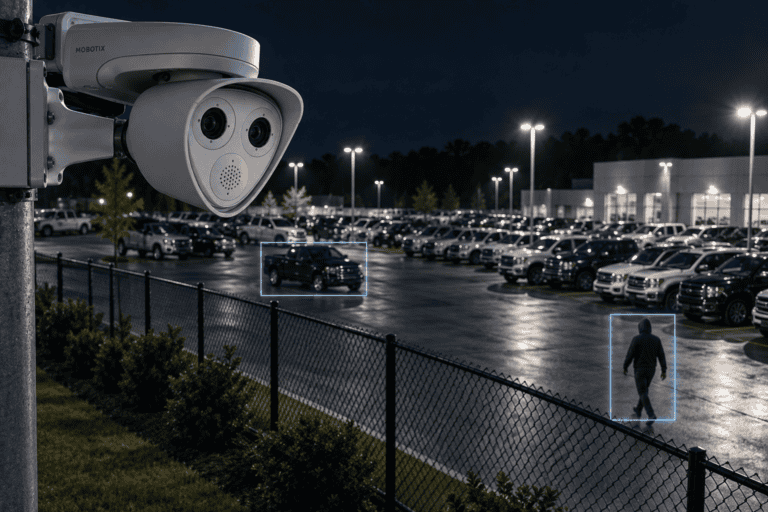
AI cameras are configured to detect people in defined zones outside of business hours. Instead of recording continuously and requiring someone to review hours of footage, the system flags after-hours activity as it occurs. This creates a searchable record of when unauthorized presence began and how it progressed.
Loitering Detection
Loitering detection identifies when an individual remains in a defined area beyond a configured time threshold. For properties dealing with unauthorized gathering near entrances, in parking areas, or along building perimeters, this capability automatically surfaces extended presence events without requiring continuous human monitoring.
Live Audio Response
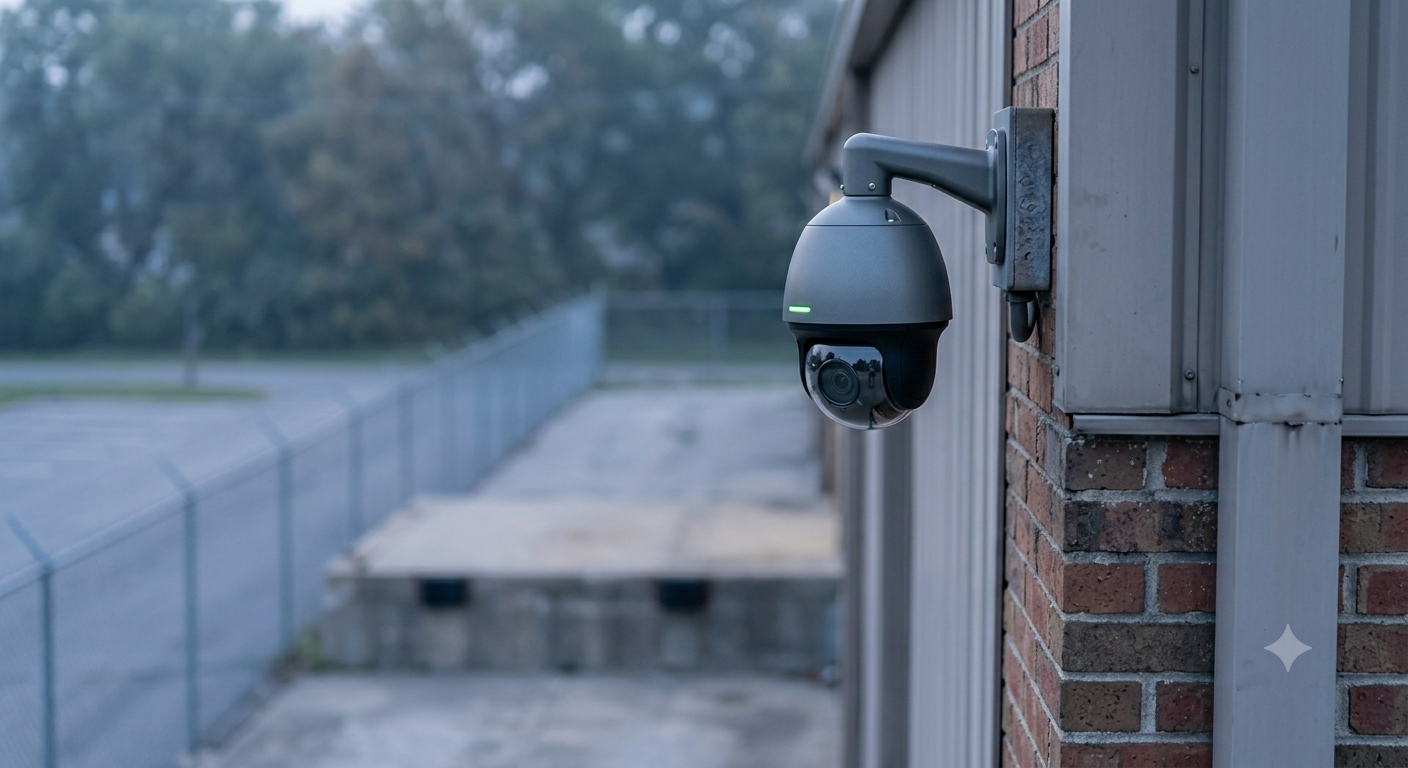
One of the most practically effective tools for discouraging unauthorized occupation is an audible live response from a monitoring operator. When someone enters a restricted area, a trained operator can communicate directly through camera-mounted speakers, making it clear that the property is actively monitored and that the individual is being asked to leave.
This approach is documented, non-confrontational, and creates a recorded interaction without requiring on-site staff to engage directly. For churches and businesses that want to address the situation without escalating it, this option is often the right first step.
Evidence Preservation for Law Enforcement and Legal Processes
When a property owner has exhausted informal approaches and needs to involve law enforcement or pursue a civil remedy, video documentation is what makes that process move efficiently. Footage that shows the timeline of unauthorized occupation, specific incidents of damage or trespass, and the individuals involved gives responding officers and attorneys what they need to act.
How Different Types of Properties Approach This
The right combination of monitoring tools depends on the type of property and the specific nature of the situation.
- Commercial real estate and retail: Parking lot and perimeter coverage with after-hours detection and live monitoring provides documentation and active response capability. Landlords with multiple tenants benefit from a system that protects the entire property and provides records for tenant communications.
- Houses of worship: Churches often face this situation because their grounds are visible and accessible, and their community-oriented identity can make property managers hesitant to take an assertive posture. Video monitoring provides documentation and a non-confrontational response option that does not require staff to engage directly.
- Industrial and warehouse properties: Larger perimeters with lower foot traffic create conditions where unauthorized occupation in unused areas can go unnoticed for extended periods. Perimeter detection and zone monitoring help surface these situations early.
- Office buildings and mixed-use developments: Entrances, parking structures, and adjacent green space are the most common areas of concern. Camera coverage of these areas with loitering detection and live monitoring addresses the tenant-facing impact while creating documentation for any legal or insurance processes.
A Practical Approach for Property Owners
The most effective approach to unauthorized encampments combines clear property posting, consistent documentation, and a defined escalation path. Video monitoring supports all three.
Clearly posted no-trespassing signage paired with visible cameras communicates that the property is monitored. Active monitoring with live response capability provides a documented, non-confrontational way to address early-stage situations. High-resolution footage with accurate timestamps gives property owners what they need if the situation requires legal or law enforcement involvement.
None of this resolves the underlying issues that lead to encampments. However, it does give property owners a structured, defensible approach to managing what happens on their specific property.
Vulcan provides free on-site assessments for commercial properties, houses of worship, and real estate owners across Alabama. If you are dealing with this situation and want to understand your monitoring options, contact us to schedule a visit.
Frequently Asked Questions
Can video monitoring help if someone is injured on my property during an encampment?
Yes. Footage documenting the conditions of the property, the unauthorized presence, and the specific circumstances of any incident is directly relevant to premises liability claims. It can support your position or at minimum establish the factual record that any legal process will depend on.
Is a live audio warning through a camera speaker legally permissible in Alabama?
Audio monitoring and response systems are lawfully used in commercial and institutional settings in Alabama. Specific legal questions about how you address trespassers on your property should be directed to a licensed attorney. Vulcan can advise on the monitoring and documentation components.
What should I do if an encampment is already established on my property?
Document the current situation with video coverage as a starting point. Consult with an attorney about your legal options for removal under Alabama trespass law. Contact local law enforcement to report unauthorized occupation. Installing visible monitoring with live response capability also communicates to current occupants that the property is actively managed.
How is this different from just calling the police?
Law enforcement can respond to trespass complaints, but a documented video record significantly improves the outcome of that response. Officers who can review footage showing the duration and nature of unauthorized presence can act more effectively than in situations where the complaint is verbal with no supporting evidence.