How Vulcan’s AI Cameras Work
Vulcan’s AI processing runs on the camera itself, using a dedicated processor built into the camera body. Video is analyzed where it is recorded. Footage does not leave your network.

No cloud dependency.
The AI detection works whether or not your internet is up. Events are logged and alerts are generated locally.
No video transmission to third parties.
Footage stays on your network. Vulcan systems do not require a cloud subscription to operate, and no analysis is performed on external servers.
Real-time response.
Because analysis happens on the camera, detection is immediate. There is no round-trip to a server and back before an alert fires.
Lower long-term cost.
Edge-based systems do not carry recurring per-camera cloud fees tied to the AI features.
Edge AI: What It Means and Why It Matters
“Edge AI” means the computing happens at the edge of the network, on the device, rather than at a central server or cloud platform.
For a security camera, this has a few concrete implications:

The MOBOTIX Certified App Platform
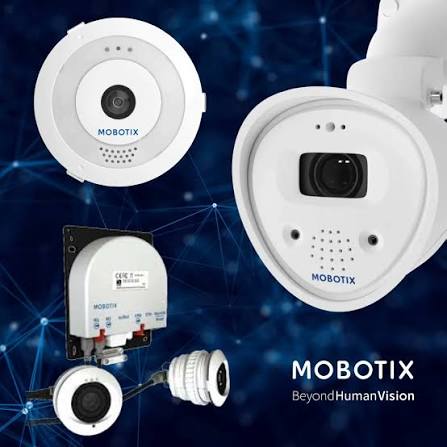
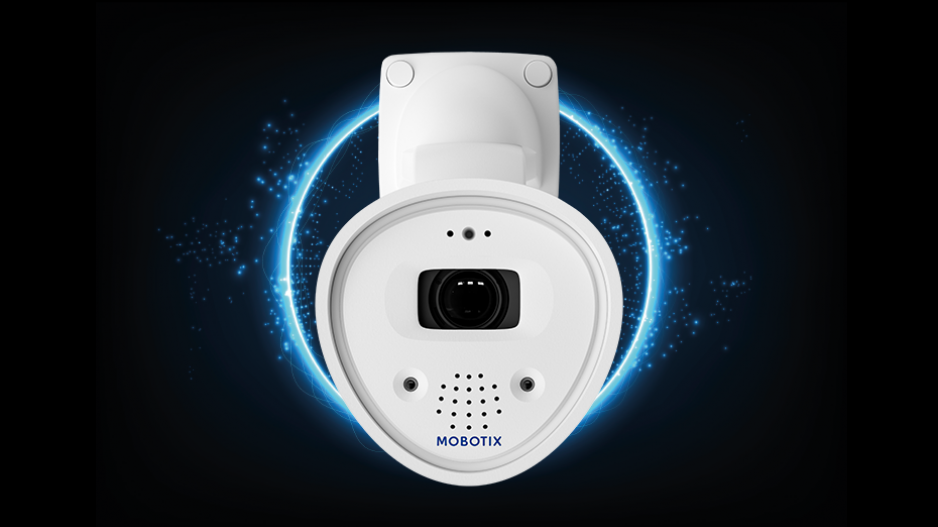
Vulcan’s M73 cameras run on the MOBOTIX 7 platform, which uses a certified app model for AI capabilities. Rather than bundling a fixed set of AI features into every camera, the system runs individual, purpose-built apps that can be selected and combined based on the facility’s needs.
Each app is developed by MOBOTIX or a vetted technology partner, tested against the MOBOTIX 7 hardware, and certified before release. Apps are pre-installed in the camera firmware and can be licensed and activated without any external software installation.
This matters because purpose-built apps tend to outperform general-purpose AI on specific tasks. The LPR app is built specifically for license plate reading. The intrusion detection app is built specifically for perimeter breach detection. The PPE app is built for one thing: verifying safety gear in a defined camera zone. Each one is optimized for its task rather than trying to cover everything at once.
Not all apps run on every M73 configuration. Camera selection and capability selection are evaluated together during a site assessment.
Certified apps available on the M73 platform include:
Perimeter intrusion detection (Irisity IRIS Core)
License plate recognition, single and multi-lane (Vaxtor)
People counting, occupancy analytics, restricted area detection, heat mapping (MOBOTIX Analytics AI)
PPE and safety gear detection
Thermal fire and smoke detection, EN 54-10 certified (M73 Thermal variant)
OCR and serial number plate reading (Vaxtor Genesis)
Facial recognition (Visage Technologies certified app, confirm availability with Vulcan)
The MOBOTIX ONE Platform
The M ONE is a newer platform from MOBOTIX. It ships with the ActivitySensor ONE as a built-in feature, an AI-based object classifier that distinguishes between people, vehicles, and other objects before triggering alerts. ActivitySensor ONE is included in every M ONE camera without a separate license.
The M ONE platform runs a different app ecosystem than the MOBOTIX 7. For most standard surveillance applications, perimeter monitoring, parking, general site security, the M ONE is a strong option. Projects that require more specialized AI capabilities, such as license plate recognition or thermal fire detection, typically use the M73.
How Vulcan Selects Camera and App Combinations
There is no standard package. The camera model and the apps deployed on it depend on what the facility needs to detect, where the cameras are placed, and what the response to a detection should be.
During a site assessment, Vulcan reviews the facility, identifies the specific use cases, and recommends the camera hardware and AI configuration that covers those cases. The goal is a system that alerts when it should and stays quiet when it should not.
Frequently Asked Questions
Ready to See AI in Action at Your Facility?
Schedule a free site assessment and Vulcan will recommend the camera hardware and AI configuration that fits what you need to detect.