CCTV Security Systems or IP Video: Is There a Difference?
Security system technology has changed a lot in the past 10 years, since digital cameras. If you’re researching security cameras for your business, you’ve probably come across the term CCTV security system. But if you speak with most modern security providers, you’ll often hear a different term: IP video surveillance.
So what’s the difference?
In short, CCTV traditionally refers to older analog camera systems, while IP video surveillance refers to modern, network-based digital camera systems that offer higher resolution, remote access, and far more functionality.
At Vulcan Security Systems, we still receive calls from business owners who ask for CCTV systems, when what they really want is modern IP video surveillance with high-definition cameras and remote monitoring.
This article explains how surveillance technology evolved and why most businesses today choose IP video systems over traditional CCTV.
What Does CCTV Actually Mean?
CCTV stands for Closed-Circuit Television.
The term originally described video systems where camera signals were transmitted through a closed network rather than broadcast publicly like television signals.
In traditional CCTV systems:
- Cameras connect to monitors or recorders through coaxial cable
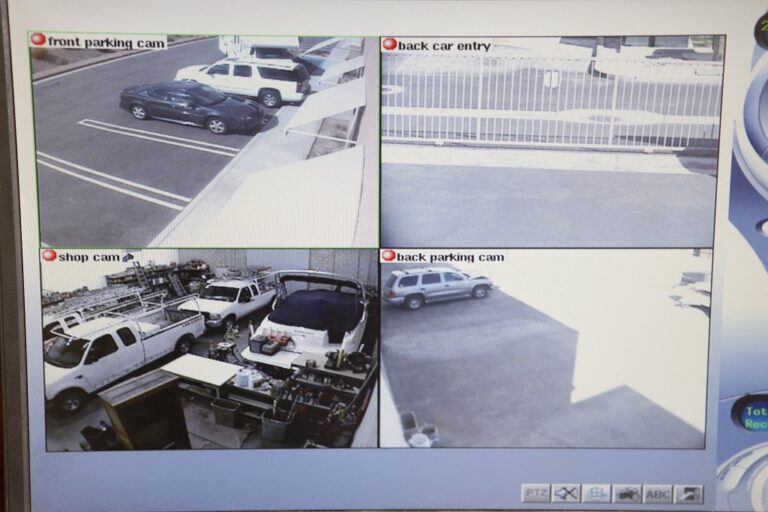
- Video feeds are viewed on dedicated monitors
- Systems operate on a closed circuit, meaning the video is not broadcast publicly
Technically speaking, even modern IP video systems are still “closed circuit” in many ways. However, the term CCTV is most often used today to refer to older analog surveillance systems.
A Brief History of CCTV Security Systems
Security camera technology has evolved significantly over the past 80 years.
The first known CCTV system was developed in Germany in 1942 to monitor V-2 rocket launches during World War II. The technology appeared in the United States in 1949, primarily used in industrial environments.
Early CCTV systems had several limitations:
- Cameras produced very low-resolution video
- Video had to be monitored live
- Storage was limited or nonexistent
- Systems required large teams of security personnel watching multiple monitors
Eventually, recording technology improved and surveillance systems began storing footage on videotape. While this allowed businesses to review incidents after they occurred, tapes had limited storage capacity and required frequent replacement.
For many years, video surveillance was expensive and labor intensive, making it primarily accessible to large organizations, government facilities, and major cities.
The 1980s and 1990s: Video Surveillance Becomes More Accessible
During the 1980s and 1990s, video surveillance technology became more affordable.
Advances in video recorders and switching technology allowed multiple cameras to feed into a smaller number of monitors and recording systems. Retail stores, warehouses, and mid-sized businesses began installing security cameras to help reduce theft and monitor operations.
One major breakthrough was the introduction of digital recording systems that replaced videotape with hard drives. These systems allowed businesses to record multiple cameras simultaneously and store footage for longer periods of time.
This shift helped accelerate the adoption of video surveillance across many industries.
The Shift from Analog Cameras to Digital Video
By the late 1990s and early 2000s, digital cameras began replacing analog CCTV cameras.
Digital cameras offered significant improvements, including:
- Higher video resolution
- Better image clarity
- Improved storage systems
- Easier retrieval of recorded footage
However, one of the biggest changes was the move from coaxial cabling to network-based connectivity.
Instead of sending video signals directly to a monitor or recorder, cameras could now send digital video across computer networks.
This development led to the rise of IP video surveillance systems.
What Is IP Video Surveillance?
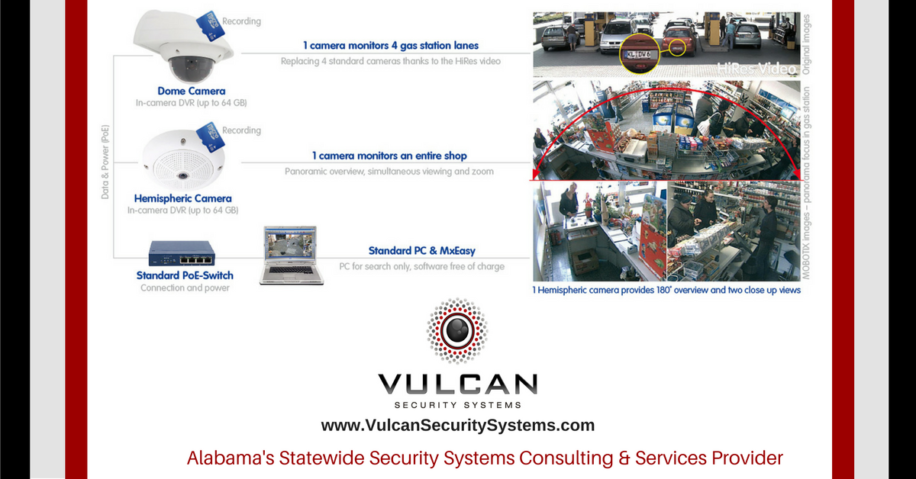
IP video surveillance uses Internet Protocol (IP) networking to transmit video data across a computer network.
Instead of functioning as isolated devices, IP cameras behave more like computers on a network.
This allows them to:
- Send high-resolution video over ethernet or fiber networks
- Store footage on network video recorders (NVRs) or servers
- Allow authorized users to view cameras remotely
- Integrate with other security technologies
Because IP systems use network infrastructure, they offer much greater flexibility and scalability than traditional analog CCTV systems.
Key Differences Between CCTV and IP Video Systems
| Feature | Traditional CCTV | Modern IP Video |
|---|---|---|
| Video Quality | Low resolution analog | High-definition digital video |
| Cabling | Coaxial cable | Ethernet / fiber network |
| Remote Viewing | Limited or unavailable | Remote access via smartphone or computer |
| Scalability | Limited expansion | Easily scalable |
| Integration | Minimal | Integrates with modern security systems |
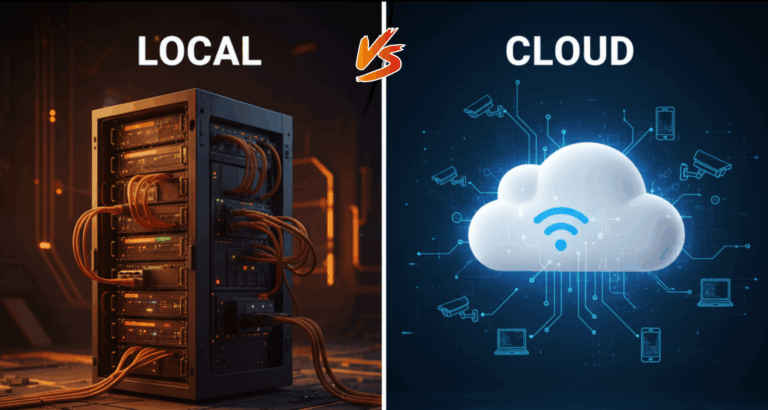
| Storage | Tape or DVR | Network storage and cloud options |
In simple terms, IP video systems provide clearer video, better accessibility, and more advanced capabilities. Read More.
Why Most Businesses Choose IP Video Today
Today, most new commercial surveillance installations use IP video cameras rather than traditional analog CCTV systems.
Modern IP systems offer several advantages that businesses value:
Higher Video Quality
Many IP cameras provide multi-megapixel resolution, allowing users to zoom into footage while maintaining image clarity.
Remote Monitoring
Authorized users can view cameras from smartphones, laptops, or desktop computers, providing visibility even when they are off-site.
Greater System Flexibility
IP systems can scale easily as businesses grow, allowing additional cameras or features to be added without replacing the entire system.
Improved Storage and Management
Video footage can be stored on network servers, allowing easier search, retrieval, and management of recorded footage.
Why Vulcan Focuses on IP Video Surveillance
At Vulcan Security Systems, we focus specifically on IP-based video surveillance systems for commercial and industrial clients.
Modern IP video technology provides several advantages for organizations that need reliable visibility and long-term performance:
- High-resolution cameras that capture important details
- Centralized monitoring and management
- Remote diagnostics and support
- Scalable infrastructure that grows with your facility
Our goal isn’t simply to install cameras, it’s to provide a system that helps organizations detect problems sooner, investigate incidents faster, and maintain better awareness across their property.
How to Choose the Right Video Security System
If you’re researching security cameras for your business, it helps to start with a few basic questions:
- What areas of your property need visibility?
- Do you need remote viewing capability?
- How long should video footage be stored?
- Will your system need to scale in the future?
Most organizations today benefit from modern IP video surveillance systems, but the right solution depends on the layout of your facility, operational needs, and security goals.
Working with an experienced security provider can help ensure the system you choose fits your needs today and remains reliable long-term.
The Bottom Line: Most “CCTV” Systems Today Are Actually IP Video
The term CCTV is still widely used, but in many cases it refers to modern IP video surveillance systems rather than traditional analog technology.
If you’re searching for CCTV cameras today, what you likely want is a high-resolution IP video system that allows you to monitor your property locally and remotely.
If you’re evaluating security camera options for your business in Alabama or surrounding areas, Vulcan Security Systems can help you understand the options and design a system that fits your facility.
Contact our team to schedule a consultation and learn more about modern IP video surveillance solutions.