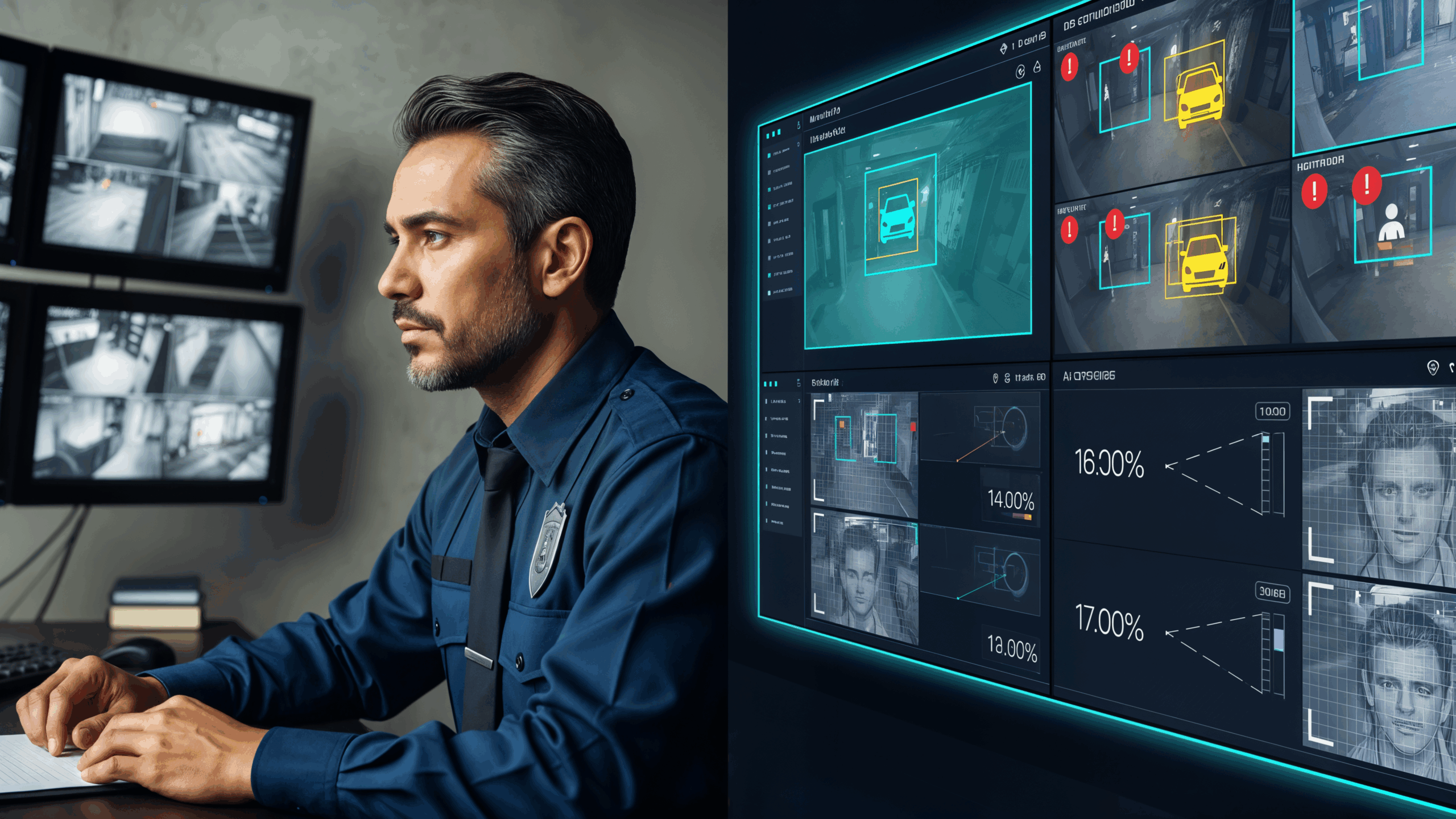
AI Surveillance vs Security Guards: What’s Right for Your Business?
When comparing AI surveillance and traditional security guards, the right solution depends on your business goals, risk profile, and budget. AI systems deliver consistency and 24/7 monitoring, while guards bring human presence and judgment. In many cases, combining both offers the most reliable and cost-effective approach to protection.
Imagine this: your business operates around the clock, but human fatigue, coverage gaps, and rising labor costs make full-time guard staffing increasingly difficult. Meanwhile, intelligent video systems offer constant oversight and real-time alerts without ever taking breaks or losing focus. For many owners, this shift is redefining what effective security really looks like.
At Vulcan Security Systems, we specialize in AI-powered video surveillance. Naturally, we understand the strengths of technology, but we also recognize the critical value guards provide, especially in high-interaction environments. This comparison isn’t about choosing sides; it’s about finding the right balance for your business.
In this guide, we’ll compare AI surveillance vs security guards across cost, liability, coverage, and scalability to help you determine which model or hybrid best suits your security needs.
Security Guards: The Human Touch (and Its Limits)
Security guards play a vital role in many industries where on-site response, presence, and customer interaction are critical. They can escort visitors, de-escalate situations, and provide reassurance simply by being visible.
For example, retail stores, hospitals, and event venues rely on guards not only for security but also to manage people and maintain calm during unexpected situations. Their ability to read context and react instinctively remains unmatched by technology.
However, human performance has limits:
- Fatigue and distraction: Long or overnight shifts often lead to lapses in attention.
- Limited visibility: A guard can only watch so much area at once.
- Rising costs: Payroll, training, and insurance are recurring expenses.
- Liability exposure: Even trained guards can be involved in incidents leading to injury or legal claims.
While guards offer an essential personal touch, relying on them alone can create gaps in consistency and add operational strain.
AI Surveillance: The Always-On Alternative
AI surveillance systems extend visibility to every corner of your property, providing real-time monitoring and automated alerts when unusual activity occurs. Instead of depending on human attention, smart cameras analyze movement, behavior, and patterns, flagging potential issues instantly.
Here’s what sets AI surveillance apart:
- 24/7 Coverage: Systems never tire, blink, or lose focus.
- Instant Alerts: AI detects motion or anomalies and sends verified clips within seconds.
- Reliable Evidence: Every event is timestamped and stored for review.
- Cost Efficiency: Once installed, systems provide predictable, lower long-term costs.
Unlike guards, AI surveillance doesn’t replace human decision-making, it supports it. Combining automation with professional monitoring creates faster, more accurate responses without the fatigue factor.
Quick Comparison: People vs. Technology
| Factor | Security Guards | AI Surveillance |
| Initial Investment | Low upfront, high ongoing payroll | Higher upfront (equipment), low ongoing |
| Ongoing Cost | ~$8,000/month (nights + weekends) | $1,000–$2,500 per camera (turnkey install) + monthly maintenance/monitoring fees |
| Scalability | Limited by staff availability | Easily scaled across multiple sites |
| Liability Risk | High (injury, confrontation) | Low (non-contact system) |
| Response Consistency | Varies by individual | 24/7 automated + verified response |
In practical terms, this means businesses spending $100,000–$300,000 annually on guards can often cut costs significantly by integrating AI systems. Over time, automation creates predictable expenses and fewer surprise liabilities.
Liability and Risk: The Hidden Costs
Every security approach carries risk. With guards, that risk is often physical; accidents, confrontations, or misjudgments can lead to injury or lawsuits. Even if the guard follows procedure, the property owner can still face legal exposure and increased insurance costs.
AI surveillance removes physical confrontation from the equation. Incidents are documented through timestamped footage, improving transparency, reducing liability, and helping resolve disputes quickly. It’s a shift from reactive protection to proactive prevention.
Hybrid Security: The Best of Both Worlds
For many organizations, the most effective solution isn’t choosing one over the other; it’s combining both. Hybrid setups use AI systems for detection and alerts while deploying guards for response, engagement, and complex tasks.
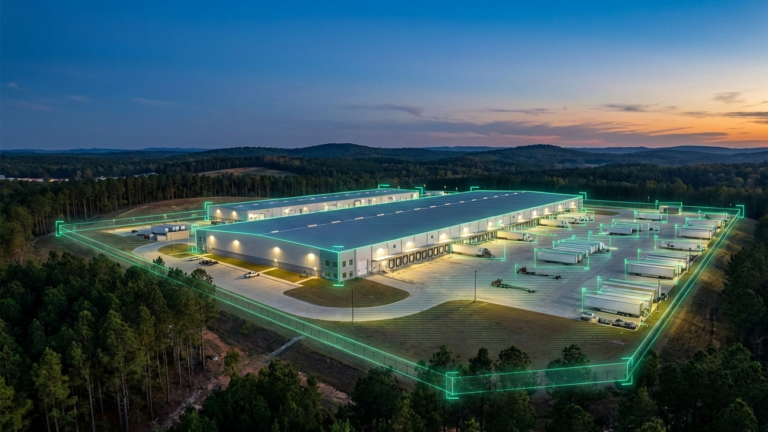
Example: A logistics facility uses AI cameras to monitor perimeters and detect after-hours movement. When motion is detected, an off-site monitoring center verifies the activity and notifies the on-site team or law enforcement if necessary. The result: faster, more targeted responses at a fraction of traditional costs.
This model optimizes resources, enhances efficiency, and preserves the human element where it’s most valuable.
Which Option Fits Your Business?
Choosing between AI surveillance and guards depends on your environment and goals:
- Opt for Guards when you need human interaction, customer support, or on-site presence.
- Opt for AI Surveillance when your biggest risks involve theft, trespassing, or after-hours activity.
- Adopt a Hybrid Model to achieve 24/7 coverage, instant alerts, and efficient human response.
Industrial, commercial, and multi-site businesses often see the greatest ROI from technology-driven or hybrid approaches. The right mix minimizes blind spots and ensures continuous protection.
Smarter Security Starts with the Right Mix
Every business faces unique safety and operational challenges. Security guards provide adaptability and human insight, while AI surveillance delivers consistency, accuracy, and scalability. Together, they form a stronger, more proactive security framework.
If you’re considering modernizing your approach, schedule a site visit with Vulcan Security Systems. We’ll assess your property, uncover opportunities for efficiency, and design a strategy that combines the best of technology and human expertise.