How AI Cameras Use OCR to Read Text in Surveillance
Optical character recognition, or OCR, allows AI cameras to detect and read text within a video frame, converting it into searchable, actionable data. OCR in surveillance cameras and AI video systems automatically captures license plates, serial numbers, shipping labels, and asset tags in real time.
Most businesses are surrounded by more physical text than they actively manage. License plates enter and exit facilities all day. Serial numbers move through shipping and receiving. Labels get applied, scanned, and sometimes missed. Tracking any of this manually is slow, inconsistent, and creates gaps that only surface when something goes wrong.
Vulcan Security Systems designs and supports AI-powered IP video systems for commercial and industrial environments. OCR is one of several analytics capabilities we evaluate and deploy based on client needs. We sell these systems and want buyers to have an accurate picture of what OCR can and cannot do before they commit.
In this guide, we cover how OCR works within AI camera systems, its most common applications, the factors that affect accuracy, and how to evaluate whether it fits your facility.
Table of Contents
- How OCR Works in AI Surveillance Cameras
- License Plate Recognition: The Dominant Application
- Serial Number and Asset Tracking
- Shipping, Receiving, and Loading Dock Monitoring
- Signage and Compliance Monitoring
- What Affects OCR Accuracy in Real-World Surveillance
- When OCR Makes Sense for Your Operation
- Frequently Asked Questions
How OCR Works in AI Surveillance Cameras
OCR in surveillance cameras works through a combination of image processing and pattern recognition. When a camera captures a frame containing text, the system first isolates the relevant region. It then normalizes the image for lighting and angle and applies character recognition algorithms to convert the text into a digital format.
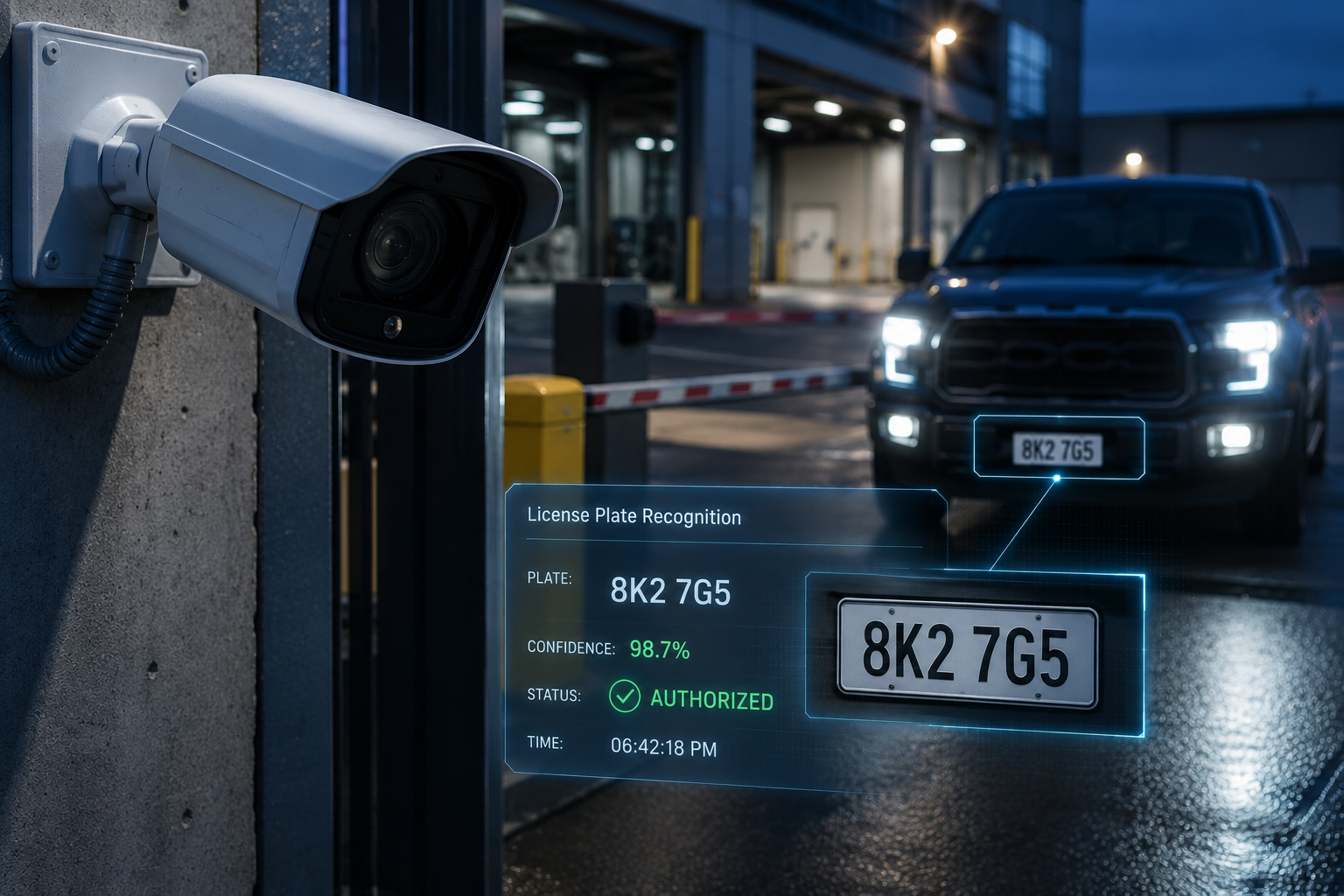
In modern AI video systems, this process runs in near real time. For example, a vehicle entering a gate can have its plate read, matched against an access list, and cleared or flagged within a fraction of a second.
This is fundamentally different from scanning a document. Surveillance OCR operates on frames captured in motion, under variable lighting, and from angles that were not designed for text reading. As a result, high-performance surveillance OCR requires purpose-built hardware, precise camera positioning, and software calibrated for the specific type of text being read.
License Plate Recognition: The Dominant Application
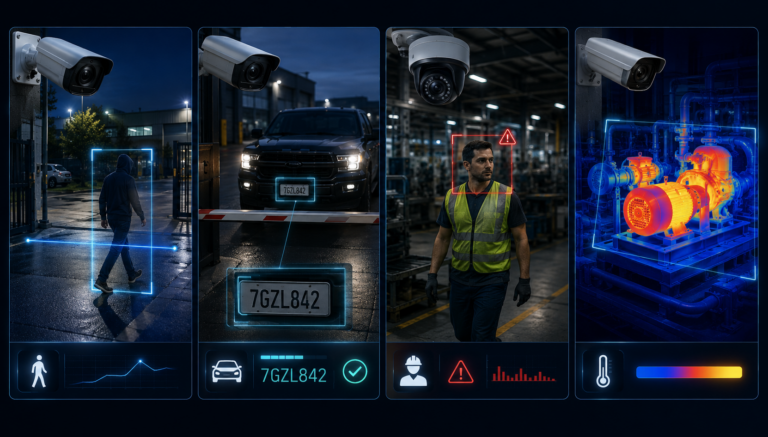
License plate recognition is the most widely deployed OCR application in commercial surveillance. Dedicated LPR cameras are engineered to capture plate characters from moving vehicles in varying light conditions. Standard cameras handle this task inconsistently at best.
In commercial and industrial settings, LPR is used for:
- Automated gate access control for authorized vehicle lists
- Continuous logging of all vehicle arrivals and departures
- Real-time flagging of stolen or unauthorized vehicles
- Documented evidence trails for incident investigations
- Parking enforcement in commercial lots and restricted areas
LPR systems compare captured plates against reference data in real time, enabling instant access decisions or alert triggers. In high-throughput or low-light environments, the difference between a standard AI camera and a dedicated LPR system is significant.
Serial Number and Asset Tracking
In manufacturing and logistics, AI cameras with OCR can read serial numbers, barcodes, and asset tags as items move through a facility. This creates a documented record of what moved through a given area and when, without manual scanning at every checkpoint.
Specifically, this capability is used to:
- Verify that correct components are present before a shipment leaves the facility
- Track the movement of high-value tools, equipment, or inventory
- Log when serialized assets enter or exit a secured area
- Flag items that appear in locations where they should not be
OCR-based asset tracking performs best when labels are machine-printed, consistently sized and positioned, and cameras are mounted for an optimal reading angle. Variability in any of these factors reduces accuracy.
Shipping, Receiving, and Loading Dock Monitoring
Loading docks handle a continuous flow of labeled packages, pallets, and containers. AI cameras with OCR can capture label data from items in motion, creating a searchable log of inbound and outbound activity. In practice, this eliminates the need for additional staff or manual scanning steps at the dock.
Practical applications include:
- Verifying inbound shipments against expected delivery manifests
- Logging outbound packages with timestamps before they leave the dock
- Recording carrier plate numbers alongside package data for complete arrival documentation
- Supporting audit trails for regulated or high-value shipments
Signage and Compliance Monitoring
In some regulated environments, cameras with OCR are used to verify that required postings are present and legible. Safety zone markers, hazard warnings, and compliance notices may need to be confirmed in specific locations on a documented basis.
This application is more specialized than LPR or asset tracking. It is evaluated case by case based on the regulatory requirements of the facility.
What Affects OCR Accuracy in Real-World Surveillance
There is often a gap between OCR performance in a controlled demo and OCR in a live industrial environment. Here is what drives it:
- Print quality and consistency: Handwritten text, faded plates, damaged labels, and inconsistent fonts all reduce recognition accuracy. OCR performs best on standardized, machine-printed characters.
- Camera angle and positioning: Text must be readable from where the camera is mounted. Glare, reflective surfaces, and steep angles degrade performance. LPR-specific cameras are designed to manage the most common positioning challenges.
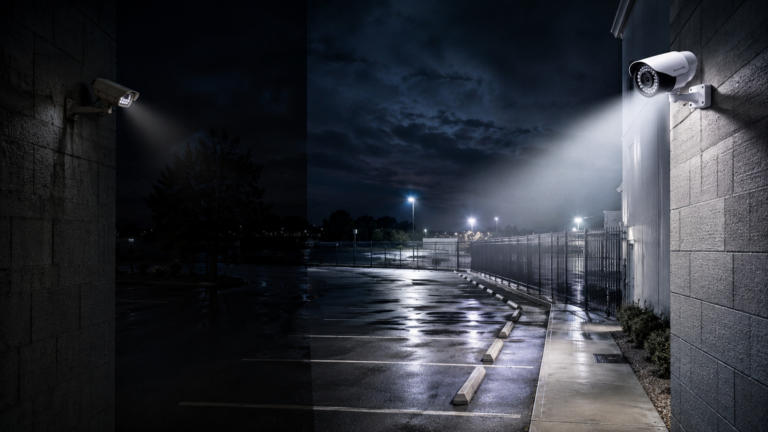
- Lighting: Consistent, adequate lighting is one of the most significant factors in OCR accuracy. Backlight, moving shadows, and low ambient light all create problems.
- Movement speed: Fast-moving subjects require higher frame rates and faster shutter speeds to produce usable frames for character recognition.
When OCR Makes Sense for Your Operation
OCR-enabled surveillance adds real value when there is a specific need to capture text data at a volume or speed that makes manual methods impractical. It is worth evaluating seriously if your facility manages vehicle access, handles regular shipping and receiving, or tracks serialized assets. It also helps when you need a documented record of what moved through a given area and when.
However, if text capture is incidental to your security goals rather than central to them, standard AI video analytics may cover your needs at lower cost and complexity.
Vulcan conducts free on-site assessments to help facilities evaluate whether OCR, LPR, or other AI video capabilities fit their actual workflows. Contact us to schedule one.
Frequently Asked Questions
Is license plate recognition the same thing as OCR?
LPR is a specific application of OCR, optimized for vehicle plates. Dedicated LPR systems include purpose-built hardware and software calibrated for plate capture under real traffic conditions. Standard OCR applied to plates from a general camera is significantly less reliable.
Can OCR cameras read handwritten text?
Surveillance OCR is not reliable for handwritten text. Accuracy is strongest with machine-printed characters in consistent formats.
Does OCR need to connect to a database to be useful?
OCR can capture and log text on its own. However, most of its operational value comes from comparing captured data against a reference, such as an authorized vehicle list or expected shipment manifest. Integration with a database or access control system is what makes it actionable in most scenarios.
How is surveillance OCR different from document scanning OCR?
Document OCR operates on static, high-resolution images under controlled conditions. OCR in surveillance cameras handles motion, variable lighting, unpredictable angles, and real-time processing requirements. They share the same underlying technology but require very different hardware and calibration.