How Long Do Mobotix Cameras Last? What Buyers Should Know
Mobotix cameras typically last around ten years in active service, with many installations running 15 to 20 years without hardware replacement. That is roughly double the lifespan of a standard commercial IP camera. The reason comes down to specific engineering choices: no moving parts, a decentralized architecture, modular repairability, and a quality standard maintained through direct manufacturing rather than outsourced production.
Most buyers start with upfront cost comparisons. That is a reasonable place to start, but it misses the more important number: total cost of ownership over time. A camera that lasts twice as long, requires less maintenance, and continues receiving security firmware updates for its full service life is a fundamentally different investment than one that needs replacement in five years.
Vulcan Security Systems uses Mobotix as our primary camera platform for commercial and industrial deployments. We have a financial interest in the systems we sell. We also think buyers deserve a clear-eyed explanation of what they are actually getting when they invest in high-end IP cameras.
In this guide, we cover what drives Mobotix camera longevity, how that compares to standard IP cameras, what can shorten lifespan regardless of brand, and how to think about lifecycle costs when evaluating a security system.
Table of Contents
- What Makes Mobotix Cameras Last Longer
- How Mobotix Compares to Standard IP Cameras
- What Can Still Shorten Camera Lifespan
- How to Think About Lifecycle Cost
- How Long Should You Expect Your System to Last?
- Frequently Asked Questions
What Makes Mobotix Cameras Last Longer
The longevity advantage is not marketing. It is the direct result of several specific design decisions that differ meaningfully from how most IP cameras are built.
No Moving Parts
Most PTZ cameras and many standard IP cameras include motorized components: pan and tilt motors, varifocal lenses with iris actuators, zoom mechanisms. These components wear out and introduce failure points that do not exist in a fixed camera with a static lens.
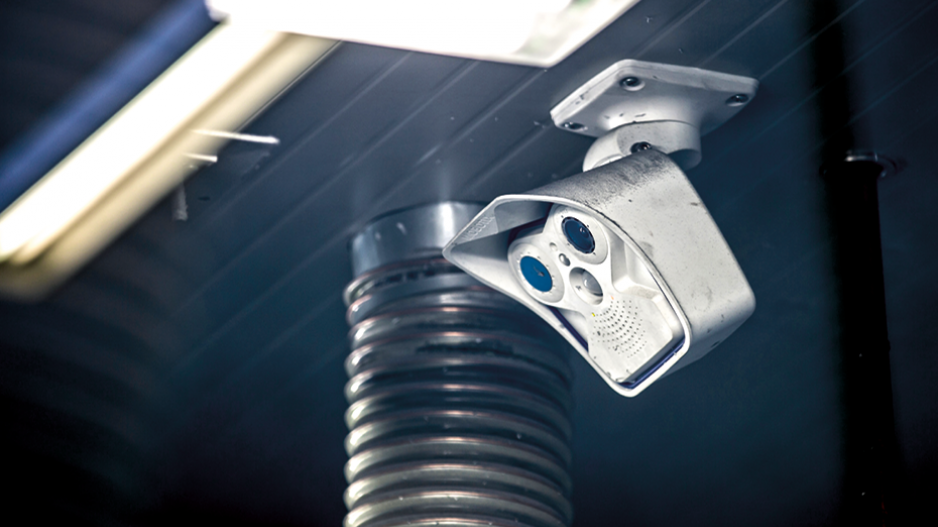
Mobotix cameras are designed around fixed lenses with no motors and no mechanical iris. Instead of motorized movement, the platform uses a hemispheric or multi-sensor approach to cover wide areas. As a result, Mobotix cameras carry an MTBF (Mean Time Before Failure) of approximately nine years, and over ten years for the newer MOBOTIX ONE platform. That metric is a direct consequence of eliminating mechanical failure modes.
Decentralized Architecture
Most camera systems are centralized: cameras capture video and stream it to a server or NVR for processing and storage. In this model, the camera is relatively simple hardware and the processing burden falls on centralized infrastructure.
Mobotix uses a decentralized model. Each camera contains its own processor, storage capability, and analytics engine. This reduces the number of system components that can fail. It also means the camera retains full functionality even if network infrastructure is disrupted.
Modular Design and Repairability
When a standard IP camera fails, the typical response is replacement. The camera goes in the trash and a new one gets installed. Mobotix cameras are designed to be repaired instead. Sensor modules, lenses, and interface components can be swapped out individually rather than requiring full unit replacement.
This matters in two ways. First, it reduces the cost of addressing hardware issues when they arise. Second, it extends the practical service life of the system because individual components can be refreshed without replacing the entire unit.
Continued Software Support
A camera that still functions mechanically but no longer receives security firmware updates is a liability, not an asset. Outdated firmware can expose a network to vulnerabilities that attackers actively exploit.
Mobotix maintains cybersecure software updates for cameras that are 15 or more years old. This is uncommon in the industry. Most manufacturers sunset firmware support within five to seven years of a product release, leaving older systems without security patches. Staying current with proactive service and maintenance is what keeps a long-lived system genuinely secure.
Environmental Tolerance
Mobotix cameras are rated to operate in temperatures ranging from -22 to 140 degrees Fahrenheit without additional heating or cooling equipment. For industrial environments with extreme temperature exposure, this eliminates a common failure mode that shortens the lifespan of standard cameras.
How Mobotix Compares to Standard IP Cameras
Standard commercial IP cameras typically carry a rated lifespan of three to five years, with many installations replaced within five to seven years due to hardware failure, firmware obsolescence, or discontinued manufacturer support. Here is how the tiers compare:
| Camera Tier | Rated Lifespan | Firmware Support | Typical Replacement |
|---|---|---|---|
| Standard commercial IP camera | 3 to 5 years | Often discontinued after 5 years | 5 to 7 years |
| Mid-range professional IP camera | 5 to 7 years | 7 to 10 years (varies by manufacturer) | 7 to 10 years |
| Mobotix | ~10 years (MTBF 9 to 10+ years) | 15+ year-old models still supported | Field installs documented at 15 to 20 years |
In practice, a well-designed Mobotix installation may complete its entire intended service life without a hardware replacement cycle that a standard IP camera system would go through twice.
What Can Still Shorten Camera Lifespan
Even the most durable hardware has vulnerabilities. These are the factors that most commonly shorten camera lifespan regardless of brand quality:
- Physical damage: Vandalism, impact, or exposure to harsh chemicals can damage cameras that would otherwise run for decades. Camera placement and housing selection matter significantly.
- Poor installation: Incorrect mounting, inadequate weatherproofing, and improperly terminated cable connections are leading causes of early failure in commercial camera systems.
- Neglected firmware: A camera that is never updated is progressively more vulnerable to exploits. Longevity only matters if the system remains secure throughout its service life.
- Power quality issues: Voltage spikes, inadequate PoE provisioning, and power cycling from unreliable infrastructure can degrade cameras over time.
- Environmental neglect: Cameras installed in environments with heavy dust, corrosive chemicals, or direct liquid exposure without appropriate housings will fail prematurely regardless of build quality.
For more on keeping a system performing over the long term, see how proactive camera maintenance minimizes downtime.
How to Think About Lifecycle Cost
When evaluating high-end cameras against standard alternatives, the right comparison is not camera price against camera price. It is total cost of ownership over a defined service period. A useful exercise is to calculate the ten-year cost of each option, including:
- Initial hardware and installation cost
- Expected replacement cycles based on rated lifespan
- Maintenance and service costs over the period
- Monitoring and infrastructure costs that depend on camera architecture
- The cost of security vulnerabilities from systems running without firmware support
When buyers run that comparison for industrial and commercial installations where cameras are expected to serve for a decade or more, the higher upfront cost of Mobotix systems frequently looks different than it does on a per-unit basis. For a deeper look at why quality and maintenance together determine real-world outcomes, see why quality surveillance and proactive maintenance matter.
How Long Should You Expect Your System to Last?
A Mobotix system that is properly installed, maintained, and kept current on firmware should realistically serve for ten to fifteen years in most commercial and industrial environments. Systems in more demanding conditions — heavy industrial use, extreme temperatures, high-dust environments — may require more attention to housing and maintenance. However, they are still expected to significantly outlast standard IP camera alternatives.
The best indicator of how a system will perform in your specific environment is a site assessment, not a general lifespan estimate. Installation quality, environmental conditions, and maintenance practices all affect real-world outcomes in ways that a spec sheet cannot capture.
Vulcan offers free on-site assessments for commercial and industrial facilities. If you are evaluating camera systems and want a straightforward comparison for your specific environment, contact us to schedule a visit.
Frequently Asked Questions
Has anyone actually had a Mobotix camera run for 20 years?
Yes. Mobotix has documented installations running for approximately 20 years without hardware replacement. This is an outlier, but it reflects the ceiling of what the platform is capable of under good conditions.
Does a longer-lasting camera mean I never have to upgrade?
Not necessarily. Even if the hardware remains functional, technology advances and business needs change. The difference is that with Mobotix, upgrading is a choice driven by capability improvements, not a forced replacement because the hardware or firmware has failed.
What warranty does Mobotix offer?
The MOBOTIX ONE platform carries a 5-year warranty. Warranty terms vary by product line. Your installing dealer can provide current warranty details for specific models.
Are there environments where Mobotix cameras are not the right choice?
Yes. Applications that genuinely require PTZ movement for tracking cannot use a fully fixed camera system. Mobotix addresses wide-area coverage through multi-sensor and hemispheric designs, but there are specific use cases where motorized cameras are the appropriate choice despite the tradeoff in longevity.