How Thermal Sensors Work in Video Security Cameras
Thermal security cameras are often misunderstood. They don’t “see” like traditional HD cameras, and they aren’t designed to replace standard video surveillance. Instead, they detect heat differences, making them uniquely effective in environments where lighting, visibility, or privacy concerns limit what conventional cameras can do.
Before diving into specific commercial and industrial applications, it helps to understand how thermal sensors actually work, how they differ from traditional video cameras, and why they’re often paired together in higher-end security systems.
At Vulcan Security Systems, we regularly deploy Mobotix thermal cameras in industrial and perimeter-security environments across north and central Alabama. Their design makes them a practical reference point for explaining modern thermal camera technology.
How Thermal Sensors Detect People and Objects
Unlike traditional video cameras that rely on visible light, thermal cameras detect infrared radiation, energy emitted by people, animals, and objects based on temperature.
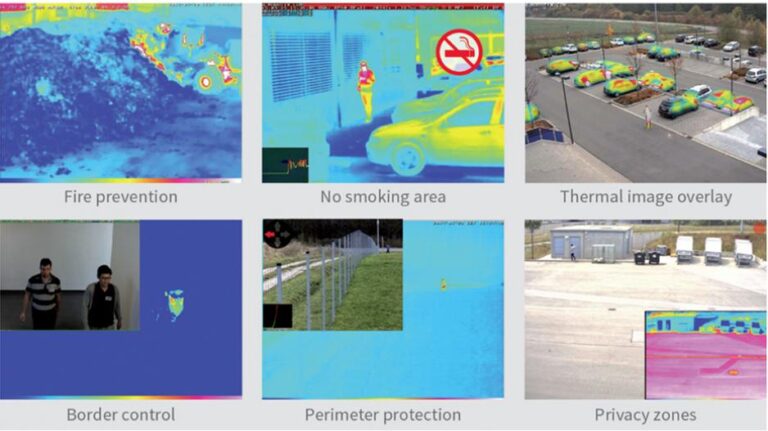
Every object above absolute zero emits heat. Thermal sensors measure small temperature differences across a scene and translate those variations into an image, typically displayed using color gradients or grayscale shading to indicate relative heat intensity.
This allows thermal cameras to:
- Detect people and vehicles in complete darkness
- Identify activity through smoke, dust, or light fog
- Operate without any ambient or artificial lighting
- Remain effective regardless of glare or shadows
Because thermal cameras read heat, not facial features or clothing, they excel in conditions where traditional cameras struggle.
Dual Thermal + Optical Cameras: The Best of Both Worlds
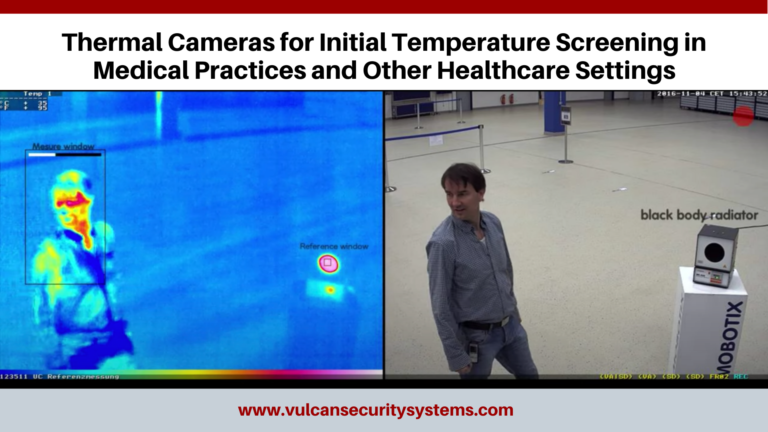
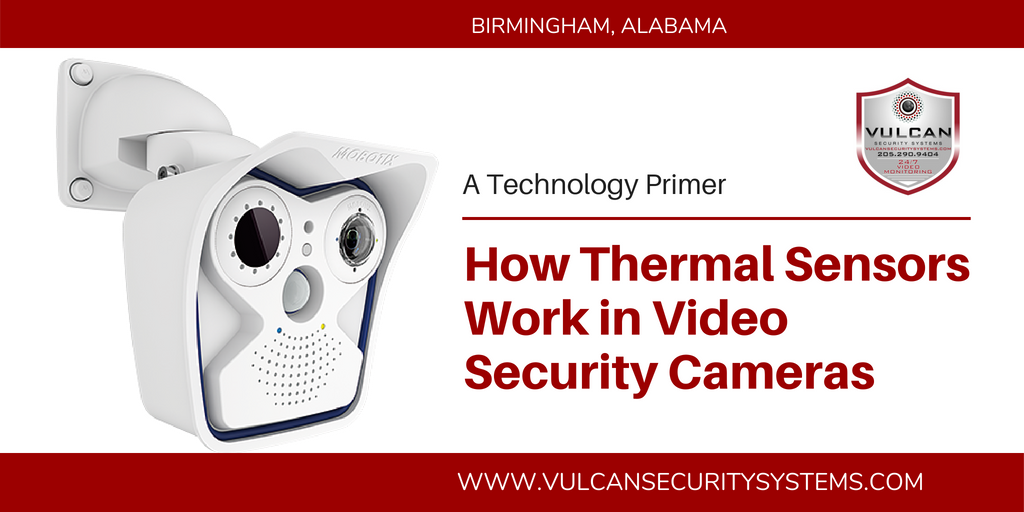
Many modern thermal cameras, including Mobotix models, combine thermal sensors with standard optical (HD) lenses in a single unit.
This dual-sensor approach allows:
- Thermal imaging for detection and triggering
- Optical video for verification and investigation
In practice, the thermal sensor identifies a heat source, and the system can overlay or switch to the optical image to pinpoint the exact location and provide visual context. This enables one camera to perform both thermal radiometry and traditional video monitoring without requiring separate devices.
For security teams, this means faster detection with clearer follow-up evidence.
Why Thermal Cameras Excel in Low-Light and Outdoor Environments
Thermal cameras are especially effective in:
- Large outdoor areas
- Facility perimeters
- Yards and storage areas
- Remote or poorly lit locations
Because they don’t rely on reflected light, thermal cameras aren’t affected by:
- Darkness
- Headlights
- Shadows
- Changing weather conditions (within limits)
In open-area deployments, Mobotix thermal cameras can detect people or vehicles at distances of up to 400 meters, depending on lens selection and environmental conditions.
When combined with intelligent analytics, such as Mobotix’s activity detection software, thermal cameras often eliminate the need for:
- Infrared (IR) illumination
- Motion-only sensors
- Fence-mounted detection systems
This “thermal + video + analytics” approach reduces false alarms while improving reliability.
Understanding Thermal Sensor Sensitivity (NETD)
Not all thermal cameras are created equal. One of the most important specifications is Noise Equivalent Temperature Difference (NETD).
NETD measures how small of a temperature difference a thermal sensor can detect. It’s expressed in millikelvin (mK).
- Lower NETD = higher sensitivity
- Higher sensitivity = better detection and clearer thermal contrast
In practical terms, NETD allows buyers to compare thermal cameras across brands and models based on real performance—not marketing claims.
Mobotix thermal sensors typically offer NETD values around 50 mK, enabling detection of temperature differences as small as 0.05°C (0.09°F) across a wide temperature range—from extreme cold to very high heat.
Thermal Radiometry for Fire Prevention and Equipment Monitoring
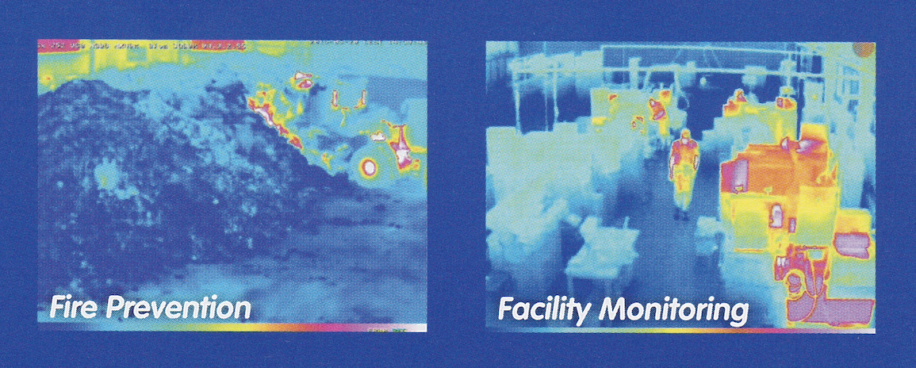
Beyond security, some thermal cameras support thermal radiometry, meaning they can measure absolute temperatures within defined areas, not just relative heat differences.
This capability allows cameras to:
- Monitor machinery for overheating
- Detect abnormal temperature spikes
- Trigger alerts when thresholds are exceeded
- Initiate automated responses (such as shutting down equipment)
In industrial environments, this makes thermal cameras valuable not only for security but also for fire prevention, equipment protection, and operational safety.
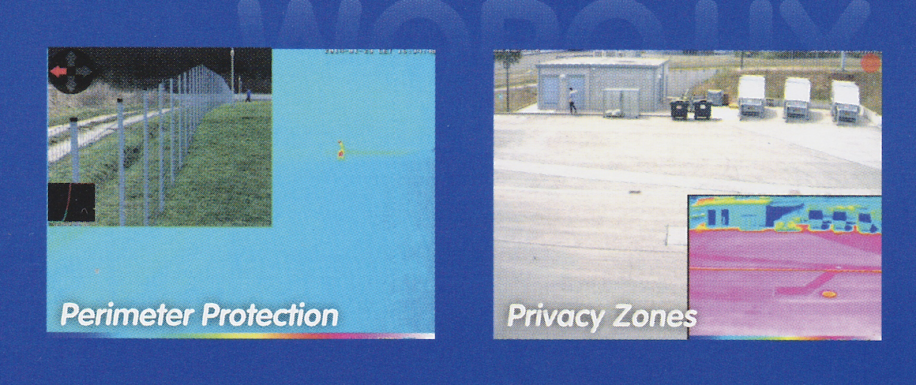
Thermal Cameras and Privacy Considerations
Thermal cameras inherently provide a privacy advantage.
Because they don’t capture facial features or identifying details, they are well-suited for:
- Recreation facilities
- Pools and athletic centers
- Hospitality environments
- Sensitive workplace areas
When paired with an optical sensor, systems can be configured to:
- Use thermal detection by default
- Activate optical video only when an event occurs
- Mask or restrict optical recording where needed
This allows organizations to balance security needs with privacy expectations—something increasingly important in modern compliance environments.
Limitations: Thermal Radiation and Glass
One important limitation of thermal cameras is glass.
Glass blocks infrared radiation, meaning thermal cameras cannot reliably detect heat sources behind:
- Windows
- Windshields
- Glass partitions
For this reason, thermal cameras are best suited for open areas or must be paired with optical cameras when glass barriers are present. Many Mobotix systems address this by allowing modular expansion with visual sensors alongside thermal units.
Understanding these limitations is critical when designing an effective deployment.
Where Thermal Cameras Make the Most Sense
Thermal security cameras are not a replacement for standard video; they are a force multiplier when used correctly.
They are most effective in:
- Perimeter security
- Large outdoor facilities
- Industrial yards
- Fire risk monitoring
- Low-light or no-light environments
- Privacy-sensitive areas
When integrated into a broader IP video system with analytics and remote monitoring, thermal cameras provide early detection, fewer false alarms, and stronger situational awareness.
How Vulcan Helps
Vulcan Security Systems designs and supports IP video systems that combine thermal, optical, and AI-driven analytics for industrial and commercial environments across Alabama.
We help clients:
- Determine whether thermal cameras make sense for their application
- Select the right sensor sensitivity and lens configuration
- Integrate thermal cameras with existing video systems
- Ensure systems remain online and properly calibrated
If you have a specific thermal camera application or are considering thermal sensors for security, safety, or fire prevention, contact Vulcan Security Systems for a free consultation.
We’ll help you determine where thermal technology adds real value and where it doesn’t.