Security Camera Laws for Alabama Businesses: What You Can and Can’t Record
Alabama gives businesses fairly wide latitude to record video on their own property, and it is a one-party consent state for audio, which means you generally do not need permission from everyone in a conversation to record it. That said, there are hard limits that apply everywhere, restrooms and locker rooms above all, along with workplace specific rules that catch business owners off guard more often than the basic recording question does.
Vulcan Security Systems installs commercial video security systems across Alabama, and clients ask us some version of this question on nearly every site visit. We are not attorneys, and this article is general education, not legal advice for your specific situation. What we can offer is a clear, accurate picture of what Alabama law actually says about video and audio recording, where the real limits are, and what applies specifically to workplaces, so you know which questions to bring to an attorney and which ones you can already answer.
Alabama’s Baseline Rule: One-Party Consent for Audio
Alabama Code sections 13A-11-30 and 13A-11-31 establish Alabama as a one-party consent state. As long as one participant in a conversation, which can be you or your employee, consents to it being recorded, the recording is generally lawful under state law. You do not need every person in the conversation to agree. Recording a conversation you are not a part of, without any participant’s consent, is a different matter and is where Alabama’s criminal eavesdropping statute applies, a Class A misdemeanor carrying up to a year in jail and a fine of up to 6,000 dollars.
This one-party standard is also what makes live audio response through a security camera legally workable. When a monitoring operator speaks to someone on your property, the operator is a direct party to that exchange, which is a meaningfully different situation than passively intercepting a private conversation between two other people. We address the practical side of this in homeless encampments on your property, where live audio warnings are a common tool.
What You Can Record Under Alabama Law
Public and Common Commercial Areas
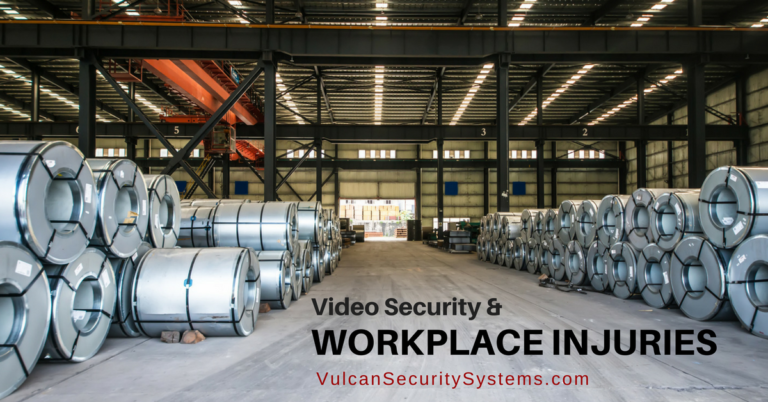
Sales floors, lobbies, entrances, hallways, and warehouse floors are all areas where no one has a reasonable expectation of privacy, and businesses can record video there without needing anyone’s consent. This is the core use case for most commercial IP video systems.
Your Property’s Exterior and Perimeter
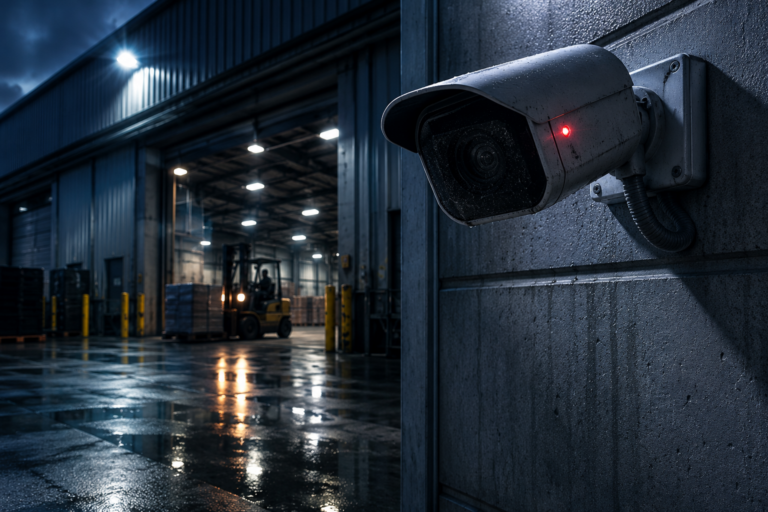
Parking lots, loading docks, fence lines, and building exteriors are all fair game. A camera on your property that happens to catch a public sidewalk or street in the background is generally not a problem, since public rights of way carry no expectation of privacy either. This is the coverage we discuss most often in the context of industrial and perimeter security.
Audio, With at Least One Party’s Consent
Two-way audio and live monitored response are lawful tools in Alabama commercial and industrial settings when used the way they are intended: an operator or employee actively communicating, not a hidden microphone capturing private conversations between people who have no idea they are being recorded.
What You Can’t Record, No Matter What
Restrooms, Locker Rooms, and Changing Areas
These spaces are off limits everywhere in Alabama, in a workplace or anywhere else. Alabama Code 13A-11-32 makes criminal surveillance a Class B misdemeanor when it involves trespassing to observe someone in a private location, and 13A-11-32.1 elevates aggravated criminal surveillance to a Class C felony when a hidden recording device is used in a private location for sexual gratification. There is no business justification that overrides this. Cameras simply do not belong in these spaces.
Any Space With a Reasonable Expectation of Privacy
Alabama Code 13A-11-30 defines a “private place” as one where a person may reasonably expect to be free from surveillance. This standard extends beyond the obvious examples. A closed private office, a nursing mother’s room, or a space specifically designated for private use can all qualify depending on the circumstances, which is exactly the kind of judgment call worth running by an attorney before you mount a camera.
Workplace-Specific Rules Alabama Employers Should Know
Break Rooms and Medical Stations
Employers can generally monitor open work areas, production floors, entrances, and warehouse space. Break rooms, first aid or medical stations, and private offices carry a higher expectation of privacy and are commonly excluded even where the law is not perfectly explicit, because the business justification is weaker and the privacy expectation is stronger. We cover the full breakdown of restricted workplace areas in video surveillance in the workplace.
Union Activity and the NLRA
The National Labor Relations Act limits how employers can use surveillance around protected labor activity, such as organizing or picketing. The National Labor Relations Board applies what is known as the Stericycle test to workplace recording policies, requiring that any no-recording rule be narrowly tailored so it does not chill employees from engaging in legally protected activity. This applies regardless of state consent laws.
Notice Isn’t Always Required, But It Helps
Alabama does not have a blanket requirement that businesses post signage announcing video surveillance in commercial, non-private areas. Posting notice anyway is still a good practice. It sets clear expectations for employees and visitors, supports a workplace surveillance policy if you ever need to point to one, and in our experience, visibly posted cameras deter more incidents than hidden ones ever catch.
A Fast Changing Landscape Around Recording and Public Trust
Alabama’s comfort level with camera networks is being tested in real time. Birmingham has expanded its own license plate reader network in recent years, and we cover the resulting backlash, along with two Alabama officer misuse cases in Moody and Springville, in the Flock camera backlash. None of that changes what is legal for a private business system covering its own property, but it is a reminder that public tolerance for surveillance is not fixed, and being able to explain clearly what your cameras do and do not do is worth more than it used to be.
Quick Reference: Where You Can and Can’t Point a Camera
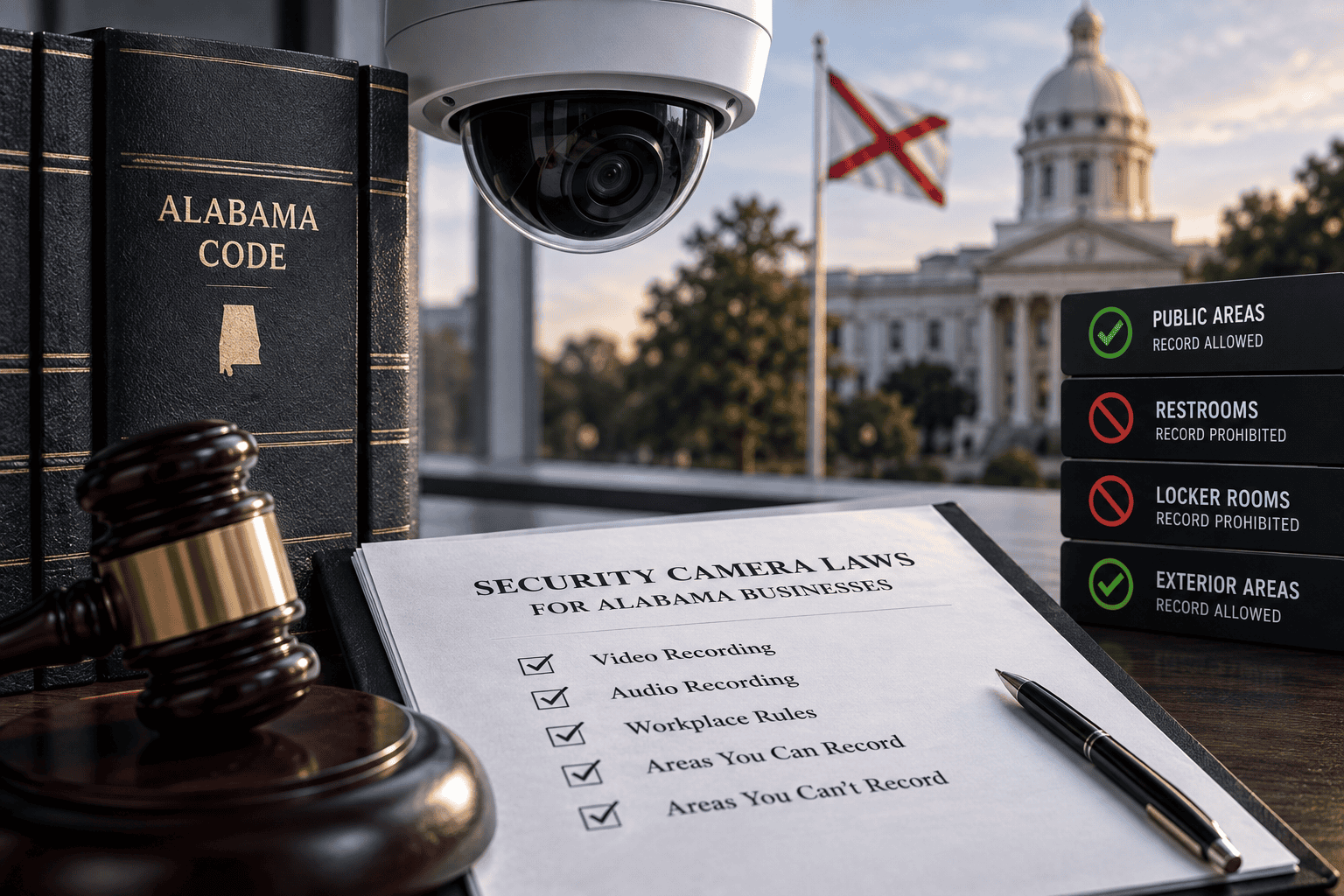
- Sales floors, lobbies, entrances, warehouses: Generally permitted, no consent required.
- Parking lots and building exteriors: Generally permitted, including incidental views of public streets or sidewalks.
- Break rooms, private offices, medical stations: Generally excluded, even without an explicit statute naming each space.
- Restrooms, locker rooms, changing areas: Prohibited everywhere, with criminal penalties attached.
- Two-way audio with an active operator: Generally lawful under Alabama’s one-party consent standard.
Design Your System Around Privacy, Not Just Around the Law
Alabama law gives businesses real flexibility to protect their property, but the legal minimum and good practice are not always the same thing. A system designed around clear, defensible placement, honest signage, and a genuine respect for private spaces holds up better in a dispute than one that simply tried to stay technically inside the law. If you have a specific legal question about your property, an attorney is the right resource. If you want a system designed to hold up to both scrutiny and use, that is where Vulcan comes in.
Vulcan will walk your property, show you exactly what coverage makes sense, and flag anything worth reviewing with your attorney before it becomes a problem.
Frequently Asked Questions
Do I need to post a sign saying my business uses security cameras in Alabama?
Alabama does not generally require signage for cameras covering commercial, non-private areas. Posting notice anyway is good practice for setting expectations with employees and visitors and can support your workplace policy if it is ever questioned.
Can I record audio through my security cameras in Alabama?
Yes, in most business contexts. Alabama is a one-party consent state, meaning a recording is generally lawful as long as one participant in the conversation consents, which includes an operator actively speaking through the system. Recording a private conversation you are not part of, without any participant’s consent, raises different legal questions and should be reviewed with an attorney.
Can I install a camera in an employee break room?
This is one of the higher risk placements. Break rooms, medical stations, and private offices carry a stronger expectation of privacy, and cameras there are commonly avoided even without a statute naming the space directly. Consult an attorney before placing a camera in any space where employees might reasonably expect privacy.
Is it legal for my security camera to capture a public sidewalk or street?
Generally yes. Cameras aimed primarily at your own property that incidentally capture a public right of way are typically not a legal problem, since there is no reasonable expectation of privacy in a public space.
What is the penalty for illegal surveillance in Alabama?
Penalties vary by offense. Criminal eavesdropping is a Class A misdemeanor punishable by up to a year in jail and a fine of up to 6,000 dollars. Criminal surveillance involving trespass into a private location is a Class B misdemeanor, and aggravated criminal surveillance using a hidden device for sexual gratification is a Class C felony.