Healthcare Providers Can Use Thermal Cameras as Initial Screening Tool
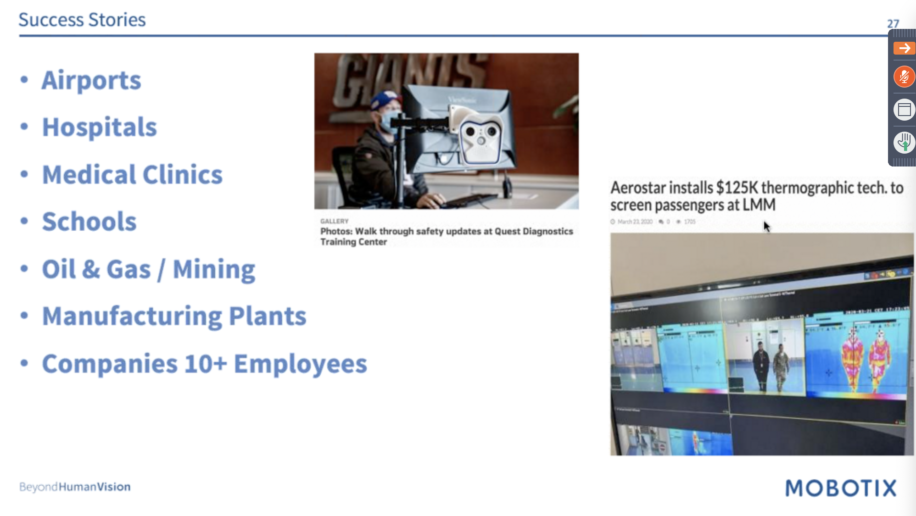
Thermal imaging technology has evolved dramatically over the past five years. What started as an emergency response tool during the COVID-19 pandemic is now a standard part of health and safety infrastructure in hospitals, dental offices, and long-term care facilities. Thermal cameras, also known as infrared thermographic systems, are used by healthcare providers across the U.S. as an efficient, non-invasive way to measure surface body temperature and detect potential fevers early.
While they’re not medical diagnostic tools, when properly deployed and maintained, thermal cameras provide a fast, contactless first layer of screening that enhances infection control, patient safety, and staff efficiency.
In this article, we’ll cover how thermal imaging technology works, what the updated FDA guidelines and accuracy requirements entail, the best practices for healthcare screening, and how Mobotix thermal cameras exceed compliance and reliability standards
Table of Contents
- Why Thermal Cameras Still Matter in 2025
- How Thermal Cameras Work
- Are Thermal Cameras Approved by FDA for Body Temperature Screening?
- Using Thermal Cameras in Real Healthcare Scenarios
- Environmental and Operational Best Practices
- Why Mobotix Leads in Thermal Accuracy and Security
- Implementation, Calibration, and Support
Why Thermal Cameras Still Matter in 2025
Even after the pandemic era, infection control remains a cornerstone of modern healthcare operations. From influenza to RSV and seasonal viral infections, preventing spread inside healthcare facilities is critical for patient outcomes and regulatory compliance.
Thermal imaging remains valuable because it allows:
- Rapid, contactless screening at entrances and checkpoints.
- Discreet temperature assessment without physical contact or slowing patient flow.
- Reduced liability by providing a documented first layer of health screening.
- Enhanced staff protection by minimizing unnecessary interactions with symptomatic individuals.
Today, thermal cameras are used across hospitals, urgent care centers, dental offices, physical therapy clinics, and even specialized outpatient practices such as dermatology and orthopedics.
How Thermal Cameras Work
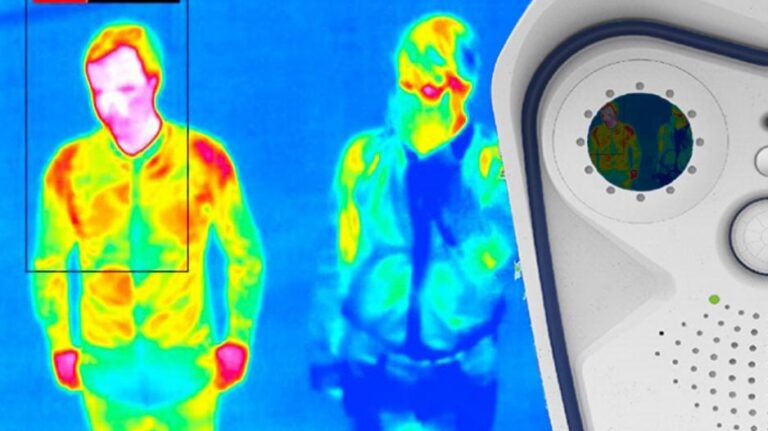
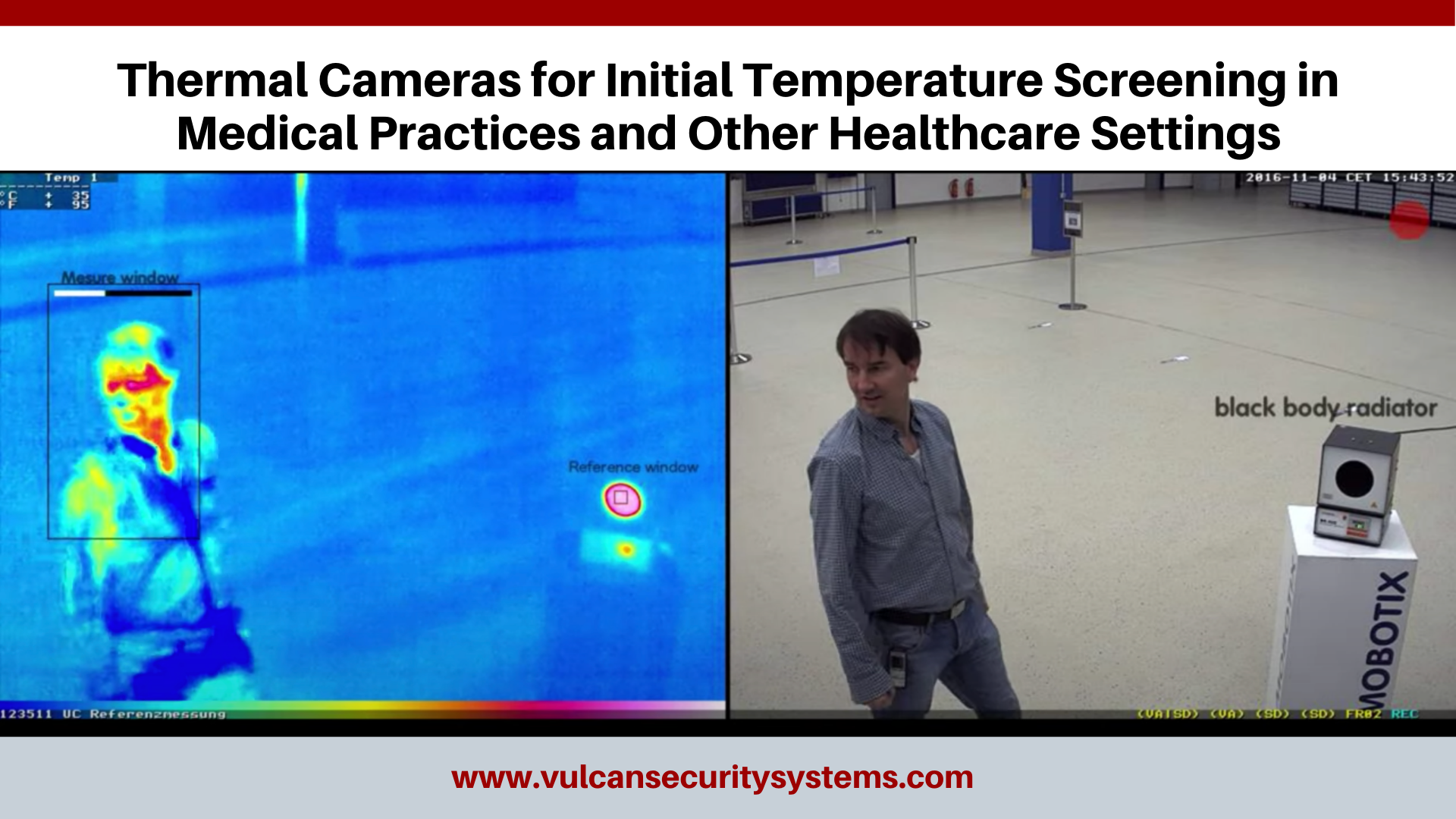
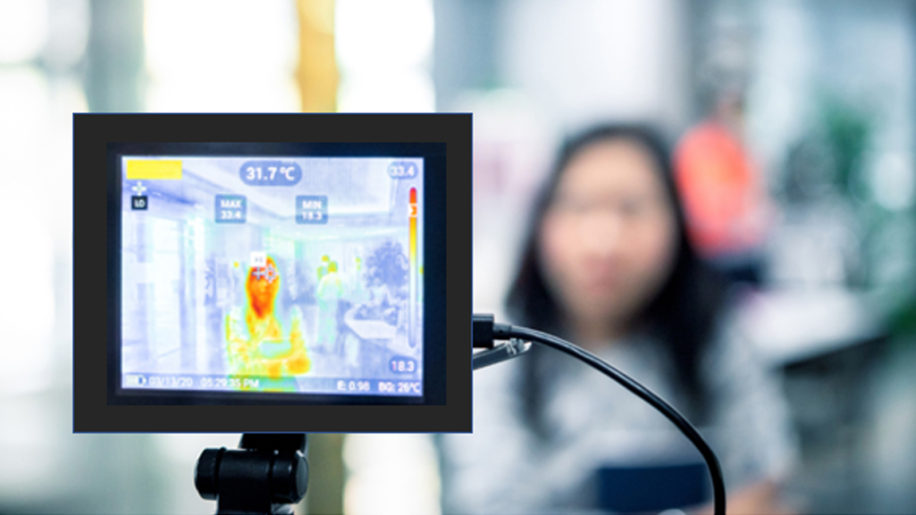
Thermal imaging cameras detect infrared energy (heat radiation) emitted by all objects. Humans radiate energy in a specific wavelength band that correlates closely with surface temperature. When a person passes through a thermal field of view, the camera converts that heat signature into a colorized visual display.
The most accurate point for measurement is around the medial canthus, the area near the inner corner of the eye. When cameras like the Mobotix M16 or M73 are properly calibrated, they can measure surface temperature with uncertainty less than ±0.5°C (±0.9°F)—the performance threshold recognized by the FDA.
Thermal systems like Mobotix process temperature data in real-time, typically within 1–2 seconds, allowing for continuous, low-friction screening at entry points.
Are Thermal Cameras Approved by FDA for Body Temperature Screening?
The U.S. Food and Drug Administration (FDA) continues to recognize thermal imaging systems as reliable adjunctive screening tools, effective for identifying elevated surface temperatures but not intended for diagnosis or treatment decisions. In practice, this means healthcare providers can safely integrate thermal cameras into entry or triage workflows as a first-line screening method, provided elevated readings are verified by a clinical thermometer.
As of 2025, the FDA’s position focuses on several key requirements to ensure accuracy and consistency:
- Performance Accuracy and Range: Thermal systems must maintain an uncertainty within ±0.5°C (±0.9°F) across 93.2°F–102.2°F. This level of precision is essential for healthcare-grade screening environments.
- Calibration and Labeling: Devices must be properly calibrated per manufacturer instructions and clearly labeled for their intended use. Pairing a thermal camera with a black body reference source provides continuous validation and reduces recalibration frequency.
- Environmental Stability: Screenings should be conducted in controlled conditions, room temperatures between 68–76°F, humidity below 50%, and no direct light or air drafts. Inconsistent environments can significantly distort readings.
- Human Factors: External variables like recent exercise, outdoor exposure, or cosmetics can affect surface temperature readings. Operators should be trained to recognize and account for these factors before interpreting results.
- Secondary Verification: Every elevated reading must be followed by confirmation with a medical-grade thermometer to ensure accurate assessment before any clinical action is taken.
Together, these principles allow healthcare organizations to implement thermal imaging safely and effectively while maintaining compliance with FDA standards.
Using Thermal Cameras in Real Healthcare Scenarios
Let’s walk through a realistic example.
A patient arrives at a physical therapy center. Just past the reception area, a Mobotix thermal camera positioned seven feet from the entrance automatically reads their temperature as they approach the counter.
- If the camera measures below 99°F, the patient proceeds to check-in.
- If the reading is 99°F or above, the system quietly notifies staff, prompting a secondary screening with a medical-grade thermometer.
- If the elevated temperature is confirmed, the patient can be discreetly isolated or rescheduled for a later appointment.
This workflow minimizes disruption, maintains privacy, and prevents potential exposure to others.
Thermal cameras are also being used for:
- Dental and outpatient offices to reduce wait room contamination risks.
- Skilled nursing and assisted living facilities to safeguard residents.
- Hospital staff entry screening before shift changes.
- Laboratories and clean rooms where infection control is mission-critical.
Environmental and Operational Best Practices
Thermal camera accuracy depends heavily on environmental and human factors. Following both FDA and Mobotix best practices ensures consistent results.
Room Setup
- Maintain a temperature-controlled environment (68–76°F).
- Keep relative humidity between 10–50%.
- Avoid direct sunlight, reflective surfaces, or strong incandescent lighting.
- Prevent drafts from HVAC systems or open doors.
Human Factors
Before screening, consider whether a person has:
- Recently exercised or been outdoors in extreme temperatures.
- Used facial wipes, compresses, or cosmetics that affect skin temperature.
- Been drinking hot or cold beverages.
A short 15-minute acclimation period is ideal in controlled environments, but for rapid throughput facilities, secondary verification protocols can mitigate these variables.
Calibration and Reference
Mobotix recommends using a black body reference source, a device that maintains a stable, known temperature point, to continually validate readings and minimize drift. This reduces recalibration frequency and improves long-term reliability.
Why Mobotix Leads in Thermal Accuracy and Security
Vulcan Security Systems partners with Mobotix because of its unmatched blend of thermal precision and cybersecurity. Unlike many low-cost imports, Mobotix cameras are:
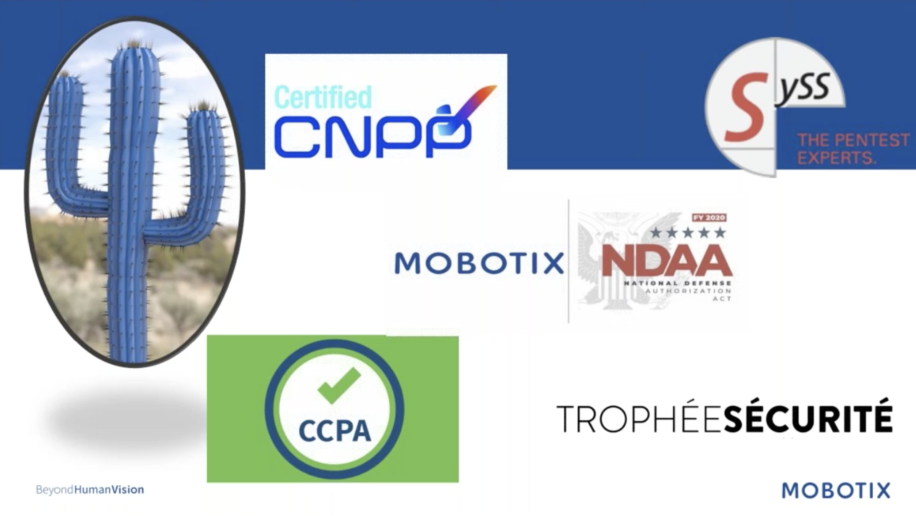
- German-engineered and manufactured, ensuring NDAA compliance and long-term support.
- Built for data privacy, with local (edge) processing, no cloud dependencies.
- Protected by SySS GmbH cybersecurity certification, confirming resistance to penetration attacks.
- Configurable for alerts, access control, and automation to trigger responses such as door locks or notifications.
- Designed for multi-purpose use: screening, surveillance, and operational analytics—all in one device.
With a 10-year average lifespan, Mobotix cameras far exceed the industry’s 5-year norm, making them a cost-effective long-term investment.
Implementation, Calibration, and Support
A thermal screening system is only as effective as its configuration and maintenance. Vulcan Security Systems offers:
- Professional installation and calibration for optimal performance.
- Remote monitoring and diagnostics, we often detect and fix issues before clients even notice them.
- Ongoing training and protocol documentation for staff compliance.
- Integration with access control or AI-powered monitoring systems for complete facility protection.
Our proactive service model ensures your system stays compliant, accurate, and fully functional without unnecessary downtime or site visits.
Partner with Vulcan Security Systems for Expert Thermal Camera Integration
Vulcan Security Systems, headquartered in Birmingham, Alabama, provides turnkey thermal and AI-powered video surveillance solutions for healthcare, industrial, and commercial clients nationwide.
We specialize in high-touch, remote-first support, keeping your systems online, secure, and compliant. Whether you need help designing a new screening workflow or upgrading your existing infrastructure, our experts can help.