Best Video Security System Options for Different Budgets and Needs
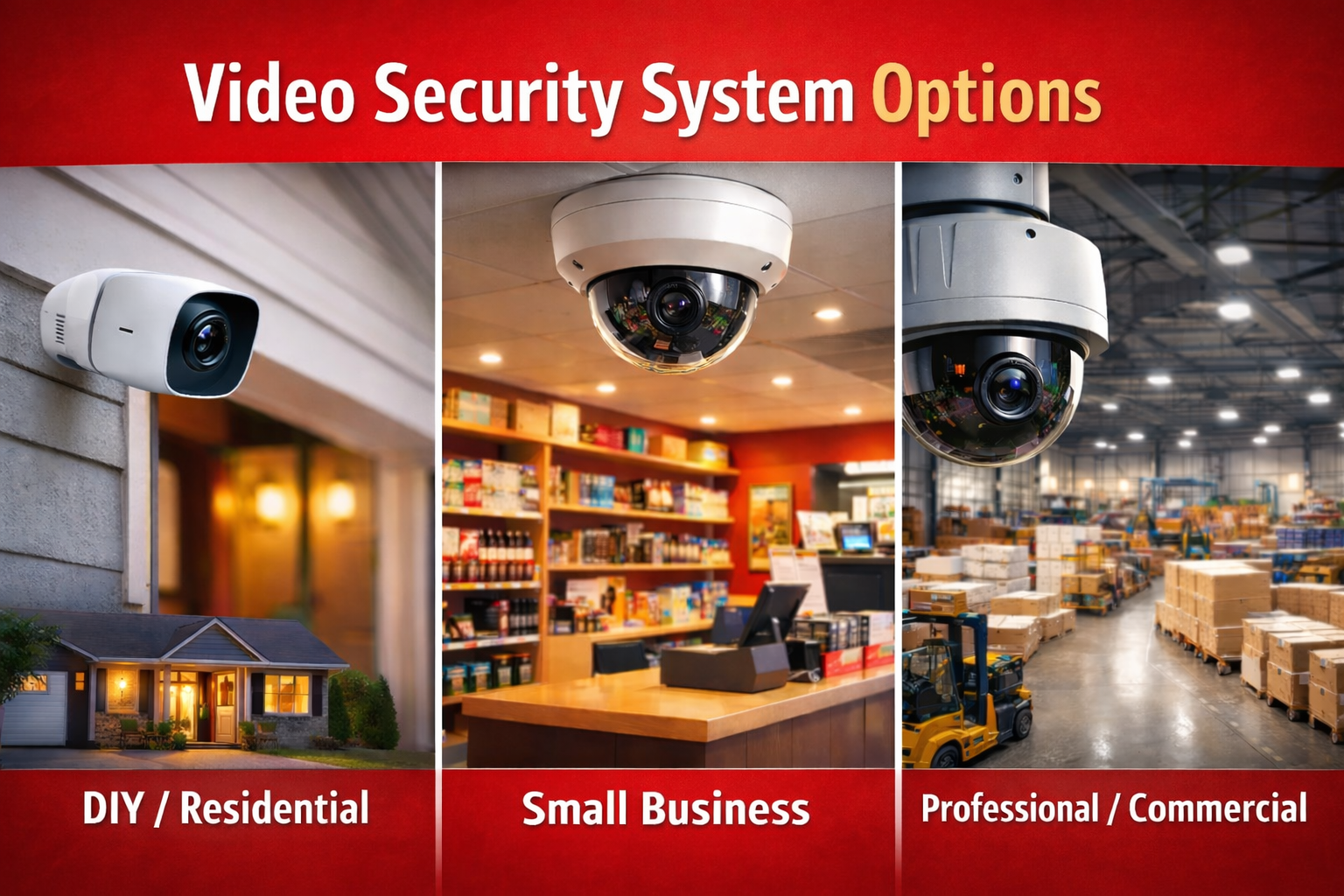
Video security systems are not one-size-fits-all. In most cases, they fall into three broad budget tiers: entry-level, mid-tier, and high-end systems. Each tier is built for a different type of user, environment, and level of risk.
After years of working with commercial and industrial video systems, and through ongoing conversations with distributors and manufacturers, one pattern keeps showing up. Buyers don’t usually make bad decisions because of brand choice. They make bad decisions because they choose the wrong tier for their needs.
This guide breaks down the most common video security system options by budget, architecture, reliability, and use case. The goal is to help you understand what you are actually paying for, what each tier is good at, where it falls short, and who it is really built for.
Table of Contents
- What determines the cost of a video security system?
- DIY / Residential Video Security Systems
- Small Business / Entry-level Commercial Video Security System Options
- Professional Commercial & Industrial Video Security Systems
- How to choose the right option for your needs
What Determines the Cost of a Video Security System?
The cost of a video security system is driven less by branding and more by how the system is designed, deployed, and supported. That also means it is difficult to give meaningful price ranges without first understanding the site and the business.
Even within the same tier, costs can vary widely. For example, a mid-tier system covering a small office may be relatively affordable, while a mid-tier system designed for a large warehouse or multi-building site can become a significant investment. It will still cost less than a high-end system built for the same footprint, but it will not be “cheap.”
That is because video security systems are highly customized to the environment they protect.
The biggest cost factors include:
- Camera hardware quality and lifespan
- How video is stored (cloud, local, or hybrid)
- Where video and analytics are processed (in the cloud or on the camera)
- Installation method (self-install versus professional)
- Network design (Wi-Fi versus wired)
- Reliability expectations and tolerance for missed events
- Ongoing service, monitoring, and support
A lower-priced system is usually cheaper because it simplifies or removes some of these elements. A higher-priced system costs more because it is designed to reduce failure points, missed footage, and downtime.
This is why meaningful pricing usually comes after an onsite assessment. The goal is not to sell a tier, but to understand how the business operates, where the risks are, and what level of performance is actually required. From there, the right system design and budget become much clearer.
DIY / Residential Video Security Systems (Lowest Budget Option)
DIY and residential video security systems are designed to be affordable, easy to install, and quick to deploy, but they trade reliability and coverage for cost.
Typical characteristics
Most DIY systems share the same basic architecture:
- Wi-Fi–based connectivity
- Cloud-only video storage
- Motion-triggered recording
- Limited onboard processing
- Self-installed or minimally installed
- Lower resolution and frame rates
These systems are built to work out of the box with minimal setup. If you can mount a camera and connect it to Wi-Fi, you can usually install one of these systems.
Who this tier is built for
DIY systems are best suited for:
- Residential use
- Small offices with very limited risk
- Single-room or short-distance coverage
- Situations where security is mostly for visibility or deterrence
They are often chosen by people who want to “check the box” on having cameras without investing heavily in infrastructure.
Where they work well
These systems can perform reasonably well when:
- The area being monitored is small and well-lit
- The camera is only expected to see a short distance
- Internet connectivity is strong and consistent
- Missing an occasional event does not carry serious consequences
Common limitations to understand
This tier has real trade-offs:
- Motion-triggered recording can miss events
- Cloud throttling can delay or skip footage
- Heavy reliance on Wi-Fi and internet uptime
- Limited forensic value after an incident
- Alerts are often inconsistent
These systems are not defective. They are simply designed for low-stakes environments. Problems arise when they are used in places that require consistent coverage, fast response, or reliable evidence.
Small Business / Entry-level Commercial Video Security System Options (Balanced Cost and Reliability)
Mid-tier small business and entry-level commercial video security systems aim to balance cost and reliability by improving hardware quality and system design without moving into full industrial-grade infrastructure.
Typical characteristics
Mid-tier systems usually include:
- Higher-quality cameras than entry-level systems
- Wired or mixed wired and wireless networks
- Cloud-based management and storage
- Improved analytics and motion detection
- Optional professional installation
- Better overall system stability
Some systems in this tier may also include limited onboard storage or buffering to help during short internet outages.
Who this tier is built for
Mid-tier systems are a good fit for:
- Small to mid-sized commercial properties
- Offices, retail spaces, and light industrial environments
- Businesses that want more reliability but still need to manage costs
- Buyers who are willing to pay more to reduce missed events
This tier appeals to organizations that have outgrown basic cameras but are not yet operating in a high-risk or mission-critical environment.
What improves at this level
Compared to DIY systems, mid-tier options typically offer:
- Better image quality and coverage
- Fewer missed motion events
- More consistent alerting
- Improved uptime and stability
- Greater scalability
Trade-offs to consider
Despite the improvements, this tier still has limits:
- Many systems still rely heavily on cloud processing
- Internet outages can reduce functionality
- Ongoing cloud fees are common
- Redundancy is limited compared to high-end systems
Mid-tier systems reduce risk, but they do not eliminate it. For many businesses, that trade-off is acceptable.
Professional Commercial & Industrial Video Security Systems (Best Performance and Reliability)
High-end professional commercial and industrial video security systems are designed for environments where reliability, uptime, and evidence quality are non-negotiable.
Typical characteristics
High-end systems are built differently from the ground up:
- Industrial-grade camera hardware
- Fully wired network infrastructure
- On-camera (edge) processing and analytics
- Local or hybrid storage with redundancy
- Event-based 24/7 recording
- Professionally designed and installed systems
In these systems, cameras do not depend on the cloud to decide what matters. They process events locally and continue recording even when the internet is down.
Who this tier is built for
High-end systems are designed for:
- Warehouses and manufacturing facilities
- Industrial and critical infrastructure sites
- Large commercial properties
- Businesses replacing or reducing physical security guards
- Environments where missed events create real financial or safety risk
These systems are not about convenience. They are about certainty.
Why architecture matters at this level
At the high end, system architecture becomes the difference-maker:
- Events are processed on the camera, not off-site
- Internet bandwidth does not limit detection accuracy
- Recording continues during internet outages
- Alerts are faster and more reliable
- Video is usable for investigations and compliance
This is where video security shifts from passive recording to active risk management.
How to Choose the Right Video Security System for Your Needs
The right video security system is the one that matches your risk level, environment, and expectations, not just your budget.
Before choosing a tier, ask yourself:
- What happens if an incident is missed?
- How critical is continuous uptime?
- How large is the area being monitored?
- Is this system for deterrence, investigation, or real-time response?
- Will this system replace or supplement human security?
Matching budget to expectations
In simple terms:
- Low budget systems provide basic visibility
- Mid-tier systems offer improved reliability and coverage
- High-end systems deliver consistent performance and operational security
Problems occur when expectations exceed what a tier is designed to deliver.
How to Decide Which Video Security System Tier Is Right for You
There is no single “best” video security system for every situation. The right option depends on how much risk your business can tolerate and what you expect the system to do when something actually happens.
DIY / Residential systems prioritize affordability and basic visibility. Mid-tier systems strike a balance between cost and reliability. High-end systems are built for environments where missed events, downtime, or poor footage create real operational or financial consequences.
If you are unsure which tier fits your needs, start with this question: What does failure look like for your business?
If missing an event is inconvenient, a lower or mid-tier option may be acceptable. If missing an event creates safety issues, liability, or downtime, higher-tier systems are usually the right fit.
Choosing the right video security system upfront helps avoid missed incidents, wasted spending, and expensive upgrades later. Understanding the differences between system tiers is the first step toward making a confident, informed decision.