What Makes a Security Camera System Impossible to Hack
No security camera system is truly impossible to hack in an absolute sense, but the right architecture gets about as close as you can. Decentralized processing, no required cloud dependency, strong encryption, and regular firmware updates remove most of the openings an attacker would look for. Most hacked camera systems were not victims of a sophisticated attack. They were running default passwords and outdated software on a flat, unsegmented network.
We design and install AI powered video security systems across Alabama, and security architecture is something we get asked about regularly.
This guide breaks down the specific design choices that make a system genuinely hard to compromise, and what you and your installer each control.
Why Most Camera Systems Get Hacked
We covered the common vulnerabilities in detail in why your security cameras could be a cybersecurity risk. The short version: default credentials, outdated firmware, exposed remote access, and no network segmentation account for the overwhelming majority of real world camera compromises. Almost every high profile camera hacking story traces back to one of those four issues, not to a sophisticated zero day exploit.
That matters because it means the most effective defenses are not exotic or expensive. They are disciplined architecture decisions made at the time of installation and maintained consistently afterward.
What a Hard to Hack System Actually Looks Like
Decentralized Architecture
Many camera systems route every feed through a single central network video recorder. Compromise that one device and an attacker has access to the entire system at once. A decentralized design spreads processing across the cameras themselves, so there is no single point of failure that brings everything down. An attacker who compromises one camera does not automatically gain access to the rest of the system or the network behind it.
This is one of the architectural reasons we use IP video cameras built around on-camera processing rather than traditional centralized recorder setups.
No Forced Cloud Dependency
Systems that require routing all footage through a manufacturer’s cloud add an attack surface that exists entirely outside your control. If that cloud platform is breached or has a vulnerability, your footage and credentials are exposed regardless of how well you secured your local network. A system that can operate fully without that dependency reduces your exposure to third party security failures.
Strong Encryption, Not Just a Password Screen
Encrypted video streams and encrypted storage matter more than a login screen alone. A password protects access to the system. Encryption protects what is actually inside if someone gets past that layer. Video data in transit should be encrypted, and stored footage should not be accessible in plain text to anyone who reaches the right folder on the network.
Open Standards Instead of Security Through Obscurity
Some closed, proprietary platforms rely on the assumption that attackers will not bother learning how a niche system works. That is a weak defense the moment a vulnerability is discovered, because there is no broad community patching it. Open, well documented standards like ONVIF are reviewed by a wider security community, which tends to produce faster, more thorough patching when issues are found.
Network Segmentation
Camera systems should run on an isolated network segment, completely separate from point of sale terminals, file servers, and employee computers. Segmentation is not a camera feature. It is a network configuration decision made at installation. Without it, a compromised camera becomes a pivot point into the rest of your business infrastructure. This is one of the most important steps a qualified installer can take, and one of the most commonly skipped.
Regular Firmware Updates
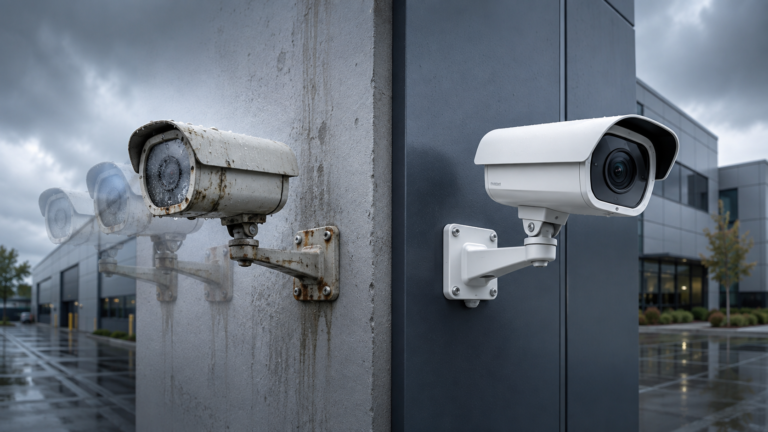
A system is only as secure as its last patch. Manufacturers that release security updates consistently, and providers who actually apply them on a defined schedule, close known gaps before they get exploited. A proactive maintenance plan should include firmware management as a standard deliverable. Leaving updates to chance is how systems end up running known vulnerabilities for months or years.
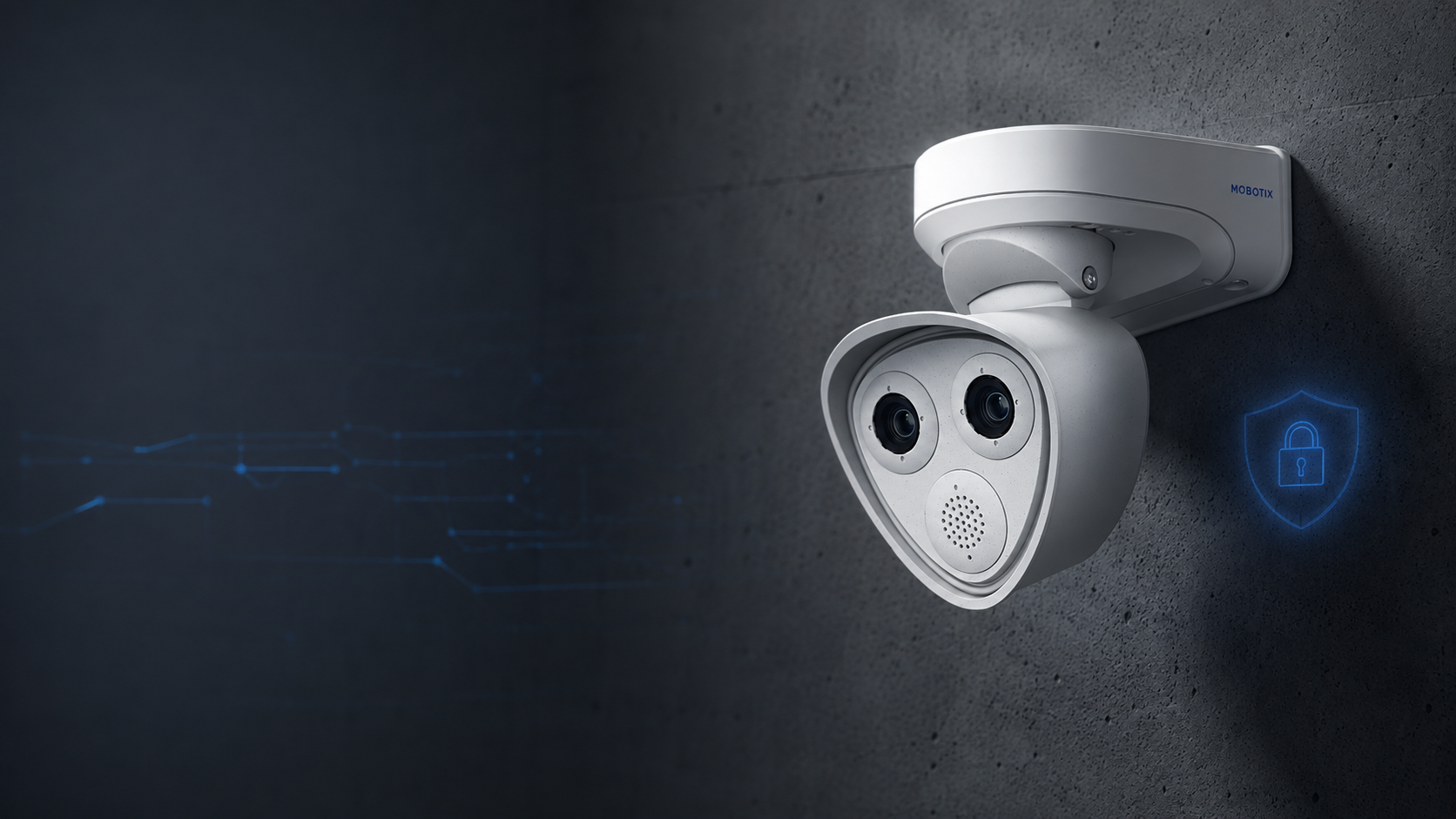
We use Mobotix specifically because of how the platform is engineered around these principles, covered in what Mobotix is and why we use it. Decentralized processing, no required cloud dependency, and a consistent firmware support track record are core to why we spec that hardware.
What You Control Versus What the Manufacturer Controls
Even the best engineered system can be undermined by a poor installation. Network segmentation, strong unique passwords, and limited, well managed remote access are choices made at install time and enforced afterward, not features baked into the hardware automatically. The camera brand and the installer both matter. A well engineered camera installed carelessly on a flat network with default credentials is not a secure system.
Remote support and ongoing access management are part of maintaining that security posture over time, not just a one time configuration at install.
Quick Checklist for a Hard to Hack Setup
- Cameras run on a segmented network, isolated from other business systems.
- No default passwords remain anywhere in the system, including on the recorder and router.
- Firmware is current and managed on a defined update schedule.
- The system does not depend entirely on one central device or one manufacturer’s cloud platform.
- Remote access is locked down to specific users with unique credentials, not left open by default.
- Video streams and stored footage are encrypted.
Protect Your Business & Technology
Nothing connected to a network is completely immune from attack. A system built on decentralized architecture, strong encryption, open standards, network segmentation, and consistent firmware updates comes about as close as the technology allows. More importantly, it is hardened against the categories of attack that account for nearly every real world camera compromise, not just the theoretical ones.
If you want a real assessment of how your current system would hold up, Vulcan can take a look and tell you honestly where the gaps are.
Frequently Asked Questions
Is any security camera system truly unhackable?
No system connected to a network is completely immune. The realistic goal is making a system difficult enough to compromise that it is not a practical target, which the right architecture and maintenance practices accomplish effectively against the attacks that actually happen in the real world.
Does a more expensive camera system mean better cybersecurity?
Not automatically. Price does not guarantee good architecture. What matters is whether the system uses encryption, decentralized processing, open standards, and receives consistent firmware support. A cheaper camera with the right design can be more secure than an expensive one built on a weak platform.
Can a properly installed system still get hacked?
It is possible, but far less likely. The overwhelming majority of successful attacks target known, avoidable weaknesses like default passwords, outdated firmware, and unsegmented networks, not sophisticated new exploits. A well installed and maintained system removes most of the realistic risk.
How often should camera firmware be updated?
Security patches should be applied as soon as a manufacturer releases them. A managed maintenance plan should handle this automatically and on a defined schedule rather than leaving it to chance or waiting until a problem is discovered.
Does network segmentation actually make a difference?
It makes a significant difference. Without segmentation, a compromised camera is a door into everything else on the same network, including point of sale systems, employee computers, and file servers. With segmentation, a compromised camera stays isolated, limiting what an attacker can reach from that entry point.