Why Fewer Cameras Can Mean Better Coverage
Fewer cameras can mean better coverage when each camera is placed correctly and built to see more ground at once. A property with 20 narrow angle cameras can still have blind spots. A property with 8 well placed, wide field cameras often does not. More cameras is not the same as more coverage, and in many cases, a larger camera count actively creates new problems rather than solving existing ones.
We design and install AI powered video security systems across Alabama, and camera count is one of the most common things new clients get wrong before we even start.
This guide explains why a smarter layout beats a bigger one and how to tell the difference on your own property.
Why More Cameras Does Not Mean Better Coverage
Adding cameras feels like the safe choice. In practice, it often creates new problems while leaving the original gaps in place.
- Overlapping blind spots. Narrow field cameras placed without a real coverage plan still leave gaps between their angles. You end up with redundant views of certain areas and zero coverage of others.
- More points of failure. Every extra camera is another device that can lose connection, go offline, or need maintenance. A system with 30 cameras has 30 opportunities for something to be down when you need it.
- Harder to monitor and review. More feeds means more footage to watch during live monitoring and more time spent searching during after-the-fact investigation. A crowded system can actually slow down your response when an incident happens.
- Higher long term cost. Each additional camera adds installation labor, cabling, storage capacity, and ongoing maintenance cost, whether or not it adds meaningful coverage. That cost compounds over the life of the system.
We cover other common planning mistakes in key things businesses overlook in video security systems.
What Actually Drives Good Coverage
Camera Placement Matters More Than Camera Count
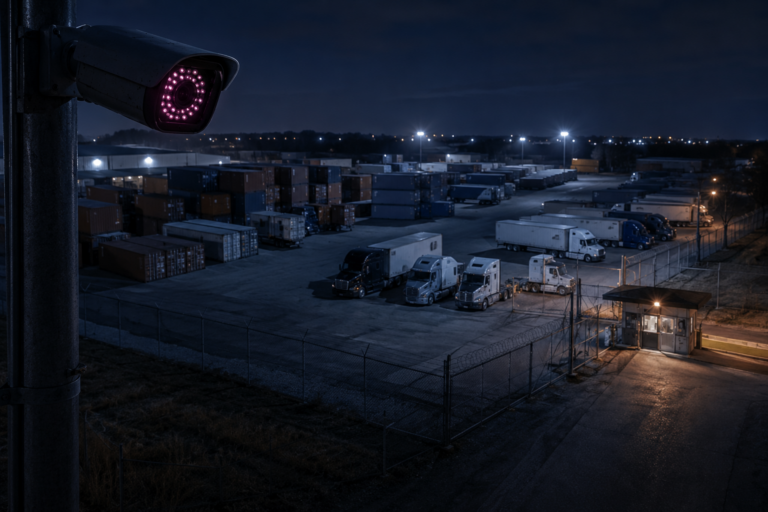
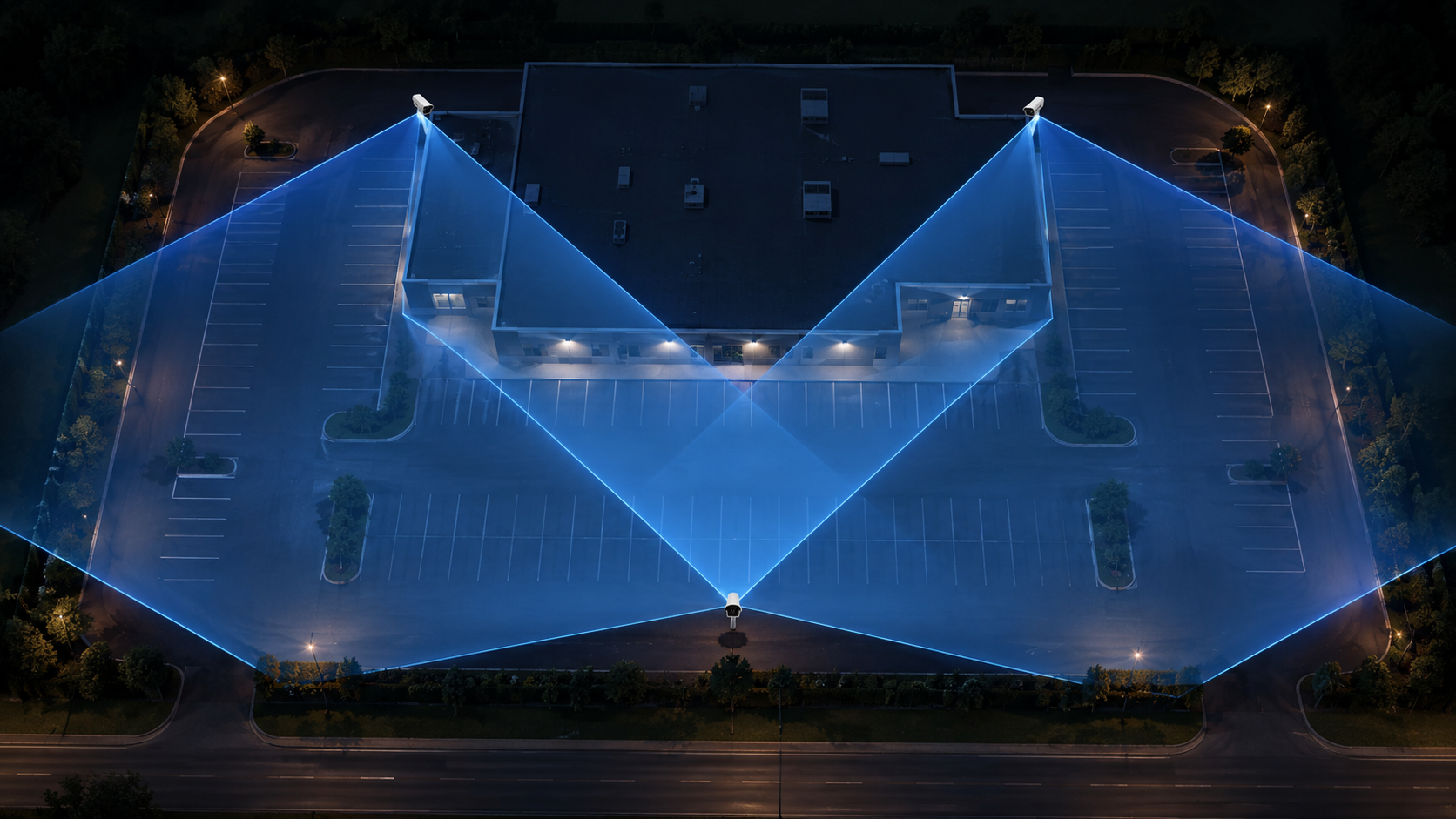
A single camera positioned at the right height, angle, and distance can cover an entrance, a parking area, or a hallway better than three cameras placed without a coverage plan. Coverage is a function of line of sight and field of view, not hardware quantity. The best camera in the wrong location is still a gap in your coverage map.
A proper site scoping and installation process identifies the natural choke points on your property, like gates, loading docks, main entries, and transition zones, where one well placed camera covers what several poorly placed ones would attempt to replicate.
Wide Field and Hemispheric Lenses Cover More Ground Per Camera
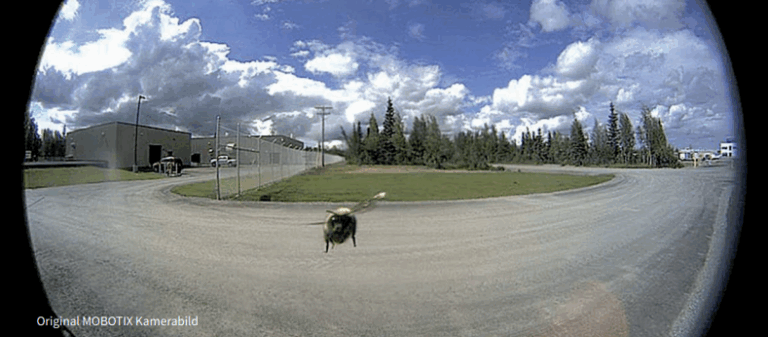
Some cameras are engineered to see 180 or even 360 degrees in a single image. A single hemispheric camera can replace several standard fixed cameras pointed in different directions while delivering a continuous, uninterrupted view of the space. We use Mobotix cameras partly because of this engineering approach, which we explain in what Mobotix is and why we use it. The lens design alone changes the math on how many cameras a property actually needs.
AI Analytics Make Each Camera Do More
A camera paired with AI detection does not just record passively. It classifies activity, distinguishes relevant events from background movement, and flags what actually matters. This reduces the need for a redundant second camera covering the same angle just to catch what the first one might miss, because the first one is doing a better job to begin with.
High Definition Imaging Captures More Detail Per Frame
A single HD camera capturing a wide area in high resolution often provides more actionable footage than multiple lower resolution cameras covering the same zone. When you need to identify a face or read a plate number from footage, resolution matters more than camera count.
How a Real Site Assessment Changes the Math
A proper site walk identifies choke points, dead zones, and coverage requirements before a single camera is specified. The goal of that process is not to recommend the most hardware. It is to cover the property correctly, efficiently, and in a way that holds up under real conditions.
We walk through what that looks like in practice in how Vulcan’s free on site assessment works. Most clients find that the right camera count is lower than what they expected, and the coverage is better, because every camera on the plan is earning its position.
When You Actually Do Need More Cameras
Fewer is not always better. Large properties, multiple buildings, sprawling parking areas, and sites with numerous entry and exit points still require enough cameras to physically cover that ground. The point is not to minimize camera count as an end in itself. It is to make sure every camera on the property has a defined reason for being there and is covering ground that would otherwise be exposed.
The Bottom Line: Camera Quantity vs Quality
Coverage comes from placement, field of view, and intelligent detection, not from the number on the proposal. A well-planned system with fewer cameras often outperforms a crowded one, costs less to install and maintain over time, and produces footage that is actually easier to review when you need it.
If you want to know whether your current camera count actually matches your coverage needs, Vulcan can walk the property and show you what is covered, what is not, and what it would take to close the gaps.
Frequently Asked Questions
Is it true that fewer cameras can mean better coverage?
Yes, when each camera is placed well and has a wide enough field of view to cover its assigned zone without gaps. Coverage depends on placement and lens design, not just the total number of cameras installed.
How do I know if my property has too many cameras?
If several cameras point at overlapping areas while other zones go uncovered, that usually signals a planning problem rather than a real coverage need. A site walk with a coverage map will make this visible quickly.
Do hemispheric cameras really replace multiple standard cameras?
Often, yes. A single 180 or 360 degree camera can cover what would otherwise take two or three fixed angle cameras depending on the layout, and without the seam gaps that multiple fixed cameras leave between their fields of view.
Will reducing my camera count save money?
It usually does, as long as coverage is not sacrificed in the process. Fewer cameras means less cabling, less storage, lower installation labor, and lower ongoing maintenance cost across the life of the system.
Does AI detection make a smaller camera system more effective?
Significantly. AI analytics improve what each camera catches and reduces missed events, which means fewer cameras need to cover the same area redundantly. It changes what each individual camera can do, which changes how many you actually need.