What is AI-Powered Video Surveillance?
Artificial Intelligence (AI) is changing the way businesses think about security. AI-powered video surveillance goes beyond simply recording footage. These systems actively detect, analyze, and respond to events in real time, reducing reliance on human guards and improving overall safety. For industrial and commercial businesses, this means security that works while you sleep.
In this article, we’ll break down what AI video surveillance is, how it works, the features it offers, and why it matters for companies that want reliable, proactive security.
Table of Contents
- What is AI-Powered Video Surveillance?
- How Does AI in Video Surveillance Work?
- What Features Does AI-Powered Surveillance Include?
- How is AI Surveillance Different from Traditional Video?
- How Does AI Surveillance Work with 24/7 Monitoring?
- Who Benefits Most from AI-Powered Video Surveillance?
- What Are the Costs and Considerations?
- AI with Eyes That See What Others Miss
- Frequently Asked Questions About AI-Powered Surveillance
What is AI-Powered Video Surveillance?
AI-powered video surveillance uses advanced software to monitor spaces in real time. Unlike traditional cameras that simply record footage for later review, AI systems are trained to recognize patterns, identify unusual activity, and trigger a response immediately.
For example, imagine a zoo where visitors must stay outside the animal enclosure. A traditional camera would simply record if someone crossed into that space. An AI-enabled system, however, would recognize the breach and trigger an immediate action, such as sounding a siren or alerting security staff.
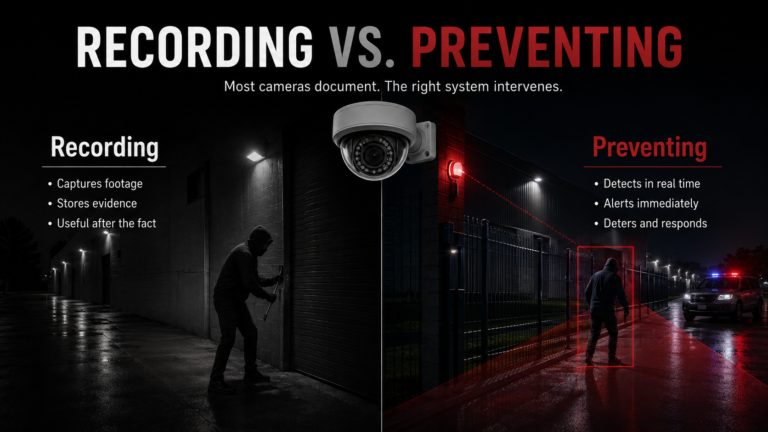
In simple terms, traditional surveillance tells you what happened. AI-powered surveillance tells you what’s happening.
How Does AI in Video Surveillance Work?
AI surveillance systems process video data at three possible levels:
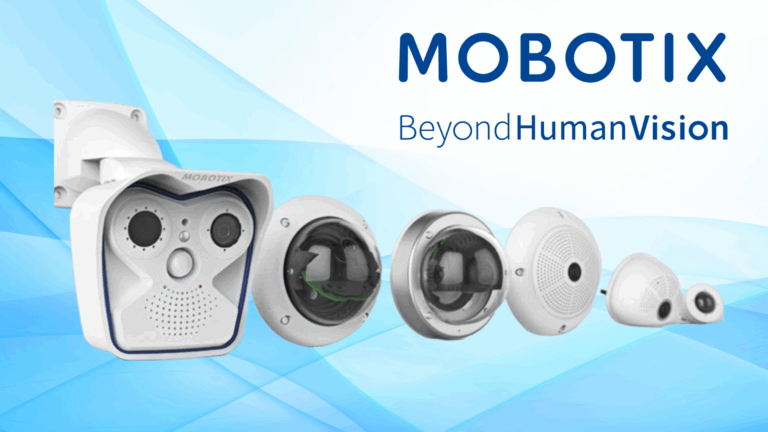
- At the edge (in the camera itself): Each camera contains a processor capable of analyzing footage in real time. Vulcan’s preferred Mobotix cameras are designed this way, giving them a performance advantage.
- At the recorder (DVR/NVR): Some systems send footage to a central device where it’s analyzed after capture.
- At the monitoring station: Alerts from cameras are filtered and confirmed by AI before being reviewed by human operators.
At its core, AI video surveillance relies on trained models. These models “learn” what normal behavior looks like in a given environment, such as foot traffic at a gas station or baggage flow at an airport and flag activity that falls outside of that pattern. This makes it possible to detect loitering, unattended items, or other unusual behaviors automatically.
What Features Does AI-Powered Surveillance Include?
AI video surveillance can be tailored to a wide range of security and safety needs. Features fall into two categories: built-in (out-of-the-box) and advanced (customized).
Common Out-of-the-Box Features
- Heat mapping for retail: Tracks where customers spend the most time.
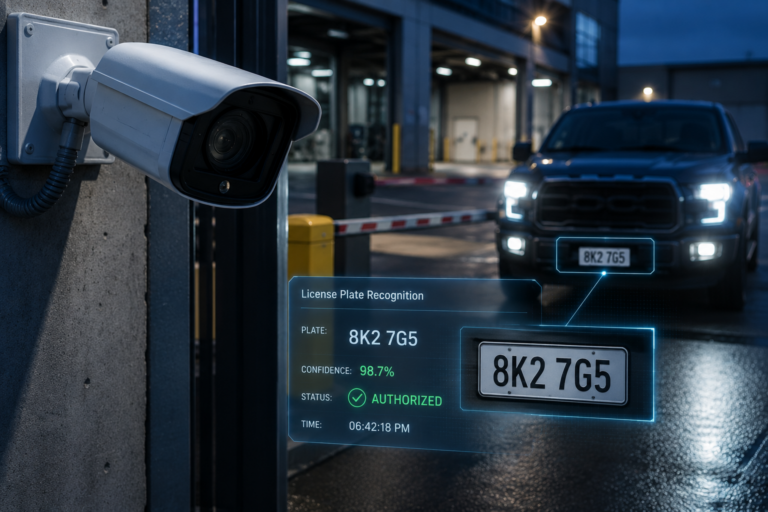
- License plate recognition: Automatically logs vehicle entry and exit.
- Directional traffic monitoring: Detects people or vehicles moving in the wrong direction.
- People counting: Monitors occupancy and foot traffic flow.
Common Advanced or Custom Features
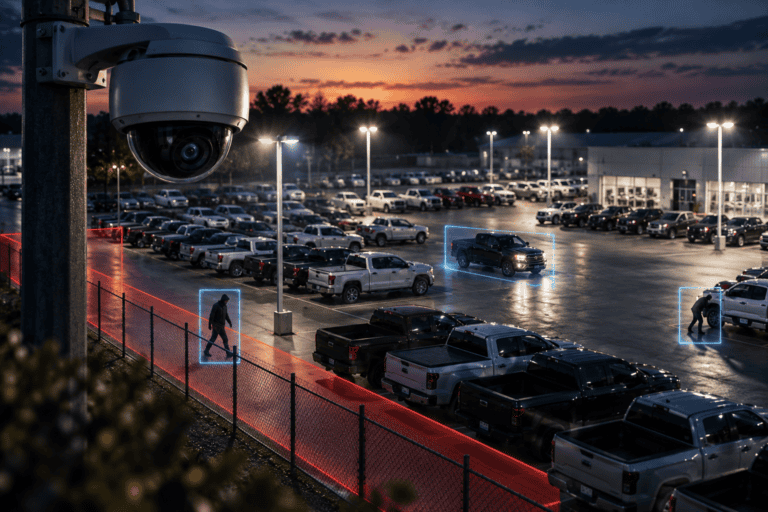
- Perimeter intrusion detection: Alerts if someone enters restricted areas, such as construction zones or car lots.
- PPE compliance monitoring: Ensures workers are wearing required gear like hard hats and safety vests.
- Fall detection: Identifies when someone falls in hospitals, nursing homes, or workplaces.
- Fire detection with thermal cameras: Triggers alerts when heat signatures exceed safe levels, giving responders a head start.
- Logistics scanning: Reads container numbers automatically at ports for faster inventory control.
- Loitering detection: Useful at gas stations or retail lots where people lingering too long may signal trouble.
- Unattended object alerts: At airports or public spaces, the system can flag bags or packages left behind beyond a set time.
Action Capabilities
Once an event is detected, AI surveillance can trigger different responses:
- Send alerts via text, email, or phone call.
- Sound alarms or sirens.
- Notify a monitoring station that can dispatch police or deliver a live verbal warning.
How is AI Surveillance Different from Traditional Video?
The difference is in timing and response. Traditional surveillance is passive, it records events so they can be reviewed after something has already happened. Businesses often discover theft, vandalism, or safety issues only after reviewing footage.
AI-powered systems are proactive. They recognize and react in the moment. If someone enters a car lot at night and begins tampering with vehicles, an AI-enabled system can immediately notify a monitoring station, which can then issue a warning or call law enforcement.
This shift saves businesses time, reduces loss, and prevents incidents before they escalate.
How Does AI Surveillance Work with 24/7 Monitoring?
AI and 24/7 monitoring work hand in hand. Here’s how the workflow typically looks:
- A camera detects unusual activity and processes it with AI.
- The monitoring station receives the alert and confirms if it’s real.
- If verified, operators can take action, such as speaking through the camera, contacting the business owner, or dispatching police.
This filtering process is essential. Without it, clients would receive constant alerts for every minor movement. Instead, AI and monitoring stations combine to reduce false alarms while ensuring true threats are addressed quickly.
Who Benefits Most from AI-Powered Video Surveillance?
AI video surveillance is especially valuable for industries where safety, security, and efficiency are top priorities:
- Industrial and manufacturing: Detects safety hazards, fire detection, PPE compliance, and theft prevention.
- Commercial properties: Reduce trespassing, loitering, and vandalism.
- Healthcare: Provides fall detection and patient safety monitoring.
- Logistics and shipping: Tracks and verifies shipments through automated scanning.
In many organizations, the same person manages both safety and security. AI-powered surveillance supports both roles by minimizing accidents and preventing intrusions, all with one system.
What Are the Costs and Considerations?
Costs vary depending on whether the feature is built into the camera or requires additional software:
- Included features: Many modern cameras, such as Mobotix, come with standard AI tools like heat mapping or license plate recognition.
- Add-on features: Specialized applications, such as PPE detection, typically require additional licensing fees, often billed per camera per year.
The trade-off comes down to reliability versus price. Lower-cost options may seem attractive upfront, but they can create gaps in coverage, shorter equipment life, and more false alarms. Higher-quality systems cost more initially, but they last longer and reduce the risks and expenses tied to downtime, incidents, or constant service calls.
Configuration is handled by integrators, not the client. While some AI systems allow end-user adjustments, these tools are not yet fully plug-and-play. Proper setup ensures accuracy and reduces false alarms.
AI with Eyes That See What Others Miss
AI-powered video surveillance transforms video from a passive tool into an active security partner. It detects unusual events, analyzes them in real time, and triggers immediate responses that protect people, property, and operations.
Key takeaways:
- Traditional cameras record. AI cameras respond.
- Features range from retail heat mapping to construction site safety monitoring.
- AI works best when combined with 24/7 monitoring to filter false alarms and take immediate action.
- While many features come standard, advanced applications may require additional software.
For businesses facing security and safety challenges, AI surveillance offers a reliable, always-on solution that reduces costs, minimizes risks, and ensures peace of mind. Vulcan specializes in building these systems for companies that want to move beyond outdated guard-based security into proactive, AI-driven protection.
FAQs About AI-Powered Surveillance
Do I need special cameras for AI surveillance?
Most AI features require modern IP cameras with built-in processing power. Older cameras may not support advanced functions.
Will I be flooded with alerts?
No. AI systems work with 24/7 monitoring to filter false alarms. Only verified events reach the business owner or operator.
Is AI surveillance replacing security guards?
Not always, but in many cases, it can reduce or eliminate the need for on-site guards, cutting costs and liability while improving coverage.
What industries benefit most?
Industrial sites, commercial properties, healthcare facilities, and logistics hubs gain the most value from AI surveillance.
Are advanced AI features expensive?
Some features come standard with quality cameras. More specialized applications may require additional software licensing, typically billed per camera per year.
Can businesses customize AI surveillance?
Yes. AI can be tailored for specific needs, from PPE compliance on job sites to unattended object detection in airports.