How Video Security Monitoring Protects Employees After Closing Time
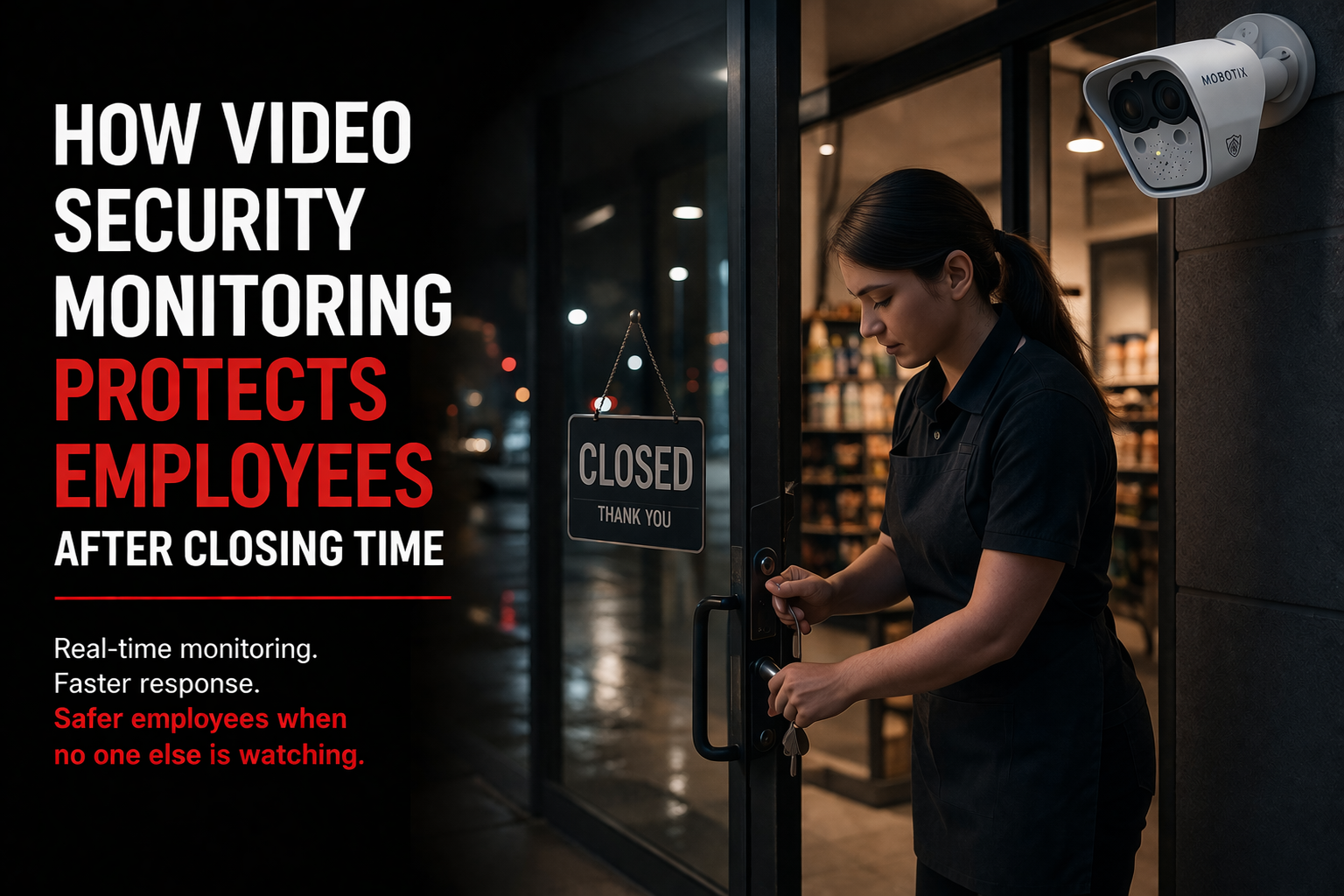
Employee safety does not end when the doors lock. For many businesses, the most dangerous moments happen after closing, when staff are leaving late at night, handling cash, or securing the building with no customers around. Video security monitoring helps protect employees during these vulnerable moments by providing real time visibility, verification, and response when no one else is watching.
At Vulcan Security Systems, we work with businesses that face after hours risk on a regular basis.
In this article, we explain how video security monitoring protects employees after closing time, what it realistically can and cannot do, and when it makes sense to use it.
Why Employees Are Most Vulnerable After Closing
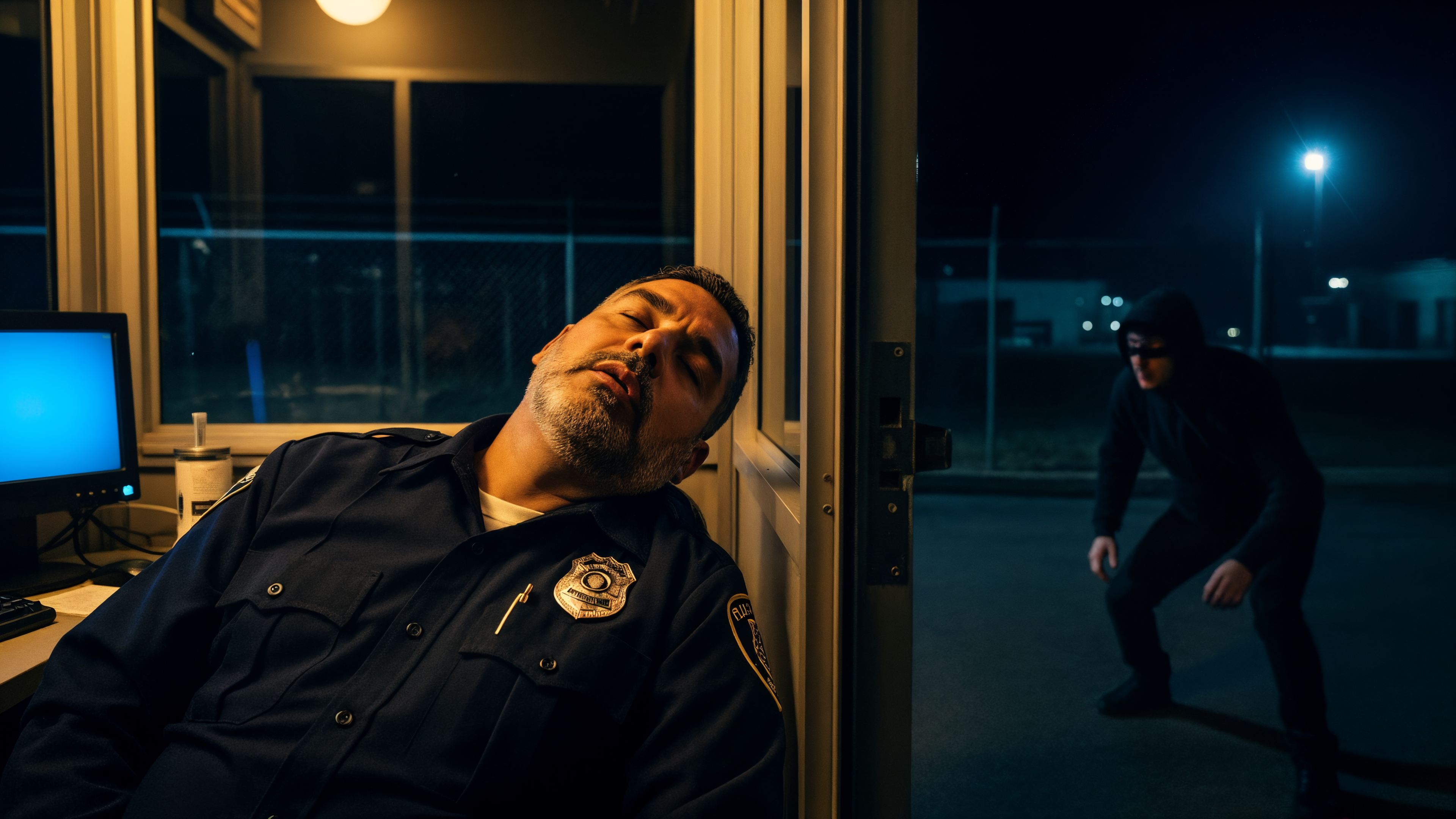
After closing time, businesses enter a different risk category. Staff levels are low, lighting is often reduced, and routines become predictable. Employees may be counting cash, locking doors, or walking to their vehicles alone.
These conditions create opportunity. Criminals understand that after hours activity is limited and that employees may be isolated. This is especially true for retail, restaurants, convenience stores, and small businesses where managers often close alone or with minimal help.
Employee safety risks increase not because staff are careless, but because the environment changes.
Common After Hours Threats to Employees
Businesses often focus on burglary and vandalism, but employee safety risks after hours are more personal and immediate.
Common scenarios include:
- Employees being confronted while locking up
- Individuals forcing staff back inside to access safes
- Threats or intimidation during late night exits
- Suspicious loitering near entrances or back doors
- Escalating situations that begin outside the building
These incidents move quickly and often happen before traditional alarms are triggered.
Why Cameras Alone Are Not Enough
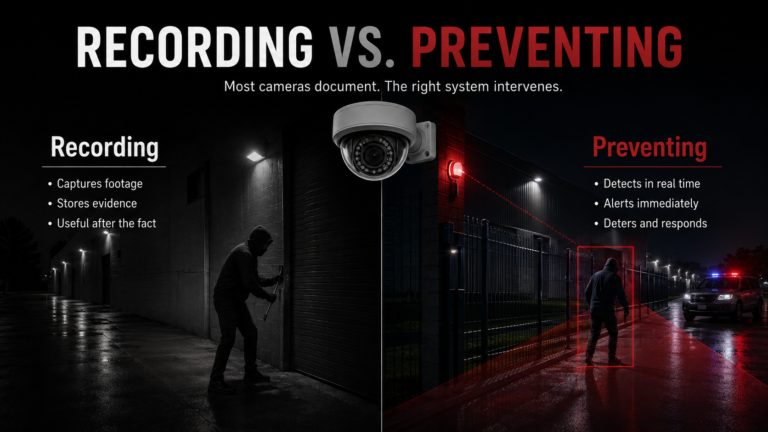
Many businesses already have cameras, but most systems are passive. They record footage without anyone actively watching.
The limitation is simple. Cameras that are not monitored do not change outcomes in real time. They may help explain what happened later, but they do not help employees in the moment when decisions and response matter most.
Motion alerts also fall short. After hours environments produce constant false triggers from lighting changes, weather, or passing vehicles. Over time, alerts are ignored or disabled altogether.
Protection requires verification, not just detection.
How Video Security Monitoring Actually Works
Video security monitoring adds a human layer to camera systems.
When AI detects activity such as a person approaching an entrance or following an employee after hours, trained monitoring professionals visually verify what is happening. This allows for informed action instead of assumptions.
Depending on the situation, responses may include:
- Observing and documenting the event
- Issuing live audio warnings
- Contacting law enforcement with verified information
- Escalating situations based on real time behavior
The goal is not constant intervention. It is clarity and readiness when something does not look right.
Preventing Forced Re Entry and Late Night Robberies
One of the most serious after hours risks is forced re entry. This occurs when an employee is confronted while leaving and forced back inside to open a safe or access cash.
These incidents are difficult to prevent with exterior cameras alone. The risk often moves from outside to inside within seconds.
Video monitoring helps by:
- Detecting suspicious activity before employees exit
- Monitoring entry points during closing procedures
- Providing real time verification if someone is forced back inside
- Ensuring faster and more accurate response during escalation
While no system can eliminate all risk, early awareness can make a meaningful difference in outcomes.
Balancing Employee Safety and Privacy
Employee safety solutions must be implemented responsibly. Video monitoring is not about watching employees constantly or invading privacy.
Effective systems are designed with clear boundaries:
- Monitoring focuses on after hours and high risk periods
- Cameras are positioned for security, not productivity tracking
- Policies are transparent and communicated to staff
- Footage is accessed only when needed
When implemented correctly, video monitoring protects employees without creating a culture of surveillance.
When Video Monitoring Makes Sense
Video security monitoring is most effective when:
- Employees work late or close alone
- Cash handling occurs after hours
- The business has predictable closing routines
- There is limited overnight activity
- Employee safety is a documented concern
It may not be the right solution for every business. Environments with constant after hours traffic or shared public access require different approaches.
The key is matching the solution to the risk.
Protecting Employees When It Matters Most
Protecting employees after closing time requires more than cameras on the wall. It requires awareness, verification, and the ability to respond when something feels off.
Video security monitoring does not replace good policies, training, or lighting. It supports them by adding visibility during the moments when employees are most vulnerable.
For businesses that take employee safety seriously, understanding how monitoring works and when it adds value is the first step toward reducing risk after hours.