How AI Cameras Detect PPE Violations in Real Time
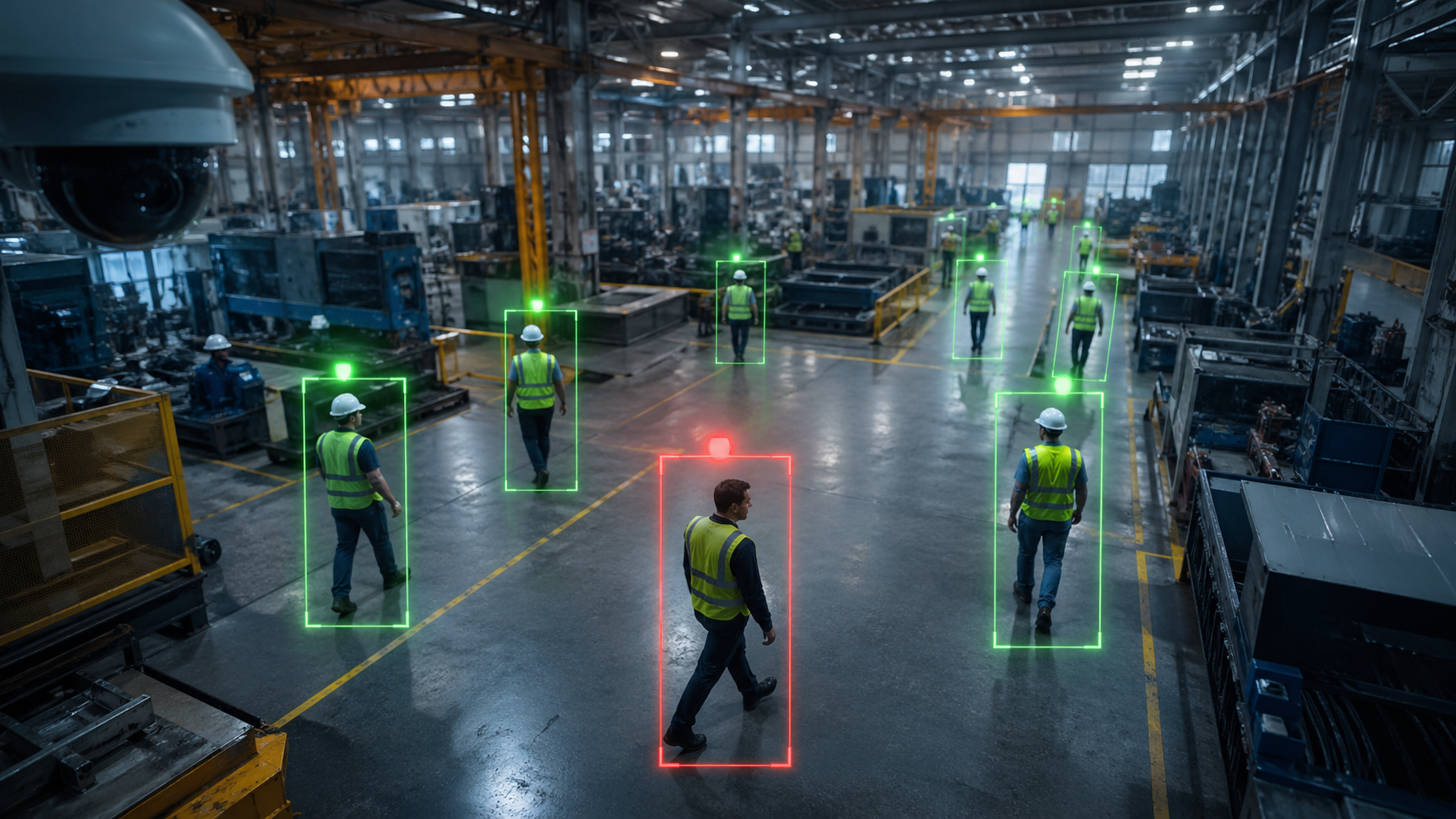
AI cameras detect PPE violations in real time by analyzing video frame by frame, using computer vision models trained to recognize specific safety equipment. When a worker is missing a hard hat, safety glasses, or gloves, the system flags it within seconds and triggers an alert.
Most violations go unnoticed. Supervisors cannot watch every corner of a facility all day, and workers know it. The hard hat comes off in the warm section of the plant. The gloves get set aside for a quick task that turns into twenty minutes. By the time someone notices, the exposure has already happened.
At Vulcan Security Systems, we design and install AI-powered IP video systems for industrial and commercial environments. We sell these systems, so we have an interest in their success. We also want buyers to understand exactly what the technology can and cannot do before they commit.
In this guide, we cover how AI PPE detection works, what equipment it can reliably identify, how facilities are using it today, and the limitations you need to understand going in.
Table of Contents
- How the Detection Process Actually Works
- What PPE Items AI Cameras Can Detect
- Where AI PPE Monitoring Is Being Used
- What Happens When a Violation Is Detected
- Limitations to Know Before You Invest
- Is It Worth It for Your Facility?
- Frequently Asked Questions
How the Detection Process Actually Works
AI PPE detection is built on computer vision, the same core technology that powers facial recognition, license plate readers, and object detection in self-driving vehicles. Applied to workplace safety, the process works in three stages:
- The camera continuously captures video of the work area
- The AI analyzes each frame to identify human figures within the scene
- Once a person is detected, the model checks specific regions of the body — head, hands, torso, eyes — for required equipment, and generates an alert if something is missing
The models are trained on thousands of labeled images covering diverse workers, lighting conditions, angles, and environments. Real-world accuracy depends heavily on how representative that training data is for your specific facility. See how practical AI video analytics are already being applied in industrial settings.
What PPE Items AI Cameras Can Detect
Not all PPE is equally easy to detect. Here is how the most common items perform in practice:
- Hard hats: Highly reliable. The shape and size are distinct, and the system can often differentiate between hard hats and bump caps.
- High-visibility vests: Among the easiest to detect due to their bright color signature. Accuracy remains high across distances and angles.
- Safety glasses and goggles: Accurate in good lighting at moderate distances. Performance drops when workers are facing away from the camera or standing far from it.
- Gloves: Detectable but more dependent on camera placement. Works best when hands are clearly visible and within reasonable distance.
- Ear protection: Possible but less reliable due to the small size of the equipment.
- Safety footwear: Limited by camera angle. Most industrial setups do not have clear sightlines to the foot area.
Where AI PPE Monitoring Is Being Used
This technology is not theoretical. It is already running in production environments across several industries.
- Construction sites: Large job sites with multiple zones are difficult to supervise consistently. AI cameras positioned at key areas monitor compliance without requiring additional personnel on the ground.
- Manufacturing plants: Workers rotate between tasks and zones throughout a shift. AI monitoring provides full-floor coverage that manual supervision cannot match.
- Oil and gas facilities: High-consequence environments with strict PPE requirements. Automated detection adds a continuous layer on top of periodic supervisor checks.
- Warehouses and distribution centers: Forklift zones and loading areas often require zone-specific PPE. AI flags workers entering hazardous areas without the right equipment.
- Chemical processing plants: Consistent use of respiratory protection, gloves, and face shields is critical. AI cameras provide documentation and real-time alerts when compliance slips.
What Happens When a Violation Is Detected
The response depends on how the system is configured. Common options include:
- On-site audio warnings: A speaker near the camera issues an immediate live message to the worker.
- Supervisor alerts: A push notification or dashboard alert goes to a safety officer or manager in real time.
- Event logging: The violation is recorded with a timestamp and video clip, creating a documented trail for audits and incident reviews.
- Zone access integration: In some setups, workers without required PPE are denied entry to hazard zones entirely.
The combination of deterrence, notification, and documentation is what separates AI detection from passive recording. Learn more about how AI surveillance improves workplace safety beyond just PPE compliance.
Limitations to Know Before You Invest
AI PPE detection performs well under the right conditions. Here is what can undermine it:
- Low light: Dark environments reduce detection reliability. Infrared-capable cameras help, but very dim areas remain a challenge.
- Poor camera placement: Accuracy drops when workers are too far from the camera, partially obstructed, or at sharp angles. System design matters as much as the AI itself.
- Training data mismatch: A model trained on outdoor construction sites may not perform well inside a dim chemical facility without additional calibration.
- Detection is not enforcement: The system identifies violations and triggers responses. It cannot physically stop a worker from entering a hazard zone without the right equipment. The response layer has to be designed to create actual consequences.
Is It Worth It for Your Facility?
AI PPE detection makes the most sense where compliance gaps are documented, where scale makes continuous human observation impractical, or where audit trails and regulatory documentation are a real requirement.
It works best as a reinforcing layer on top of an existing safety culture, not a substitute for one. For facilities already investing in IP video infrastructure, adding PPE detection is often a cost-effective upgrade rather than a standalone purchase.
If you are evaluating AI video systems for workplace safety compliance, Vulcan offers free on-site assessments for commercial and industrial facilities. Reach out to schedule one.
Frequently Asked Questions
Can AI cameras detect PPE violations from any distance?
Accuracy is strongest within 20 to 30 feet of the camera. Longer distances are possible but less reliable, particularly for smaller items like gloves and safety glasses.
Does an AI PPE system need a live monitoring center to be useful?
Not necessarily. Automated alerts and event logging provide value without continuous human oversight. Some facilities add monitored response services on top for faster action.
How quickly does the system flag a violation?
Most AI video analytics platforms detect and flag PPE violations within one to three seconds of the event appearing on camera.
What if workers are wearing hats or hoods that partially cover required equipment?
Partial obstruction can reduce accuracy. This is why testing the system in your specific environment before full deployment is always recommended.