The Real Cost of Downtime: What Happens When a Security Camera Fails
When a security camera fails, most businesses focus on the repair cost. That is rarely the biggest concern. The real cost of security camera downtime comes from what happens during the outage itself. A theft goes undocumented. An incident has no footage for review. A liability claim cannot be resolved without evidence. Camera failure creates exposure that is far more expensive than any service call.
Failures happen more often than most system owners realize. Hardware degrades over time. Firmware goes unpatched and a vulnerability is exploited. A cable connection corrodes. A power surge takes out a unit. In many cases, the camera sits offline for days or weeks before anyone notices. There is no mechanism to surface the failure if no one is actively watching.
Vulcan Security Systems designs and installs AI-powered IP video systems for commercial and industrial environments. We see both sides of this: facilities that use active monitoring and catch failures quickly, and facilities where cameras have been down for months before anyone discovered the problem. Buyers should understand what camera downtime actually costs before making decisions about system quality and ongoing maintenance.
In this article, we break down what happens when a camera goes offline, what each failure type costs in practice, and what separates facilities that manage this well from those that do not.
In This Article
- The Failure Scenarios That Matter Most
- What Camera Downtime Actually Costs
- Why Failures Go Undetected for So Long
- What Separates Facilities That Handle This Well
- The Camera Failure You Should Worry About Most
- Frequently Asked Questions
The Failure Scenarios That Matter Most
Not all camera failures carry the same risk. The severity depends on which camera fails, for how long, and what happens during the outage. Here are the scenarios where downtime creates the most exposure.
Theft During a Coverage Gap
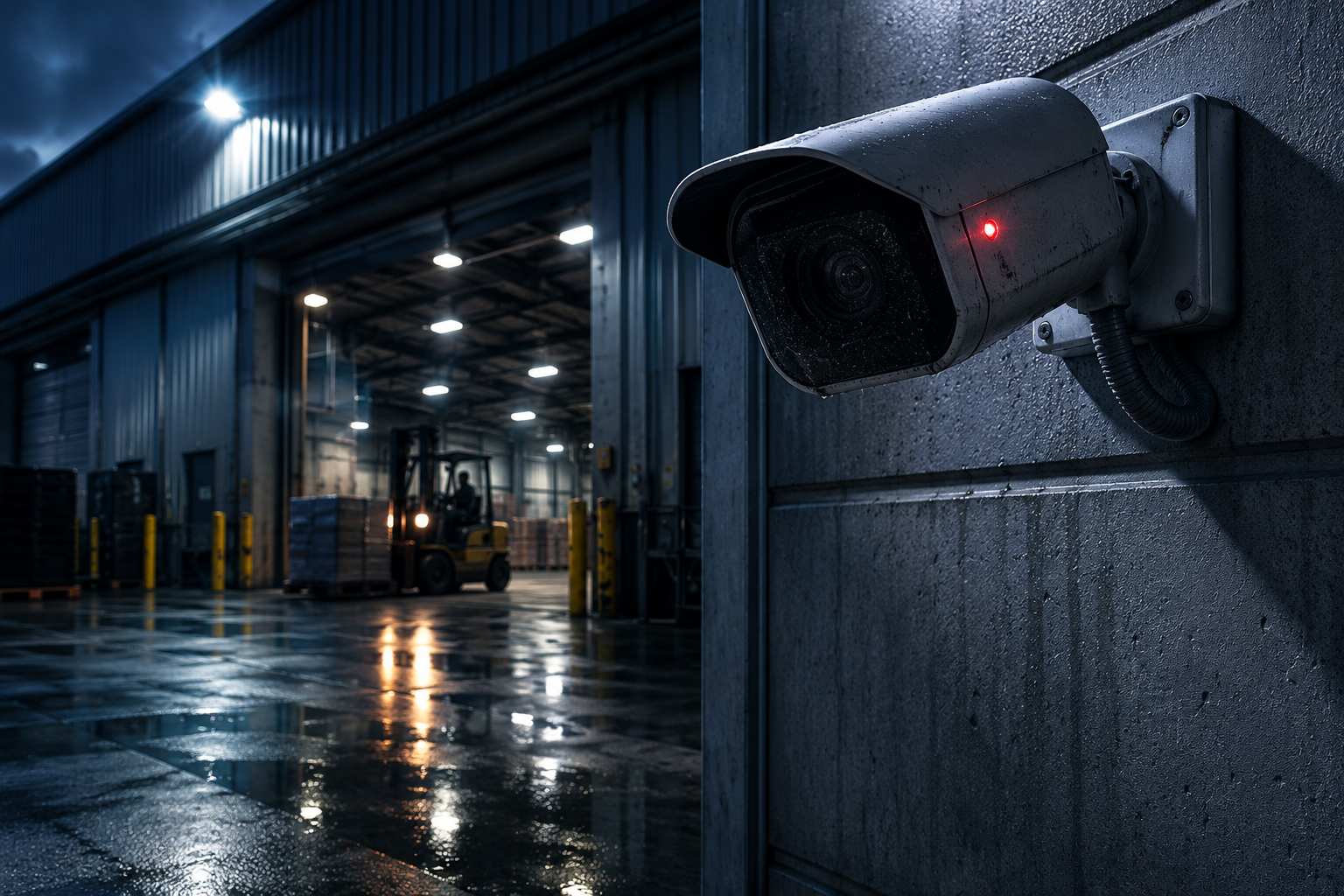
A camera covering a loading dock, equipment yard, or storage area goes offline. The failure is not noticed. Someone who has observed the camera’s position tests whether it is still active. They find it is down and take the opportunity.
By the time the failure is discovered, there is no footage and no starting point for an investigation. This is not a hypothetical. Organized theft operations actively look for disabled or offline cameras before executing. A facility that appears monitored but has a known gap can be worse than a facility with no cameras at all. The false sense of security slows the response to missing assets.
An Incident With No Documentation
A workplace injury, a customer fall, a vehicle collision in the parking lot, an altercation between employees. These incidents all generate claims and sometimes litigation. In each case, the first question from the insurance adjuster or attorney is: do you have footage?
If the camera covering that area was offline, the answer is no. A claim that might have been resolved quickly with clear footage becomes a dispute that plays out over months. There is no objective evidence on either side. That extends timelines, increases legal exposure, and drives up settlement costs.
A Failure That Goes Undetected
This is arguably the most dangerous scenario. Many facilities have security cameras that are not actively monitored. If a camera fails and there are no health alerts, no live feeds being watched, and no regular inspections, that camera can sit offline indefinitely.
In those situations, the actual coverage gap is far longer than anyone realizes. Weeks or months of exposure are compressed into the moment someone goes looking for footage that does not exist. By then, nothing can be done to recover it.
What Camera Downtime Actually Costs
Breaking the cost of security camera failure into categories makes it easier to evaluate what is actually at stake for a specific facility. The costs are not always obvious, and they are rarely limited to hardware replacement.
- Stolen assets: The direct value of what is taken during a coverage gap. This ranges from minor losses in low-risk environments to hundreds of thousands of dollars in industrial settings with high-value equipment or materials.
- Investigation costs: Without footage, investigations involve interviewing witnesses, reviewing access logs, pulling records from other systems, and often hiring outside investigators. This takes significant time and money that would not be spent if footage existed.
- Unresolvable liability claims: A slip-and-fall claim that might have been dismissed based on clear footage can become a $50,000 to $100,000 settlement when there is no documentation. Without evidence, outcomes become negotiations rather than determinations of fact.
- Insurance impact: A pattern of claims without supporting documentation can affect premium rates at renewal. Some carriers reduce coverage or add exclusions for facilities with documented security gaps.
- Regulatory and compliance exposure: Facilities in regulated industries such as healthcare, finance, or critical infrastructure may have documentation requirements that a camera failure directly affects. Penalties for gaps in required monitoring can be significant.
- Operational disruption: Beyond financial costs, discovering that a camera was down during a relevant incident creates internal disruption, requires management time, and damages confidence in the security program.
Why Failures Go Undetected for So Long
The most preventable aspect of security camera downtime is the detection gap. This is the time between when the failure occurs and when someone realizes it. In facilities without active monitoring, this window is often measured in weeks or months.
The core problem is that passive recording systems are designed to capture footage, not to self-report their own health. A camera that goes offline simply stops recording. If no one is watching a live feed and no one pulls footage until an incident occurs, there is no mechanism to surface the problem.
Several factors make the detection gap worse:
- No health monitoring or offline alerts built into the system
- No scheduled inspections or camera audits
- Staff assuming the system is working because it was working before
- Cameras in low-traffic areas that are not visually checked
- Video management software that logs failures but does not push notifications
Active monitoring changes this dynamic entirely. A professionally monitored video system includes camera health checks and offline alerts as part of the service. When a camera goes down, the monitoring center knows within minutes, not weeks.
What Separates Facilities That Handle This Well
Facilities that manage camera downtime exposure effectively share a few common practices. None of these are complicated. However, all of them require intentional decisions at the design and operations level.
- Active monitoring: Someone is responsible for knowing the status of every camera in real time. Failures are detected and reported promptly, not discovered after the fact. This is the single most effective change a facility can make.
- Reliable hardware: Higher-quality cameras fail less often. A Mean Time Before Failure (MTBF) measured in years rather than months means fewer failure events over the system’s service life. See our guide on how long security cameras last for more on this.
- Regular maintenance: Scheduled inspections catch degrading connections, obstructed lenses, and firmware gaps before they become outages. This is especially important for exterior cameras exposed to weather and temperature cycling.
- Firmware discipline: Cameras running outdated firmware are vulnerable to cyberattacks that can take them offline remotely. Keeping firmware current is part of keeping cameras operational.
- Redundant coverage in high-risk areas: Overlapping camera coverage in the most critical zones means a single camera failure does not create a complete coverage gap. Redundancy is a deliberate design choice, not an accident.
The Camera Failure You Should Worry About Most
The failure that costs the most is the one that sits undetected during the incident you needed coverage for. Hardware replacement, service calls, and firmware updates are known costs that can be planned and budgeted. Those are manageable.
The unknown cost is the incident that happens during a gap you did not know existed. Preventing that outcome is less about spending more on cameras. It is more about designing a system with active oversight, reliable hardware, and a maintenance discipline that keeps everything functioning as intended.
Vulcan designs and supports actively monitored IP video systems for commercial and industrial facilities. If you are concerned about coverage gaps or system health in an existing installation, contact us for an assessment.
Frequently Asked Questions
How quickly can a professionally monitored system detect a camera failure?
In a well-configured active monitoring setup, a camera going offline generates an alert within minutes. The monitoring team can then escalate to the facility owner or dispatch a technician based on the nature of the failure.
Can cybersecurity attacks take security cameras offline?
Yes. Cameras running outdated firmware or connected to poorly secured networks can be compromised and taken offline remotely. Keeping firmware current and following network security best practices are the primary defenses against this type of attack.
Is camera redundancy worth the added cost?
In high-value or high-risk areas, overlapping coverage from two cameras is often worth the investment. A single camera going down in a critical zone during an incident is one of the most expensive failure scenarios a facility can face. For example, redundancy in a loading dock or equipment yard can prevent a total loss of documentation when it matters most.
What is MTBF and why does it matter for security cameras?
MTBF stands for Mean Time Before Failure. It is a statistical measure of how long a component is expected to operate before failing. For security cameras, a higher MTBF means fewer failure events over the system’s service life. Cameras from manufacturers with rigorously tested MTBF figures fail less often than cameras where this specification is not published or verified. Learn more in our guide on how long Mobotix cameras last.