The Real Lifespan of a Security Camera (And Why Cheap Costs More)
Security camera lifespan depends far more on build quality than on price tag alone, and that gap shows up in your wallet over time. A budget camera might last one to three years before a sensor fails or a housing leaks. A well-built commercial camera can run seven to ten years or more. The cheaper camera is rarely cheaper once you count what it costs to keep replacing it.
We install and support AI-powered video security systems across Alabama, so we have watched plenty of budget systems fail early, and plenty of premium ones outlast their warranty by years.
This guide breaks down what actually drives camera lifespan, what the real cost of cheap hardware looks like over time, and how to estimate the true cost before you buy.
What Actually Wears Out on a Security Camera
Understanding what fails first helps you evaluate hardware before you commit. Most early camera failures trace back to the same handful of weak points.
- Image sensors. Cheaper sensors degrade faster, especially in heat or under constant direct sun exposure, leading to progressively grainy or discolored footage well before total hardware failure. The camera still works, but the footage stops being useful long before the unit dies.
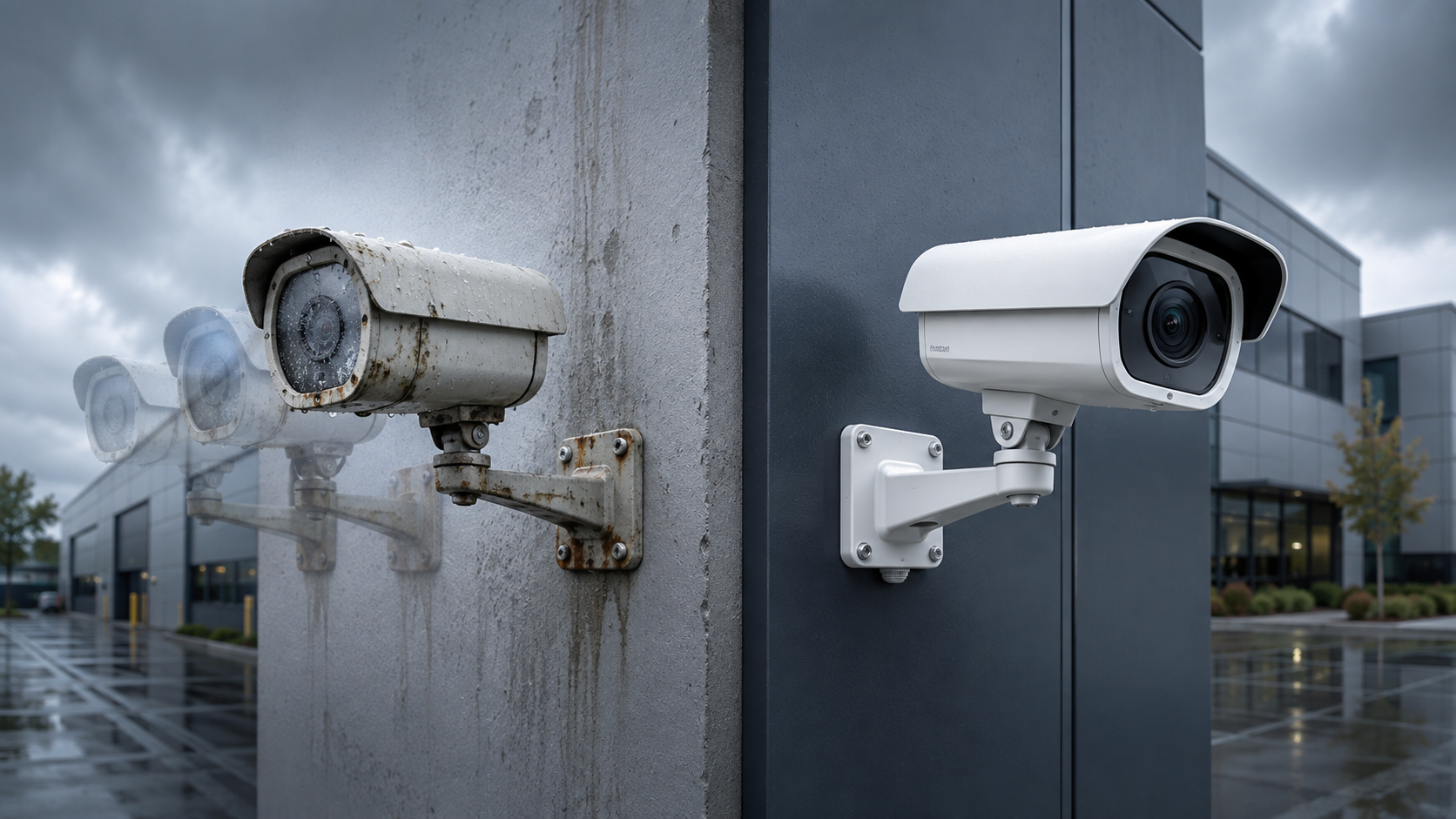
- Weatherproof seals. Budget housings often use lower grade gaskets that fail within a couple of years of outdoor exposure. Once a seal fails, moisture enters and begins corroding the internal electronics. This is one of the most common causes of early outdoor camera failure.
- Moving parts. Pan tilt zoom cameras have motors that wear down with regular use. More moving components in a camera generally translates directly to a shorter usable lifespan, particularly in environments with frequent repositioning.
- Power supplies. Cheap power components are a frequent failure point, especially in facilities with inconsistent power quality, voltage fluctuations, or frequent power cycling. A surge protection investment can extend this, but it does not compensate for a weak internal power supply.
- IR illuminators. The built-in IR LEDs that power night vision functionality degrade over time, particularly in budget cameras. Diminishing night performance is often the first sign that a camera is nearing the end of its useful life.
The Hidden Cost of a Cheap Camera Failing Early
The purchase price is only part of the cost calculation. When a budget camera fails, several additional costs follow that are easy to underestimate before they add up.
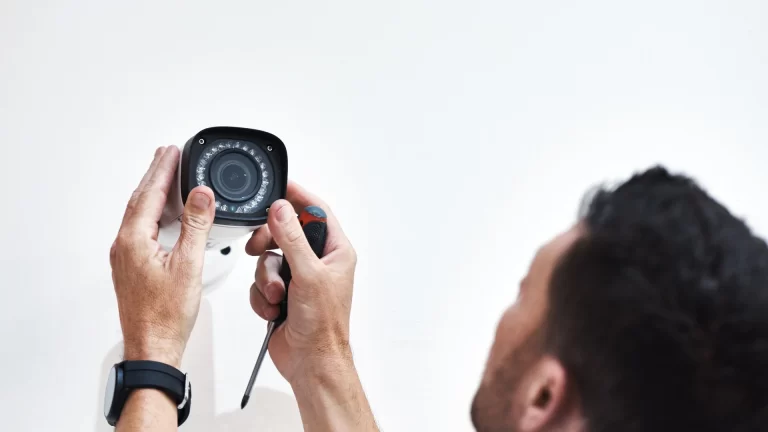
- Labor to replace it. Someone has to climb a ladder, pull the old unit, run new cable if needed, and reinstall a replacement. That labor cost is roughly the same whether the camera cost $80 or $400.
- Downtime during the gap. That section of your property has no coverage from the moment the camera fails until the replacement is installed. We covered what that downtime actually costs in the real cost of downtime when a security camera fails. The gap itself is not usually a scheduled, visible event. It is a quiet, undetected blind spot.
- Lost footage. If the camera failed before an incident was recorded from another angle, that gap in coverage becomes a gap in your evidence. Lost footage has real consequences for insurance claims, legal disputes, and workplace investigations.
- Repeated replacement cycles. Budget cameras installed at the same time tend to fail around the same time. Replacing one usually means the rest on the same installation are close behind it, compounding the labor and downtime costs across the whole system.
Add these costs over five years, and a camera that cost less upfront can easily exceed the total cost of the premium option it was meant to save money on.
What Makes a Camera Actually Last
Commercial-grade cameras are built differently from the components up. Higher quality sensors, better weatherproof housing, stronger power supplies, and fewer moving parts all extend the useful service life under real operating conditions. HD cameras built for commercial use typically carry IP67 or IP68 ratings, meaning they are fully dust sealed and waterproof, compared to the IP44 or IP65 ratings common on budget hardware.
We use Mobotix specifically because of how their hardware holds up over time, which we cover in detail in how long Mobotix cameras last. The short version is that better components, better sealing, and fewer moving parts add years of usable life under the conditions Alabama businesses actually deal with, including heat, humidity, and outdoor exposure.
Regular maintenance also extends lifespan meaningfully. A proactive maintenance plan that includes cleaning lenses, checking seals, testing connections, and applying firmware updates prevents the gradual degradation that turns a functional camera into a failing one without any single obvious event.
How to Estimate the True Cost Before You Buy
- Ask the manufacturer for the expected service life, not just the warranty period. A one year warranty on a camera that is expected to last three years tells you something. A three year warranty on a camera expected to run for ten years tells you something different.
- Multiply the camera price by how many replacement cycles you would likely see over ten years at that failure rate.
- Add labor cost per replacement, including any after-hours or emergency service calls.
- Add estimated downtime cost per replacement, even if that number is conservative.
- Compare the total against a single premium camera installed once, with a proactive maintenance plan included.
In most cases, the math favors the camera that was never the cheapest option in the proposal. The premium case for buying right the first time is something we expand on further in why serious businesses don’t buy cheap security.
Invest In Your Business’s Security
A security camera’s real lifespan is driven by sensor quality, weatherproofing, and build, not by the price on the box. Cheap cameras often fail early, and the costs of replacement labor, coverage downtime, and lost footage typically outweigh whatever was saved upfront. The true cost calculation almost always looks different once you account for the full service life.
If you want a clear picture of what your current cameras will actually cost you over the next five to ten years, Vulcan can help you run the numbers honestly.
Frequently Asked Questions
How long should a security camera realistically last?
A budget camera often lasts one to three years before performance degrades or hardware fails. A well built commercial camera can run seven to ten years or longer with proper maintenance and reasonable operating conditions.
Is a longer warranty the same as a longer lifespan?
No. A warranty period is a minimum guarantee from the manufacturer, not an estimate of actual service life. Many cameras last well beyond their warranty, while others fail shortly after coverage expires. The warranty tells you about the manufacturer’s confidence, not the hardware’s ceiling.
What is the biggest hidden cost of a cheap camera?
Usually downtime and lost coverage during the replacement period, combined with the labor cost of repeated installs. If an incident occurs during that gap, the downstream cost can be significantly higher than the price of the camera itself.
Does camera placement affect how long it lasts?
Yes, significantly. Cameras exposed to direct sun, high heat, or moisture wear out faster than ones in more protected locations, even when both units are the same hardware. Mounting angle and housing orientation matter alongside the camera’s rated weatherproofing.
How does proactive maintenance affect camera lifespan?
Meaningfully. Regular cleaning, connection checks, seal inspections, and firmware updates prevent the slow degradation that shortens usable life. A camera that is regularly maintained will typically outlast the same model that is installed and ignored.