AI-Based Quality Control: Catching Defects on the Line
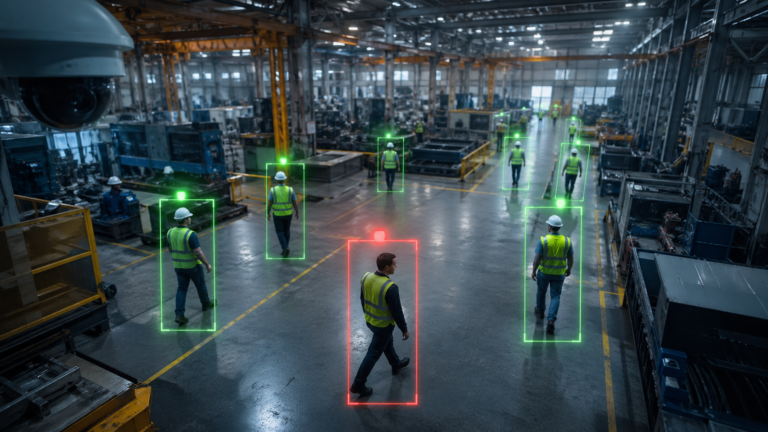
AI-based quality control visual inspection uses computer vision cameras positioned along a production line to automatically detect surface defects, dimensional errors, assembly flaws, and contamination in real time. The system compares each unit against a trained model of acceptable output. Anything that falls outside specification gets flagged, often at production speeds that make manual inspection impractical.
Quality failures are expensive in a specific way: they are usually discovered too late. A defective part clears final assembly. A contaminated batch ships. An incorrectly assembled component gets returned from the field. By the time the problem surfaces, the cost includes not just the defective product but the rework, the warranty claim, and the customer relationship.
Vulcan Security Systems designs and installs AI-powered IP video systems for industrial and commercial environments. Visual quality inspection uses the same computer vision technology as our security and monitoring systems, applied to production rather than security. Many of the facilities we work with have both security and operational visibility needs, and AI video often plays a role in both.
In this guide, we explain how AI quality inspection works, what defect types it can detect, where it is already being used, and what its real limitations are.
Table of Contents
- How AI-Based Quality Control Visual Inspection Works
- Types of Defects AI Cameras Can Detect
- Where AI Quality Inspection Is Already Being Used
- Limitations of AI Visual Inspection
- When AI Quality Inspection Makes Sense
- Frequently Asked Questions
How AI-Based Quality Control Visual Inspection Works
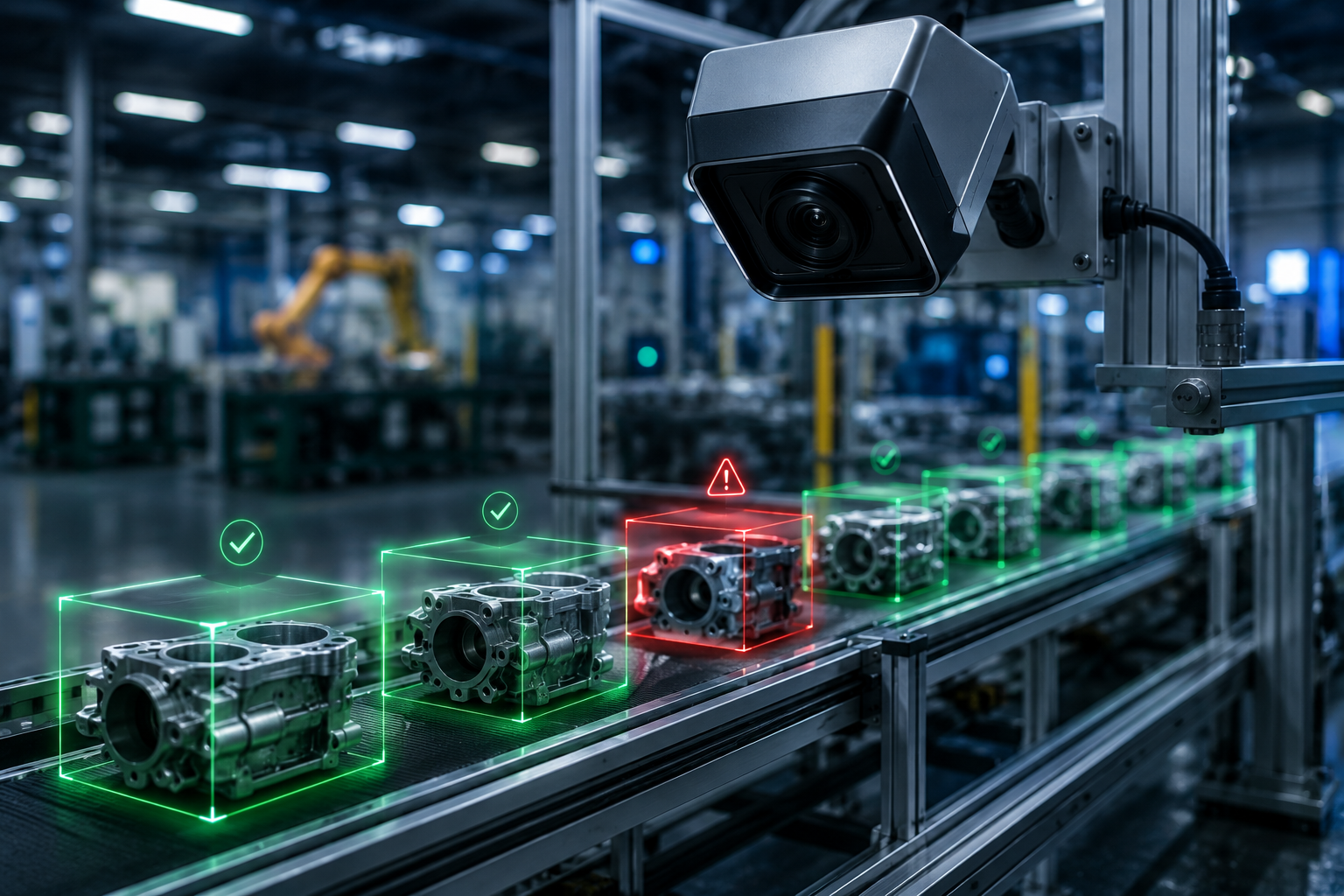
AI visual inspection systems are built around industrial cameras mounted at defined points along a production line. These cameras connect to AI software trained to recognize both acceptable output and known defect types. The process works in three steps:
- A camera captures an image of each unit at the inspection point.
- The AI compares the image against its trained model of acceptable output.
- If the unit is within specification, it passes. If a deviation is detected, it is flagged and a configured response is triggered.
Training the model requires labeled examples covering both good product and known defect types. The more representative the training data, the more reliably the system performs under real production conditions.
One significant advantage over manual inspection: modern AI inspection systems can process hundreds of units per minute, continuously, without the attention drift that affects human inspectors over a long shift.
Types of Defects AI Cameras Can Detect
AI-based quality control visual inspection can identify a broad range of defect categories. The most common in manufacturing environments include:
- Surface defects: Scratches, dents, cracks, discoloration, bubbles, and coating inconsistencies are detectable from cameras with sufficient resolution and field of view.
- Dimensional errors: Camera-based measurement systems flag parts that fall outside height, width, hole placement, or edge straightness specifications.
- Assembly errors: Missing components, incorrect placement, improperly seated connectors, and reversed assemblies are detectable when the camera has a clear view of the assembly area.
- Label and packaging verification: The system confirms that required labels are present, correctly positioned, and legible before units are packed and shipped.
- Contamination: In food processing and pharmaceutical manufacturing, AI cameras detect foreign material, color inconsistency, and surface contamination that manual inspection would struggle to catch consistently.
Where AI Quality Inspection Is Already Being Used
This is not an emerging technology. AI visual inspection is in active production use across several industries.
- Electronics manufacturing: Printed circuit board inspection was one of the earliest machine vision applications in manufacturing. AI has significantly improved both speed and accuracy for this use case.
- Automotive components: Stamped parts, machined components, painted surfaces, and assembled modules are inspected using AI vision systems in high-volume production environments.
- Food and beverage processing: Product appearance, fill levels, label placement, and contamination are all monitored on packaging and processing lines.
- Pharmaceutical production: Tablet inspection, capsule fill verification, packaging integrity, and label confirmation represent some of the highest-stakes AI visual inspection applications, where regulatory requirements are strict and defect consequences are serious.
- Metal fabrication and machining: Dimensional verification and surface defect detection apply to machined and fabricated components where tight tolerances are a quality requirement.
For a broader look at how AI analytics are being applied in industrial settings, see our overview of practical AI video analytics applications for industrial sites.
Limitations of AI Visual Inspection
Understanding where AI inspection underperforms is just as important as knowing where it excels. Here is what to watch for:
- The model needs a well-defined standard: The system must be trained on what acceptable output looks like. Poorly defined acceptance criteria produce either excessive false positives or missed defects.
- Three-dimensional defects are harder: Standard camera-based inspection works on visible surfaces from the camera angle. Defects inside cavities, on rear surfaces, or in complex geometries may require multiple cameras or specialized sensing.
- Training requires data: Building an accurate model takes time and sufficient labeled examples of both good products and known defects. Early deployments should include a calibration period before full production speeds.
- Calibration is ongoing: As products evolve and quality requirements shift, the model needs to be updated to stay accurate. This is not a set-and-forget system.
When AI Quality Inspection Makes Sense
AI-based quality control visual inspection delivers the most value when:
- Inspection volume is too high for manual review to be consistent
- Defects have clear visual characteristics that differ from acceptable output
- The cost of defects reaching customers is significant
- Manual inspection has produced inconsistent results in the past
It works best as a complement to statistical process control and existing quality management frameworks, not a replacement for them. Stable products with well-defined specifications will see the most reliable results. However, operations with highly variable products or frequent changeovers need to factor in the training and recalibration investment carefully.
If your facility is evaluating AI video for operational visibility or quality assurance, Vulcan offers free on-site assessments to help identify where these systems add the most value. Get in touch to schedule one.
Frequently Asked Questions
What is the difference between AI visual inspection and traditional machine vision?
Traditional machine vision uses rule-based programming with fixed parameters. AI visual inspection uses trained models that recognize defects from patterns. This makes it more flexible for complex or variable defect types that are difficult to program explicitly.
How accurate are AI quality inspection systems?
Accuracy depends on training data quality, camera resolution, lighting, and how visually distinct defects are from acceptable output. Well-trained systems in suitable conditions can outperform manual inspection for consistent, high-volume tasks.
Can these systems integrate with existing production line equipment?
In most cases, yes. AI inspection systems are designed to connect with production line control systems. This enables automated rejection, line stops, or operator alerts without requiring a separate manual intervention step.
What happens when a new product is introduced?
The model needs to be retrained on the new product’s acceptable parameters and known defect types. This requires a training period with sufficient sample data before the system is reliable at full production speed.