The Hidden Risks of Security Guards (And How AI Reduces Liability)
Security guards are often hired to reduce risk, but many businesses are surprised to learn that guard-based security can also introduce liability. Missed incidents, inconsistent reporting, and lack of documentation are common issues that only surface after something goes wrong.
At Vulcan Security Systems, we work with industrial and commercial clients who want fewer unknowns when it comes to security, safety, and liability. Many come to us after realizing that relying solely on security guards left gaps they could not see until it mattered.
In this article, we’ll explain the hidden risks associated with traditional security guards, where liability actually comes from, and how AI-powered video monitoring helps reduce exposure. This is not an argument against guards. It’s an explanation of how modern security strategies reduce risk more effectively.
What Are the Real Risks of Security Guards?
The biggest risks associated with security guards are not bad intentions or lack of effort. They are human limitations.
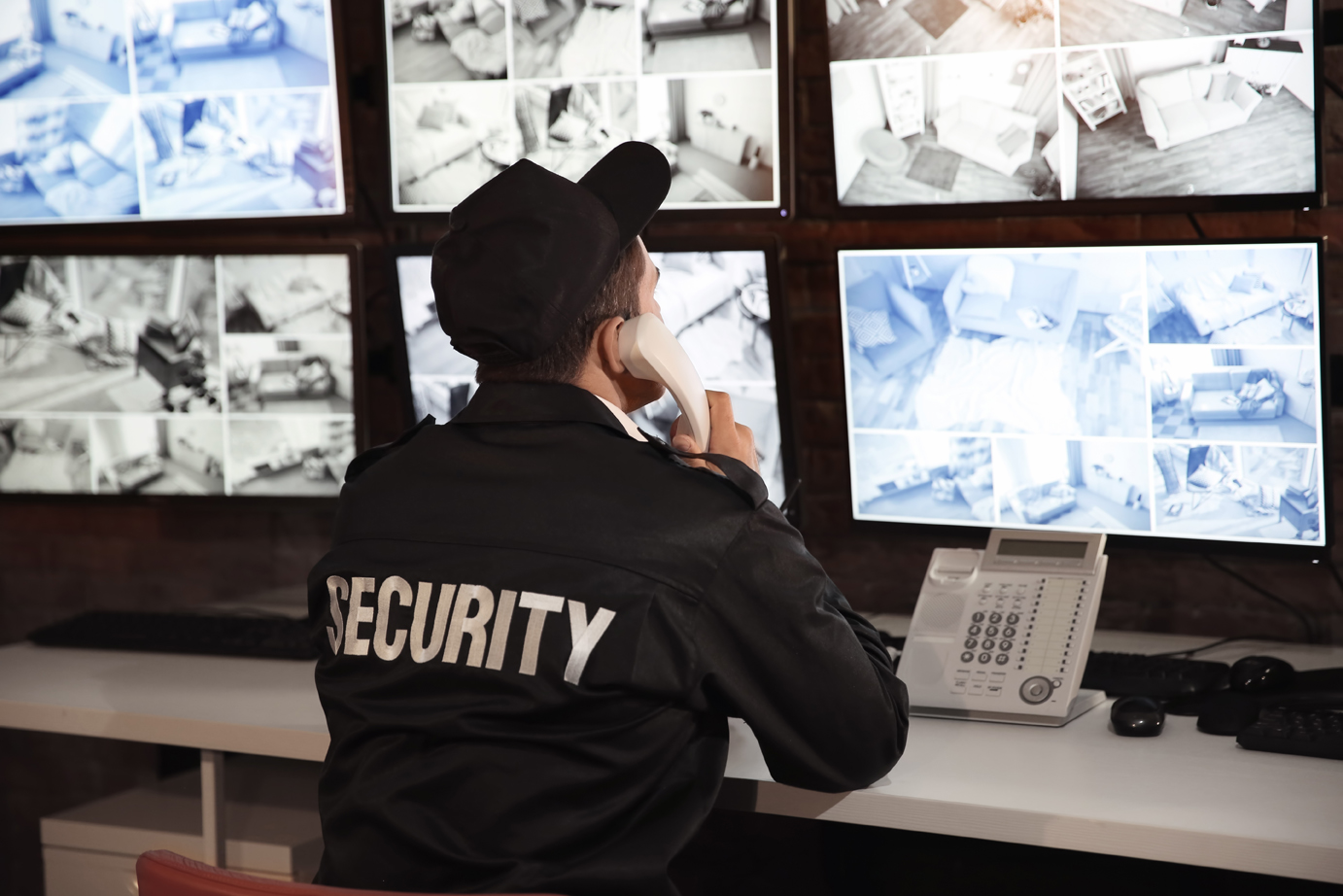
Security guards are often expected to monitor large areas, respond to incidents, document events, and act as a deterrent. In reality, one person can only see so much, respond so quickly, and remember so many details.
The risk is not that guards fail on purpose. The risk is that important moments go unseen, undocumented, or misinterpreted.
Where Security Liability Actually Comes From
Most security-related liability shows up after an incident, not during it. That’s when businesses are asked to explain what happened, when it happened, and what was done in response.
Missed or Unobserved Incidents
A security guard can only be in one place at a time. Large properties, multiple entrances, and low-visibility areas create blind spots. If something happens outside of a guard’s line of sight, there may be no record at all.
Inconsistent Reporting
Many guard services rely on handwritten logs or basic incident reports. These reports are often vague, incomplete, or written hours after the event. When details are missing, businesses are left exposed during insurance claims, disputes, or legal reviews.
Human Error and Judgment Calls
Guards must make judgment calls in real time. They may misinterpret a situation, respond too slowly, or choose not to escalate an issue. These decisions are not always wrong, but they are subjective and difficult to defend without evidence.
Turnover and Training Gaps
Security guard turnover is high. New guards may not fully understand a site, its risks, or its procedures. Inconsistent training leads to inconsistent outcomes, which increases liability over time.
Why Having a Security Guard Is Not the Same as Being Covered
Many businesses assume that having a security guard means they are protected. In practice, presence does not equal coverage.
If an incident occurs and there is no video, no clear timeline, and no independent record, the business carries the burden of proof. At that point, it does not matter that a guard was on site. What matters is what can be verified.
This is where many companies realize that their security strategy focuses on visibility, not documentation.
Our Perspective on Security Guards and Hybrid Security
Vulcan is not anti-security guard. Guards play an important role in many environments.
Security guards are effective for access control, patrols, customer interaction, and on-site response. A visible guard can deter certain behavior and provide reassurance to staff and visitors.
Where guards fall short is in continuous monitoring and documentation.
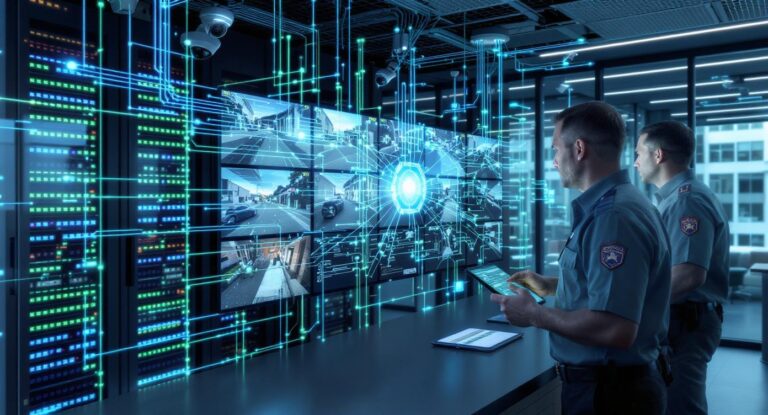
The most effective security strategies we see are hybrid approaches. Cameras handle constant surveillance and detection. Guards focus on response, decision-making, and human interaction.
This approach reduces blind spots, lowers risk, and often allows businesses to reduce guard hours without sacrificing security.
How AI Video Monitoring Reduces Liability
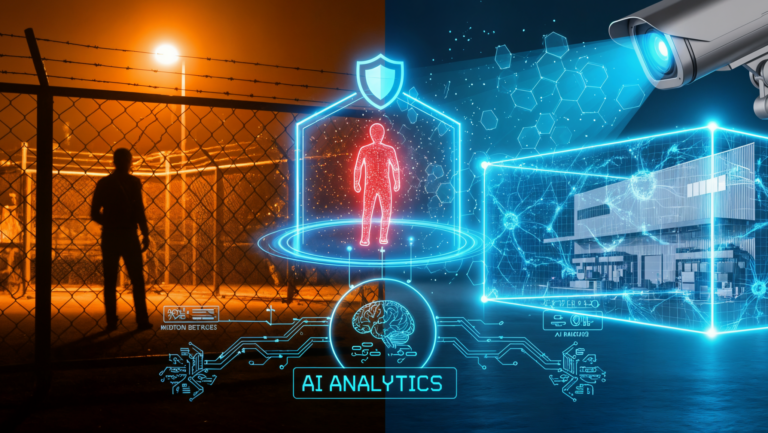
AI-powered video monitoring reduces liability by removing uncertainty.
Instead of relying on memory or written reports, businesses have objective, time-stamped video evidence of what happened. Instead of hoping someone was watching, they know the system was.
Key ways AI video reduces risk include:
- Continuous 24/7 coverage without breaks
- Automatic detection of defined events
- Video documentation for every incident
- Remote verification instead of guesswork
- Consistent monitoring rules across the entire property
This level of documentation is especially valuable for insurance claims, internal investigations, and legal protection.
Security Guards vs AI: A Liability Comparison
| Area | Security Guards | AI Video Monitoring |
| Coverage | Limited to line of sight | Full property visibility |
| Consistency | Varies by person and shift | Always consistent |
| Documentation | Manual reports | Recorded video evidence |
| Incident review | Often unavailable | Fully reviewable |
| Liability exposure | Higher without proof | Lower with documentation |
This does not mean guards are ineffective. It means that technology provides a level of consistency and accountability that humans cannot.
When a Hybrid Security Model Makes the Most Sense
Most Vulcan clients do not eliminate guards entirely. They rethink how guards are used.
Common hybrid strategies include:
- Reducing overnight guard hours
- Using cameras to cover large or remote areas
- Letting guards focus on response instead of monitoring
- Backing up guard reports with video evidence
This approach lowers costs, improves coverage, and significantly reduces liability.
Security Liability Is About What You Can Prove
Security guards are often hired to reduce risk, but relying on guards alone can introduce liability when incidents go unseen, undocumented, or poorly explained after the fact. Human coverage has limits, and those limits are where exposure tends to appear.
AI-powered video monitoring reduces that uncertainty. It provides continuous visibility, objective documentation, and clear timelines when incidents occur. That documentation is often what determines how insurance claims, internal investigations, and legal questions are resolved.
This is not about choosing between people and technology. It’s about using each where they perform best. Guards bring judgment and response. AI video delivers consistency, coverage, and proof.
If you’re paying for security guards but still dealing with blind spots, unanswered questions, or ongoing liability concerns, it may be time to rethink how your security strategy is structured.
Modern security is not about more staffing. It’s about fewer unknowns, better evidence, and systems you can rely on when it matters most.