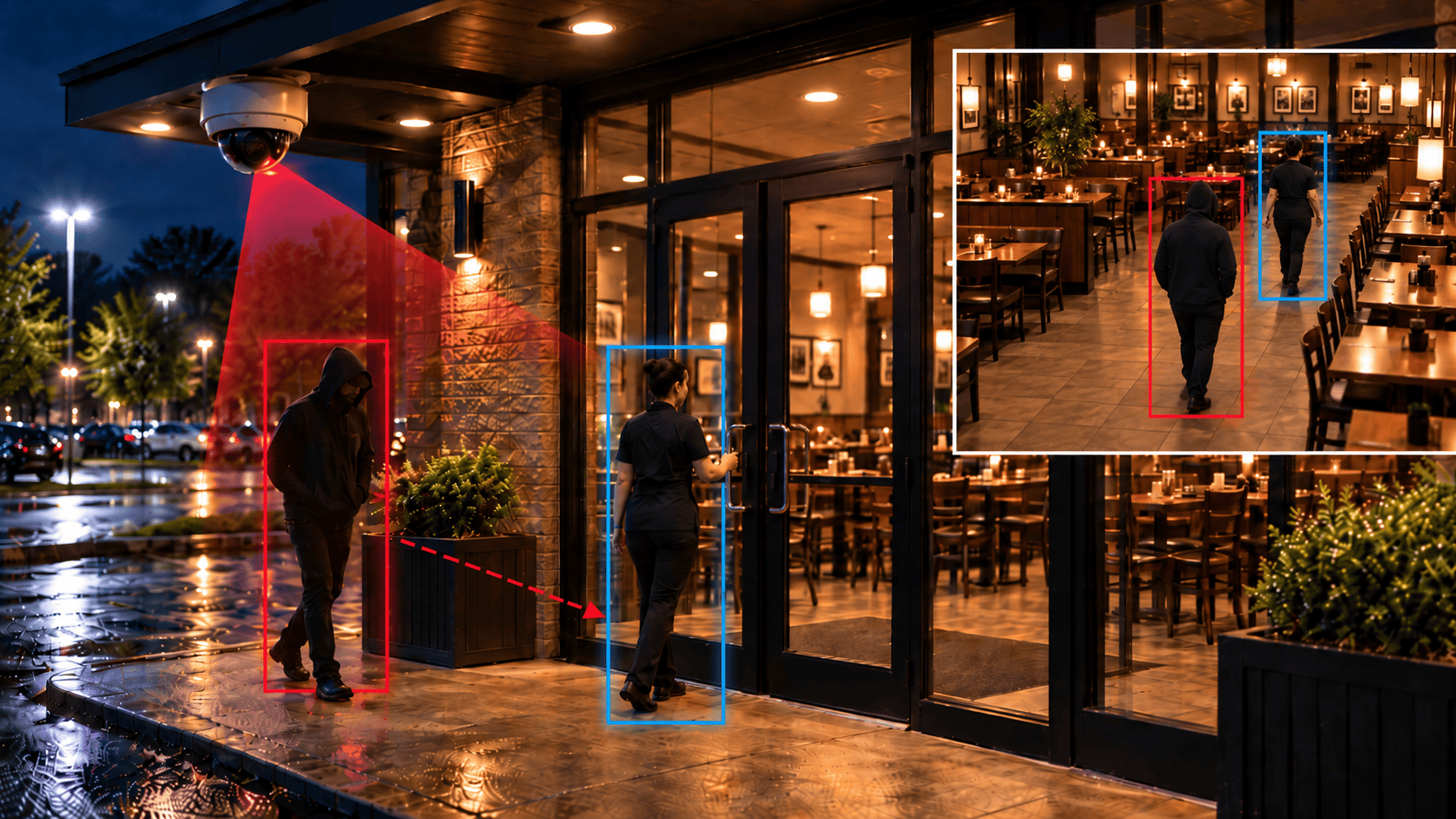
Why Exterior Cameras Alone Don’t Protect Late-Night Employees
A lot of business owners assume that once exterior cameras are mounted at the front and back doors, the property is covered. Exterior cameras do real work, but they were never designed to protect an employee once someone has already made it past the door. That gap is exactly where the most dangerous late-night incidents tend to happen.
Vulcan Security Systems builds layered video security systems for businesses across Alabama that operate late into the night, and closing the gap between exterior deterrence and real employee protection is one of the most common upgrades we recommend. This article covers what exterior cameras actually do well, where the coverage gap starts, and what a system built to protect employees after dark actually needs.
What Exterior Cameras Are Actually Good At
Exterior cameras do a good job of documenting who approached a building, when they arrived, and which direction they came from. Visible cameras also provide a real deterrent effect. Someone scouting a property is less likely to attempt anything obvious in front of a camera they can see. None of that is wasted investment.
The problem is that exterior coverage answers the question of who came near the building. It does not answer what happens once someone is inside, and for a late-night employee, that second question is the one that actually matters.
Where the Gap Starts
No Interior Coverage Once Someone Is In
Once a door opens, whether an employee lets someone in unknowingly or a door is forced, exterior cameras lose the ability to see what happens next. If there is no interior coverage in back offices, stockrooms, or hallways near cash handling areas, the most critical moments of an incident go completely unrecorded and unmonitored.
Blind Spots at Doors and Vestibules
Many exterior cameras are angled to capture a wide approach view rather than the narrow moment of someone stepping directly into a vestibule or doorway. That framing choice, useful for general deterrence, often means the exact instant someone follows an employee through a door is the hardest moment to make out clearly.
Cameras That Only Record Rather Than Respond
A camera without live monitoring behind it is a witness, not a responder. It will show what happened, but it cannot warn an employee, alert a monitoring center, or contact police while the incident is still unfolding.
No Two-Way Communication
Standard exterior cameras are one-directional. They capture video but give an employee no way to signal for help or hear a warning delivered through the camera itself, which removes one of the most effective real-time deterrents available.
What Happens When an Intruder Gets Past the Exterior Camera
A common and dangerous scenario is someone waiting near an entrance for an employee to unlock or exit, then pushing in behind them before the door closes. Exterior cameras will show this moment happening, but by the time anyone reviews that footage, the employee is already dealing with whatever comes next. We cover this specific threat and how to prevent it in after-hours employee safety: how video monitoring prevents forced re-entry robberies.
Building Layered Protection for After-Hours Employees
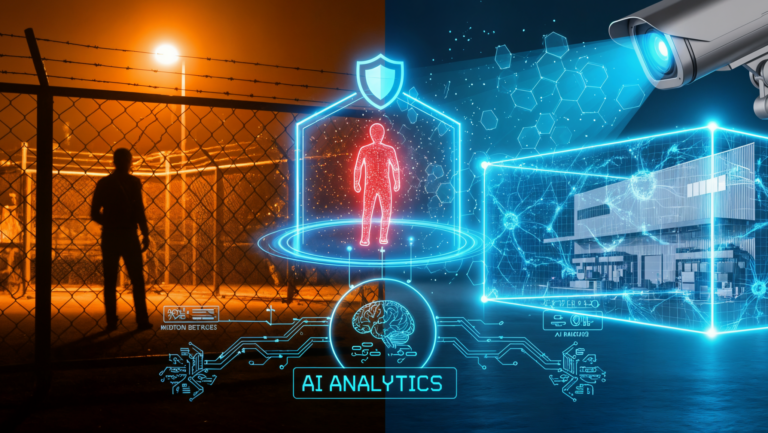
Real protection starts with extending coverage past the door itself. AI-powered surveillance can flag a second person entering right behind an authorized employee, sometimes called tailgating detection, at the exact moment it happens rather than after the fact.
That detection only creates value when it connects to live monitoring. A trained operator watching the alert in real time can issue an audio warning through the camera speaker, confirm what is happening with the employee if two-way audio is available, and contact law enforcement immediately. We walk through exactly what a monitoring operator does step by step in how monitoring centers respond during a forced re-entry situation.
What to Evaluate in Your Current Coverage
- Interior coverage of hallways, offices, and rooms near every exterior door.
- Camera framing tight enough to identify a second person entering behind an employee.
- Live monitoring rather than recording-only coverage during closing and opening hours.
- Two-way audio capability at entrances where employees close alone or in pairs.
- A documented response plan tied to what the monitoring center actually does when an alert fires.
Coverage Should Follow the Employee, Not Stop at the Door
Exterior cameras answer an important but limited question, and stopping there leaves the moments that matter most for employee safety unprotected. A system that extends detection past the threshold and pairs it with a live, responsive monitoring team closes the exact gap that exterior-only coverage leaves open.
Vulcan builds security systems that protect employees past the front door, not just up to it. We will walk your property and show you exactly where your current coverage stops.
Frequently Asked Questions
Are exterior cameras a waste of money if they don’t protect employees inside?
No. Exterior cameras still provide real deterrence and useful documentation of who approached the building. The issue is relying on them as the entire security plan rather than one layer of it.
What is tailgating detection?
Tailgating detection is an AI capability that flags when a second, unauthorized person enters a space directly behind an authorized employee, which is exactly how many forced re-entry incidents begin.
Do we need interior cameras if we already have good exterior coverage?
In most cases, yes. Interior coverage near entrances, offices, and cash handling areas is what allows a monitoring team to see and respond to what happens after someone gets past the exterior cameras.
How quickly can a monitoring operator respond to an alert?
Response is typically near-instant once an alert fires, since the operator is watching in real time rather than reviewing footage later. Exact response steps are covered in how monitoring centers respond during a forced re-entry situation.
Is two-way audio necessary for every business?
It is most valuable for locations where employees close alone or in small numbers, since it gives them a direct way to be warned or to signal that something is wrong without needing to reach a phone.