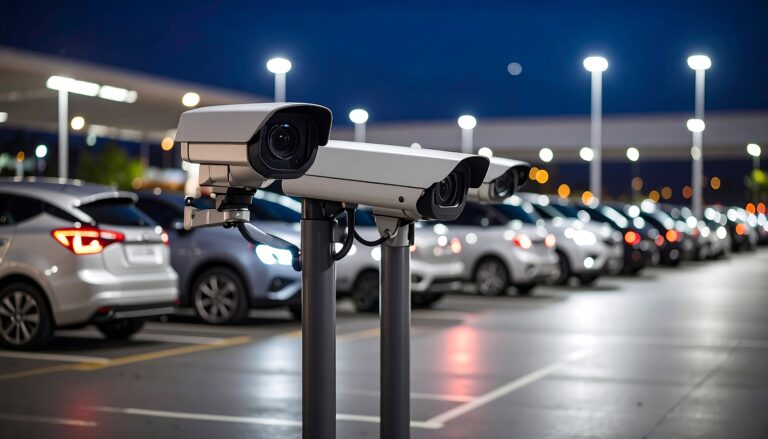
What Happens When a Vehicle Lot Camera Goes Down at 2 A.M.?
A camera failing at two in the afternoon gets noticed fast. Someone walks by a monitor, sees a black screen, and calls it in. A camera failing at two in the morning can go unnoticed for hours, sometimes until the next incident review, which means the exact window a vehicle lot needs coverage most can go completely dark without anyone knowing until it is too late.
Vulcan Security Systems maintains camera systems for vehicle lots across Alabama, and overnight failure detection is one of the most overlooked pieces of a security plan. This article covers why cameras fail more often at night than people realize, what that gap actually costs a business, and how proactive monitoring catches it before it becomes a problem.
Why Camera Failures Happen More at Night Than People Realize
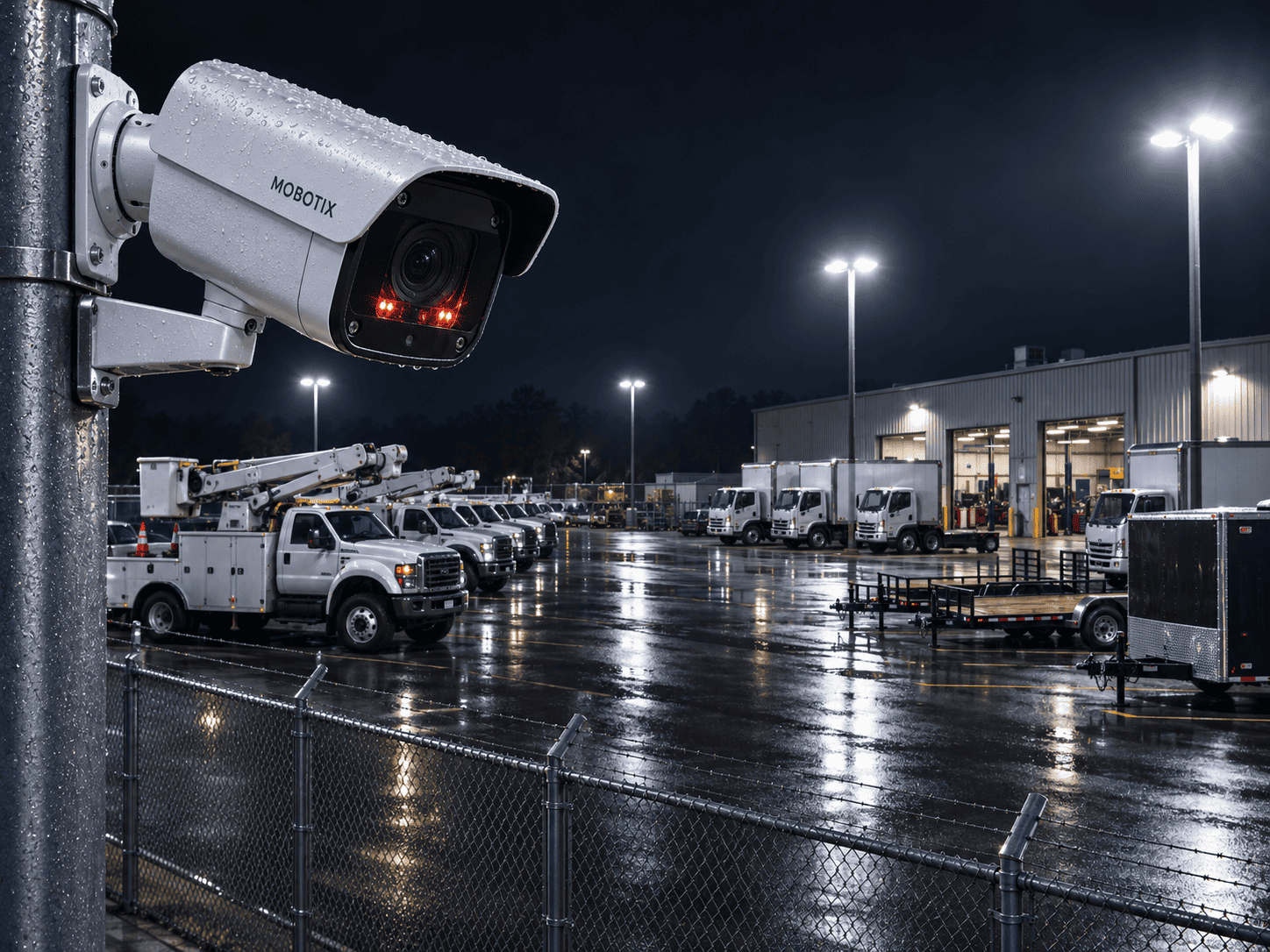
Infrared illuminators, the components that let a camera see in the dark, run continuously through the night and generate heat while doing it. That extended duty cycle makes them one of the more common points of failure, and an illuminator burning out can leave a camera producing a technically working but completely useless black image after dark.
Network connectivity issues, power fluctuations, and even temperature swings also tend to surface overnight, when a property is at its quietest and least likely to have anyone around to notice a problem starting. A camera that has been degrading for weeks often only gets discovered the night it finally fails completely.
The Real Cost of Not Knowing
The Gap Nobody Notices Until Morning
A camera that fails at 2 a.m. and gets discovered at 8 a.m. leaves six hours of a vehicle lot completely unwatched, with nobody aware it was happening in real time. If anything occurred during that window, there is no footage, no alert, and no chance for a monitoring team to respond.
Insurance and Liability Exposure
A missing camera feed at the exact time of an incident can complicate an insurance claim or a police investigation. Instead of clear footage supporting a report, a business is left explaining why coverage was unavailable during the hours it mattered most.
Lost Evidence
Vehicle theft and vandalism cases often depend heavily on plate capture and clear video. A camera that was down during the only window an incident occurred removes the single piece of evidence most likely to identify who was responsible.
How Proactive Monitoring Catches Failures in Real Time
The difference between a six-hour blind spot and a fifteen-minute one comes down to whether anyone, or anything, is actually watching for the failure itself. Proactive service and maintenance includes automated health checks that flag a camera going offline or degrading immediately, rather than waiting for a person to notice a black screen during a routine check.
Paired with remote support, many issues can be diagnosed and sometimes resolved without waiting for a technician to physically arrive on site, cutting the length of the blind spot dramatically. We cover how the surrounding camera and monitoring system is designed to handle overnight risk more broadly in why most vehicle lot cameras fail when it matters.
What a Response Plan Should Include
A well designed lot has overlapping camera coverage, so one failed unit does not create a total blind spot on its own. An immediate alert path to a remote support team, rather than a dependence on someone physically noticing the failure, keeps the outage window short. And a clear escalation process, including a quick truck roll when remote diagnosis cannot resolve the issue, prevents a short outage from turning into a multi-day one.
Questions to Ask About Your Current System
- Does the system send an automatic alert the moment a camera goes offline, at any hour.
- Is there overlapping coverage so one camera failure does not create a complete blind spot.
- How quickly can an issue be diagnosed remotely, before a truck roll is even needed.
- What is the typical time between a failure occurring and a technician resolving it on site.
- Has anyone actually reviewed footage quality overnight recently, rather than assuming it is fine.
A System Is Only as Good as What Happens When It Fails
Every camera system eventually has a component fail. The difference between a well designed system and a vulnerable one is not whether a failure happens, it is how quickly that failure gets caught and fixed. Automated health monitoring and a fast remote support process turn an overnight camera failure from a six-hour blind spot into a brief, managed interruption.
Vulcan monitors the health of every camera we install, not just the footage it produces. We will show you how quickly a failure on your lot would actually get caught.
Frequently Asked Questions
Why do camera failures happen more often overnight?
Infrared illuminators run continuously through the night and generate more heat and wear than daytime operation, and network or power issues also tend to surface during the quiet overnight hours when nobody is present to notice them starting.
How would we even know if a camera failed overnight?
Without automated health monitoring, most businesses find out the next morning or, worse, when they try to pull footage after an incident. A proactive system sends an alert the moment a camera goes offline or degrades.
Does one failed camera really create a total blind spot?
It depends on the design. A lot with overlapping coverage from multiple cameras can often still capture an incident from another angle, while a lot relying on a single camera per zone loses coverage entirely when that one unit fails.
Can camera issues be fixed without someone driving to the site?
Many issues can be diagnosed and sometimes resolved remotely, which significantly shortens the outage window compared to waiting for a technician to arrive in person.
How often should a vehicle lot’s overnight camera performance actually be checked?
Ongoing automated monitoring is ideal, supplemented by periodic manual review of actual overnight footage quality, since automated uptime checks alone do not always catch a degraded but technically online camera.