How AI Video Monitoring Protects Vehicles Parked Overnight
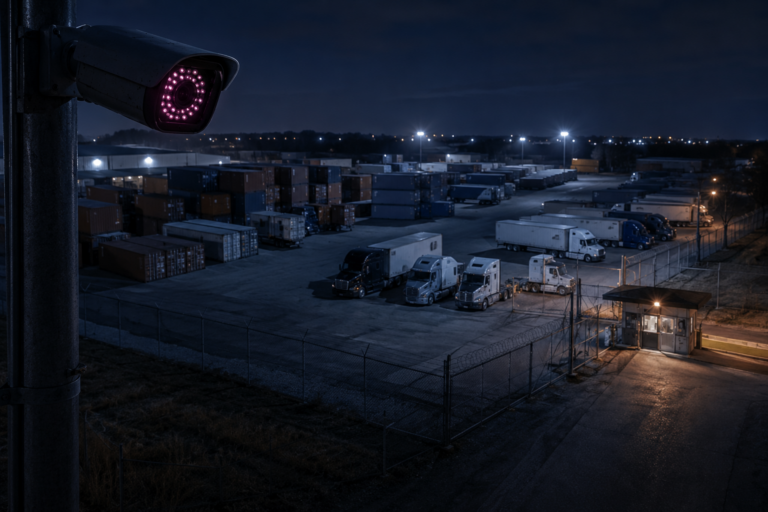
A vehicle lot sitting empty overnight is one of the most predictable security risks a business can have. Everyone, including anyone scouting the property, knows exactly when the lot fills up, when it empties out, and how many hours it sits unattended. AI video monitoring closes that window by watching the entire lot continuously and flagging unauthorized activity the moment it starts, instead of waiting for someone to review footage after a vehicle is already gone.
Vulcan Security Systems designs video security for vehicle lots, including dealerships, rental fleets, and commercial parking areas, and overnight coverage is where most of our clients’ actual risk lives. In this article, we cover what AI monitoring actually watches for on a vehicle lot overnight, how it differs from a standard recording camera, and what a well designed system looks like for a lot that has to protect itself while everyone is gone.
Why Overnight Is the Highest Risk Window for a Vehicle Lot
Vehicle lots operate on a predictable schedule. Staff arrive, staff leave, and the lot sits alone for the rest of the night with no natural foot traffic and no one around to notice anything unusual. That predictability is exactly what makes a lot an attractive target. Anyone who wants to test a property’s defenses can simply watch the schedule from the street and pick their moment.
A guard sitting in a booth or making periodic rounds cannot realistically watch an entire lot at once, and a standard camera system only proves useful after something has already happened. AI monitoring changes the equation by watching every part of the lot at the same time, all night, without needing anyone physically present.
What AI Monitoring Actually Watches for Overnight
Perimeter and Fence Line Intrusion
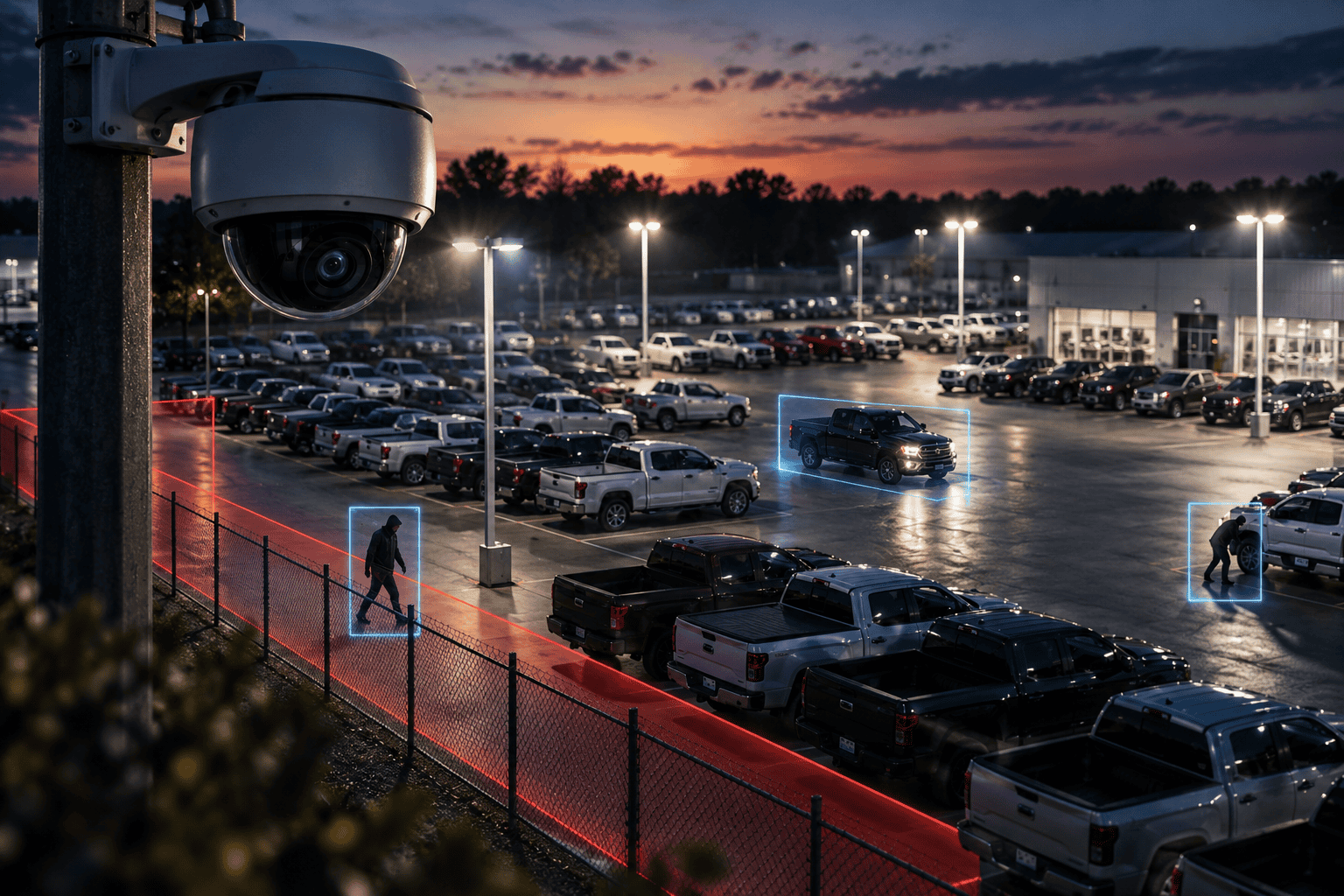
Virtual perimeters and people detection flag anyone crossing into the lot outside of business hours, whether they come through a gate, over a fence, or across an unfenced boundary. The system does not need to recognize the person. It only needs to recognize that someone is somewhere they should not be at that hour.
Loitering Near Vehicles
Someone walking through a lot is different from someone standing beside a specific vehicle for an extended period. Loitering detection identifies the second pattern automatically, which is often the clearest early signal that a vehicle is being targeted rather than the lot in general.
Slow Passes and Repeat Visits
A vehicle circling a lot slowly, or the same vehicle returning multiple times in one night, is a documented precursor to theft. AI cameras with license plate recognition can flag repeat visits automatically, something that would otherwise require someone manually cross referencing hours of footage.
Unauthorized Entry Into a Vehicle
Motion and object recognition around a specific vehicle can flag a door opening, a window being forced, or someone reaching into a cab well before the vehicle is actually moved or stripped for parts.
Detection Alone Is Not Enough. Response Is What Stops the Loss.
An alert that nobody acts on is just a very fast way to document a theft instead of a slow one. The value of AI detection comes from pairing it with 24/7 monitoring, where a trained operator sees the alert in real time and can respond immediately. A live audio warning through the camera’s speaker, informing whoever is on the lot that they are being watched and recorded, interrupts a huge share of incidents before anything is taken. If the situation escalates, the same operator can contact law enforcement with a description and a location while the person is still on the property.
This combination is also why AI monitoring is increasingly replacing overnight guard shifts on vehicle lots rather than supplementing them. We cover the guard replacement math directly in how AI video monitoring is replacing overnight guards at vehicle lots and why vehicle lots don’t need 24/7 guards but do need 24/7 eyes.
What a Well Designed Overnight Vehicle Lot System Includes
Coverage has to account for how dark a lot actually gets, not how it looks during a daytime sales walk. Thermal cameras see people and vehicles by heat signature regardless of lighting conditions, which makes them a strong complement to standard IP cameras in the darkest corners of a lot. We cover how thermal and AI work together in AI and thermal cameras: stopping break-ins and fires early.
Placement matters as much as camera count. A handful of well positioned cameras covering the full lot with overlapping fields of view typically outperforms a larger number of narrow, uncoordinated cameras, a point we cover in why fewer cameras can mean better coverage.
What to Look for in a Vehicle Lot Monitoring System
- Full perimeter coverage with no gaps between camera fields of view.
- Thermal or low-light capable cameras in the darkest sections of the lot.
- Active monitoring with live audio response, not recording alone.
- License plate recognition on entry and exit points.
- A maintenance plan that catches a failed camera before a full night of coverage is lost.
The Lot Should Watch Itself When No One Else Can
Vehicles parked overnight are exposed for the same predictable stretch of hours every single day, and that predictability is precisely what a criminal relies on. AI video monitoring removes the advantage that predictability creates by watching the full lot continuously and responding the moment something looks wrong, not after a vehicle is already missing. For a lot with real value sitting on it every night, that shift from passive recording to active detection is the difference that actually prevents loss.
Vulcan designs AI-monitored camera systems for vehicle lots across Alabama. If you want to know exactly what your lot looks like overnight, we will walk the property and show you.
Frequently Asked Questions
Can AI video monitoring fully replace an overnight guard on a vehicle lot?
In most cases, yes. AI monitoring covers the entire lot continuously rather than one section at a time, and it never loses focus. A guard still has value for physical intervention, but detection, alerting, and live audio response can be handled by AI monitoring at a fraction of the cost.
How does AI monitoring tell the difference between an employee and an intruder at night?
The system does not need to identify who someone is. It flags presence in a zone outside of authorized hours, unusual loitering, or repeat vehicle visits, all of which are unusual regardless of who is involved, and a monitoring operator makes the judgment call from there.
Does license plate recognition work reliably at night on a vehicle lot?
It can, but only with cameras and settings specifically configured for nighttime plate capture. We cover the common failure points in why most vehicle lot cameras fail when it matters.
What happens after the system detects an intruder on the lot?
A monitoring operator reviews the alert in real time, can issue a live audio warning through the camera’s speaker, and contacts law enforcement with a description and location if the situation continues. We cover this process in detail in how monitoring centers respond during a forced re-entry situation.
Is thermal camera coverage necessary for a vehicle lot, or is standard IP video enough?
Standard IP video works well in adequately lit areas. Thermal cameras become valuable in poorly lit corners of a lot where standard cameras struggle to produce usable detail after dark.