How AI Cameras Can Detect Production Line Stoppages Instantly
AI cameras can detect production line stoppages within seconds by watching for the visual signs that a line has stopped or is about to: product no longer passing an inspection point, a jam building up on a conveyor, a person stepping into a guarded machine zone, or a motor running hot. When one of those conditions appears, the system sends an alert with a short video clip, so a supervisor knows both that the line stopped and why.
Vulcan Security Systems designs and installs AI-powered IP video systems for manufacturing plants and industrial facilities across Alabama, where the same cameras that protect the property are increasingly used to watch the operation itself. In this article, we cover the stoppages AI cameras catch most reliably, how detection works in practice, where cameras fit next to the sensors you already have, and how to tell if your line is a good fit.
Why Line Stoppages Go Unnoticed Longer Than They Should
Most plants already know when a line is down. The control system logs it, an andon light comes on, or production counts stop climbing. What they often do not know, at least not right away, is why. A supervisor walks the line, finds the problem, and only then decides who to call. On a large floor or a second shift with a thin crew, that walk can take longer than the fix itself.
The gap is even wider on lines that were never fully instrumented. Older equipment, manual stations, and packaging areas often have no sensor reporting their status at all. When something stalls there, the first sign may be a pileup upstream or an empty station downstream.
Manufacturing is a big part of what Alabama does. According to the Governor’s office, manufacturing accounts for nearly 16 percent of the state’s GDP and supports more than 290,000 jobs. For the plants behind those numbers, every minute spent finding a problem is a minute of lost output.
The Most Common Production Line Stoppages AI Cameras Can Catch
AI cameras do not detect a “stoppage” as a single event. They detect specific visual conditions that cause or signal one. These are the ones we see deliver the most value in practice.
Product Stops Passing an Inspection Point
Many plants already use cameras for AI-based quality control on the line. A camera that checks every unit for defects also knows when units stop arriving. If the flow of product past that point drops to zero, the system can flag it immediately instead of waiting for someone to notice a gap in the count.
The same camera can also flag a sudden jump in rejected units. A spike in defects is often the early sign of a tooling or feed problem that will force a stop if nobody catches it.
Jams and Product Pileups
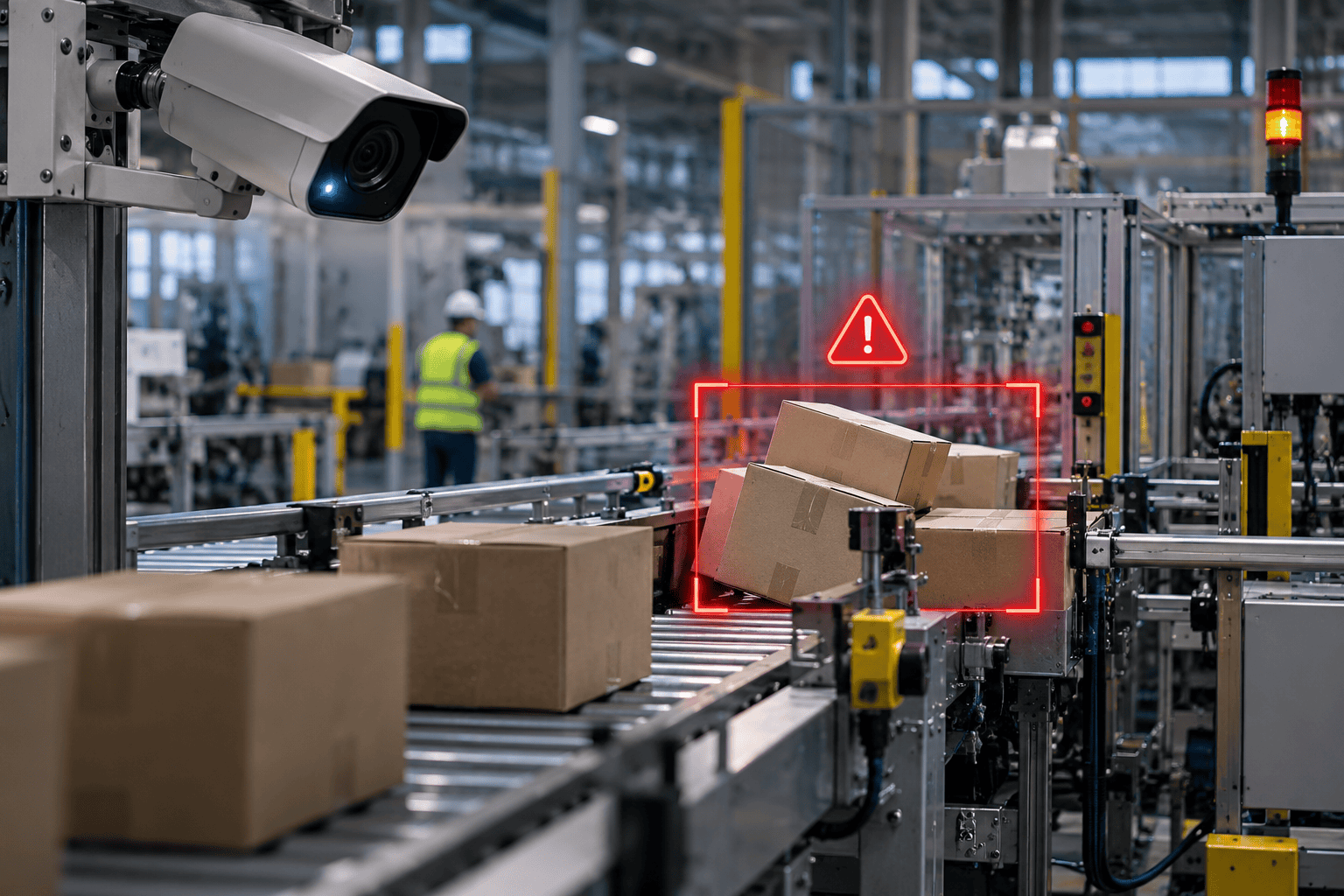
Object recognition can tell the difference between product moving normally along a conveyor and product accumulating in one spot. A carton wedged at a transfer point or parts stacking up at a chute look visually different from normal flow, and the system can be set to alert when that pattern appears in a defined area.
Catching a jam while it is still small often means a quick clear instead of a full shutdown and cleanup.
A Person Inside a Guarded Machine Zone
Restricted zone detection lets you draw a virtual boundary around a press, robot cell, or other hazardous area. When a person crosses it, the system alerts right away. Some stoppages are triggered by the equipment’s own safety interlocks, and the camera clip shows exactly what happened and who was involved.
This is a safety tool first. It also gives supervisors a clear record for retraining instead of a secondhand account after the fact.
Overheating Equipment Before It Fails
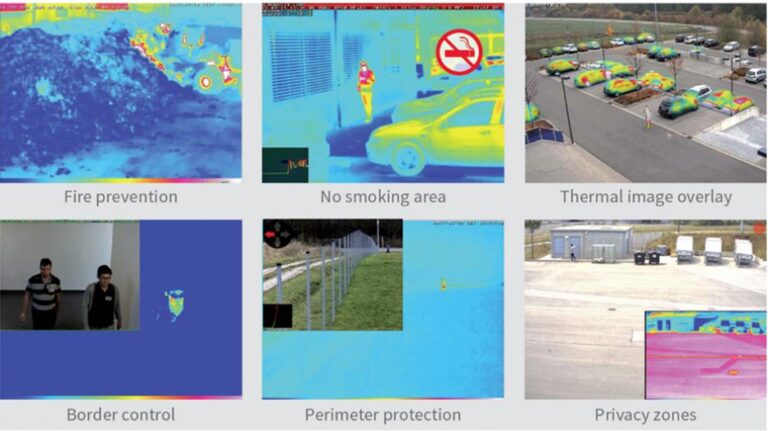
Thermal cameras read surface temperature across their full field of view. Pointed at motors, bearings, electrical panels, or ovens, they can alert when a component runs hotter than its normal range. That is often the warning before a breakdown that would stop the line for hours instead of minutes.
We cover this application in more depth in our post on thermal cameras for predictive equipment maintenance.
A Worker Down on the Floor
Slip and fall monitoring detects when a person goes down and stays down. On a busy floor that may be obvious, but in a remote corner, a mezzanine, or a quiet shift, it may not be. A fast alert gets help there sooner, and the line usually needs to stop anyway while the situation is handled.
How AI Stoppage Detection Works in Practice
Detecting production line stoppages with cameras is less about the AI and more about setup. The system only knows what to watch for because someone defined it. A typical deployment follows four steps:
- Pick the choke points. Walk the line and identify where stoppages actually start: transfer points, packaging, manual stations, and equipment that has failed before.
- Place cameras for a clear, steady view. Each camera needs a consistent angle and enough light to tell normal flow from a problem. Industrial IP video cameras built for heat, dust, and vibration hold up far better than commercial models in this setting.
- Define the rules. Draw the zones, set the conditions (no product for a set number of seconds, accumulation in an area, a person in a restricted zone, temperature above a threshold), and decide how long a condition must last before it triggers an alert.
- Route the alert. Send it to the person who can act on it, by phone, email, or a monitor on the floor, with a short clip attached so they know what they are walking into.
Expect a tuning period. In the first weeks, alerts get adjusted to cut out normal events, like a planned changeover or a shift break, that look like a stop. After that, the system runs quietly and only speaks up when something changes.
Every alert is also a recorded, timestamped clip. Over time, those clips show which stations stop most often and why, which is the information you need to fix the root cause instead of reacting to the same jam every week. This is one of the practical AI video analytics applications for industrial sites that pays off well beyond security.
AI Cameras vs. Line Sensors: When to Use Each
Cameras are not a replacement for the sensors and control systems already on your line. Each does a different job well.
- Line sensors and PLCs are the fastest and most precise way to know a machine stopped. If your equipment already reports its status, that signal should stay your primary trigger.
- AI cameras show what the sensor cannot: the jammed carton, the person in the cell, the hot bearing. They also cover manual stations, older equipment, and packaging areas that have no sensors at all.
- Together, the sensor tells you when, and the camera tells you why. That combination cuts the time between a stop and the right person showing up with the right tool.
If you are choosing where to spend first, start with the stations that have no instrumentation and the ones that stop most often. Those are where cameras add the most new information.
One practical note: production cameras need the same reliability as the line they watch. A camera that is offline cannot catch anything, which is why our proactive service maintenance monitors every camera’s health and flags outages before they become blind spots.
Quick Checklist: Is Your Line a Good Fit?
AI stoppage detection tends to deliver the most value when several of these are true:
- The same stations or transfer points cause most of your stops.
- Supervisors spend real time walking the floor to find out why a line is down.
- Parts of the line, especially older equipment or manual stations, have no status sensors.
- Second and third shifts run with fewer people watching the floor.
- You already have, or plan to add, cameras for security or quality control that could do double duty.
- Root cause reviews currently rely on memory instead of video.
If only one or two apply, a camera at your worst choke point may be enough. If most apply, it is worth mapping the full line during a site walk.
Knowing Why the Line Stopped Is Worth More Than Knowing That It Did
Your line probably already tells you when it stops. What costs you time is the walk to find out why, and the repeat stops nobody traces back to a cause. AI cameras close that gap by watching the specific conditions behind production line stoppages, sending the right person a clip within seconds, and building a video record of every event. Used alongside your existing sensors, they turn downtime from a mystery into a list of fixable problems.
If you want to know where AI cameras would catch stoppages on your line, Vulcan will walk your floor with you, identify the choke points, and show you what the cameras would actually see.
Frequently Asked Questions
How fast can AI cameras detect a production line stoppage?
Detection happens in near real time. In practice, most plants set a short delay of a few seconds before an alert fires, so that normal pauses do not trigger false alarms. The alert, with a video clip attached, typically reaches the supervisor within seconds of that threshold being met.
Do AI cameras replace the sensors on my production line?
No. Line sensors and control systems remain the most precise way to know a machine has stopped. Cameras add the visual context of why it stopped and cover areas that have no sensors.
Can the same cameras be used for security and production monitoring?
Often, yes. A camera placed for quality control or safety on the floor can also feed your security system, and some security cameras can be configured for production rules. Placement for each purpose is different, so it is worth planning both together.
What happens during planned downtime or changeovers?
Rules can be scheduled around shift breaks and planned stops so they do not fire alerts. During the first few weeks, alerts are tuned to filter out normal events that look like a stoppage.
Will AI cameras work in hot, dusty, or high-vibration areas?
Industrial grade cameras are built for those conditions, but placement and housing still matter. Lenses in dusty areas need periodic cleaning, and a maintenance plan that monitors camera health catches problems before they create a gap in coverage.