AI and Thermal Cameras: Stopping Break-Ins and Fires Early
AI and thermal cameras stop break-ins and fires early because the system is not waiting to see something happen. It watches for heat signatures and pattern changes, then sends an alert before the situation becomes an incident. A traditional camera records what happened. AI and thermal cameras catch things while they are still developing.
We install and support AI powered video security systems across Alabama. Thermal and AI detection is one of the technologies we get the most questions about, mostly because it sounds more complicated than it is.
This guide explains how the combination works and where it gets used in the real world.
How Thermal Cameras Detect Heat
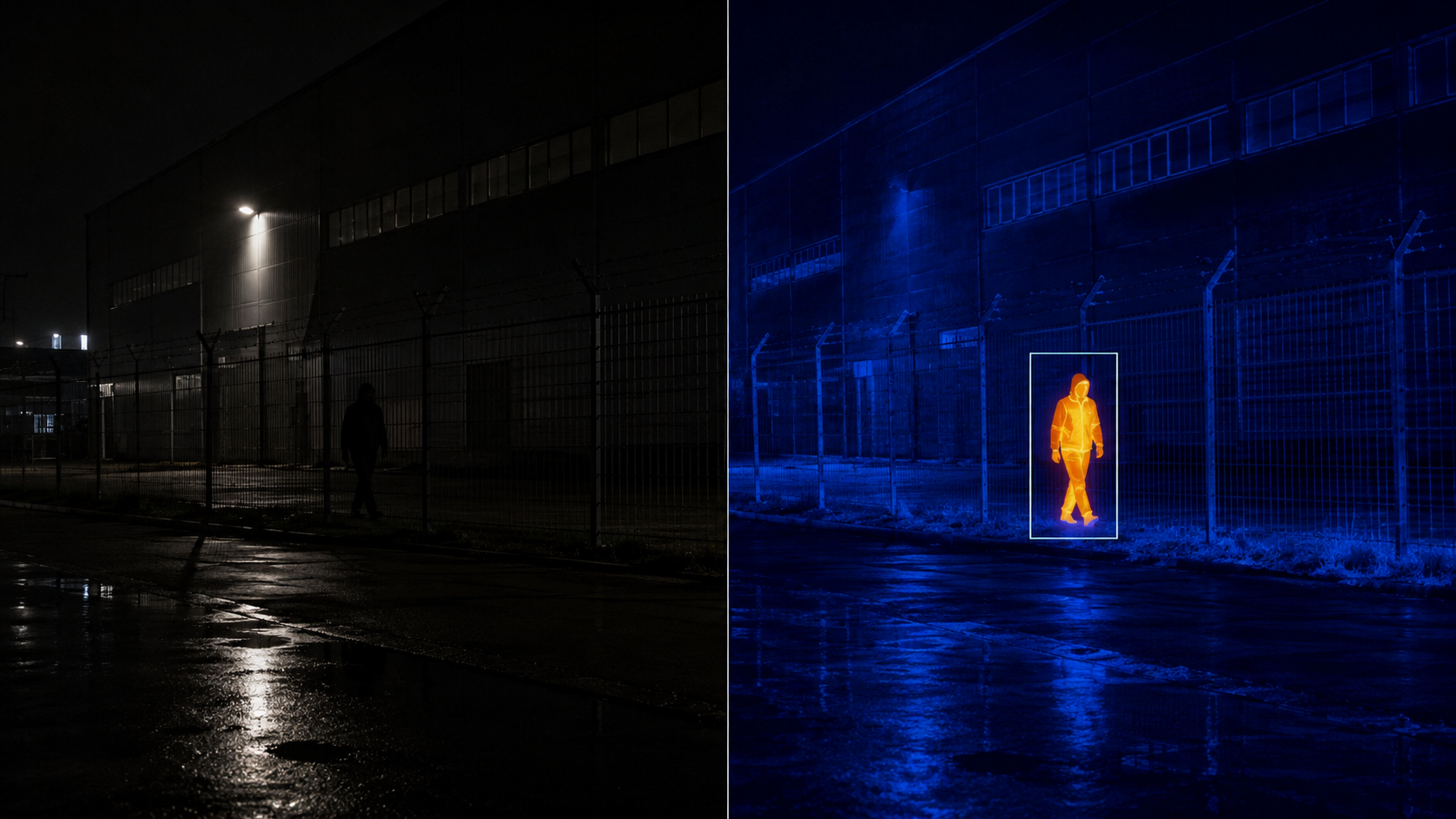
Thermal cameras do not capture light. They measure infrared radiation, which is the heat emitted naturally by every person, animal, vehicle, and machine, and convert temperature differences into a visible image. Unlike standard cameras that depend on IR illuminators or visible light, thermal cameras generate a picture entirely from heat data. There is nothing to illuminate and nothing to obscure.
This matters in two distinct ways for commercial properties.
- Security. A person walking a fence line at 3 a.m. shows up clearly on thermal even in total darkness, fog, or light rain. There is no IR cone to stay within and no shadows to hide in.
- Fire and life safety. Electrical equipment, battery storage systems, and industrial machinery generate detectable heat patterns before a problem becomes visible to the eye or triggers a smoke detector. Thermal catches the early warning.
We covered the fire safety angle specifically in why thermal video monitoring is critical for battery storage fire risk. The same principle applies to any site with equipment that can overheat or generate heat anomalies during normal operation.
What AI Adds to Thermal Detection
Thermal cameras show you where the heat is. AI tells you what that heat means and whether anyone needs to know right now.
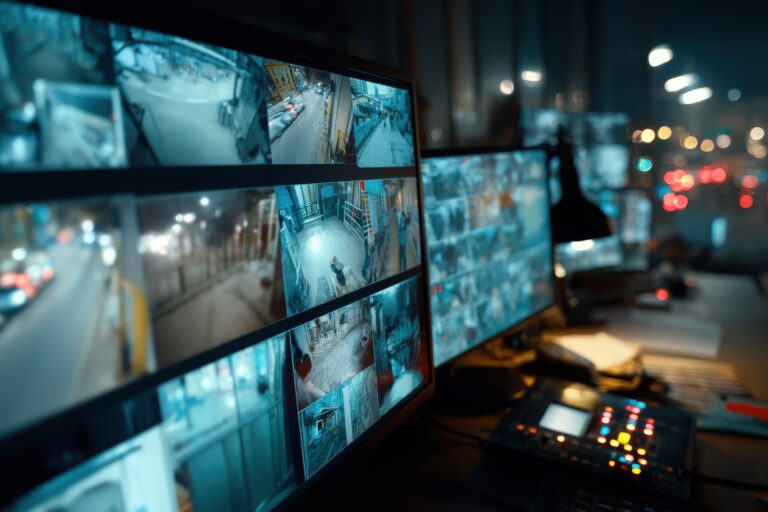
Without AI, a thermal feed is still just a screen someone has to watch. Most facilities do not staff someone to monitor video all night. AI fills that gap by analyzing the feed continuously and applying rules specific to your site. The result is a system that filters out background noise and only escalates real events.
- Object classification. AI distinguishes a person from a vehicle, an animal, or heat from a piece of equipment, which dramatically cuts down false alarms and alert fatigue.
- Virtual perimeters. You define a boundary around a critical zone, and the system alerts only when that line is crossed by a classified object. Everything inside that boundary that does not qualify simply does not trigger a response.
- Temperature trend detection. AI watches for a gradual rise in a specific zone over time, often the earliest detectable sign of a developing fire risk, before any flame or smoke is visible.
- Real time alerts. The system responds immediately when something matches a defined rule. No one has to be watching the screen.
We go deeper on this in what AI cameras can actually detect and how intrusion detection systems stop break ins.
How the Two Technologies Work Together
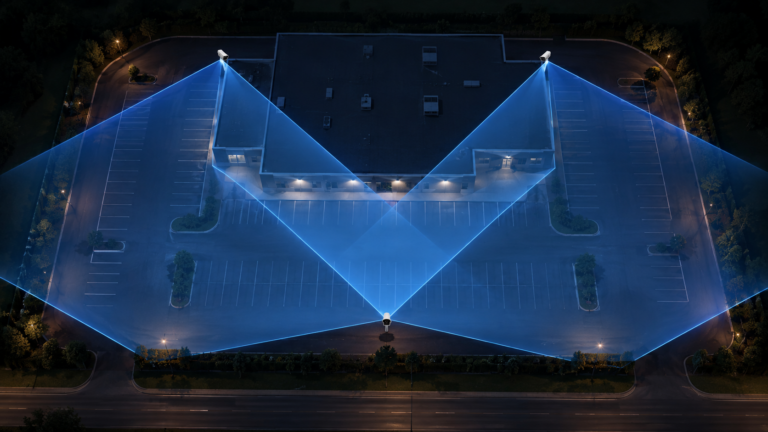
The combination is stronger than either technology alone. Thermal provides the detection layer that works independent of light, distance, or weather. AI provides the interpretation layer that decides whether the detection is a real threat or a background event that does not need a response.
Think of it this way: thermal catches everything that generates heat. AI filters that down to only the heat signatures that actually matter for your site and sends an alert through your preferred channel, whether that is a phone notification, a signal to a 24/7 monitoring station, or an automated response. Neither piece works as well without the other.
Where AI and Thermal Cameras Get Used
- Perimeter security: Fence lines, gates, and property boundaries are monitored around the clock without depending on visible light or IR range limitations. A thermal camera covers far more ground than a standard camera in the dark.
- Battery storage facilities: Continuous heat monitoring to catch thermal runaway risk before it becomes a fire. A battery cell heating abnormally is detectable long before it reaches a critical state. See our piece on battery storage thermal monitoring for how this works in practice.
- Recycling and waste facilities: Piles of organic material, metal scrap, or compressed waste can self heat and ignite. Thermal flags hot spots before flames appear, covered in our post on thermal camera applications for recycling and waste management.
- Electrical rooms and mechanical spaces: Motors, switchgear, and distribution panels are monitored for abnormal temperature increases that signal a developing failure before it causes downtime or a fire.
- After-hours facilities: Empty buildings overnight are when both break-ins and fires are most likely and least likely to be caught quickly. Thermal with AI detection provides active coverage without staffing.
- Industrial and manufacturing sites: Heavy equipment generates heat as a normal byproduct. AI learns what normal looks like and flags deviations, rather than alerting on every warm machine.
Is This Overkill for a Smaller Property?
Not necessarily. A small storefront with good lighting and low after-hours risk may do fine with standard IP video cameras and basic motion detection. A site with significant outdoor exposure, heat generating equipment, unstaffed overnight hours, or high theft and fire risk is a much stronger candidate for AI and thermal.
The technology earns its cost based on the risk profile of the property, not just the size of it. We walk through that assessment honestly when we do a site scoping visit so you know whether thermal makes sense before committing to anything.
The Bottom Line
Thermal cameras see heat instead of light, which means they catch developing problems before a break in or a flame. AI turns that heat data into something actionable by filtering false alarms and sending real alerts the moment something matches a defined rule. The combination gives you active detection rather than passive recording.
If you want a straight answer on whether AI and thermal cameras make sense for your property, Vulcan can walk the site and tell you honestly.
Frequently Asked Questions
Can thermal cameras really detect a fire before it starts?
They detect the heat buildup that often precedes a fire, such as an overheating electrical connection or a hot spot in a material pile, giving staff a chance to intervene early. They do not replace smoke detectors, but they add an earlier warning layer that smoke detectors cannot provide.
Do thermal cameras work in fog, smoke, or heavy rain?
Thermal performs well in fog and light smoke since it reads heat rather than light. Heavy rain and very dense smoke reduce range somewhat, but thermal still significantly outperforms standard cameras in those conditions.
Is AI detection the same as facial recognition?
No. The AI used in video security focuses on classifying object types, like person versus vehicle, and detecting movement patterns across defined zones. It is not designed to identify specific individuals.
How much does an AI and thermal camera system cost?
Cost depends on camera count, property size, and the specific AI rules and integrations needed. Vulcan provides a site specific quote after walking the property so the number reflects your actual coverage requirements.
Can AI thermal detection replace a security guard?
It can cover the detection and alerting function that a guard provides for perimeter and outdoor monitoring, often more consistently and at lower long term cost. We cover this in detail in our piece on security guard replacement services.