Why Most Vehicle Lot Cameras Fail When It Matters
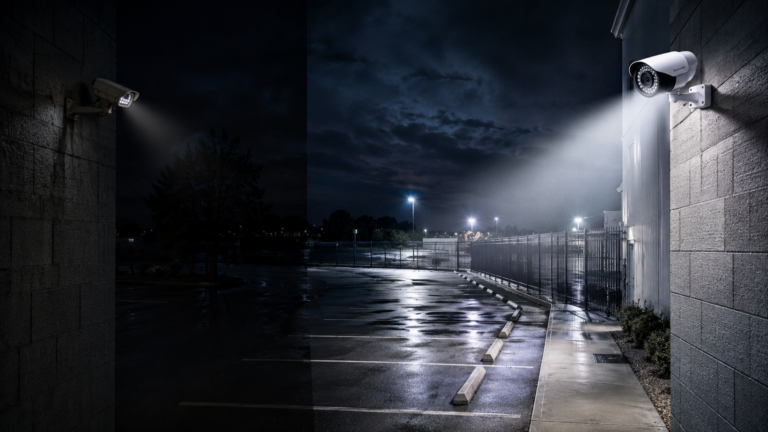
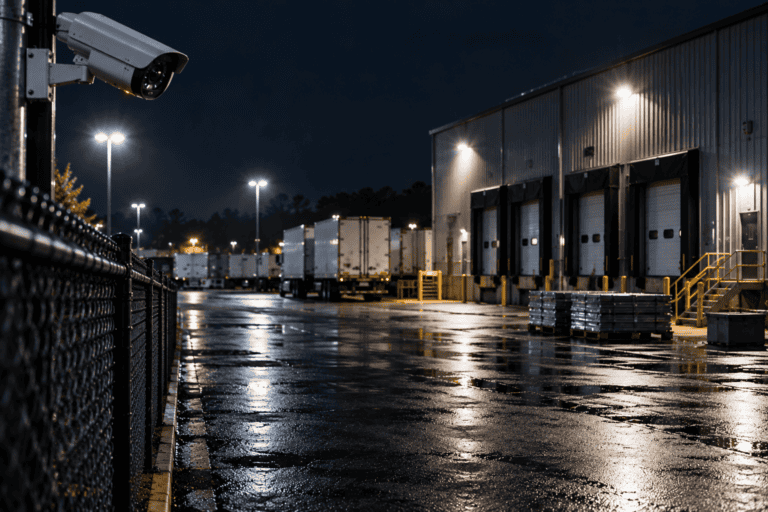
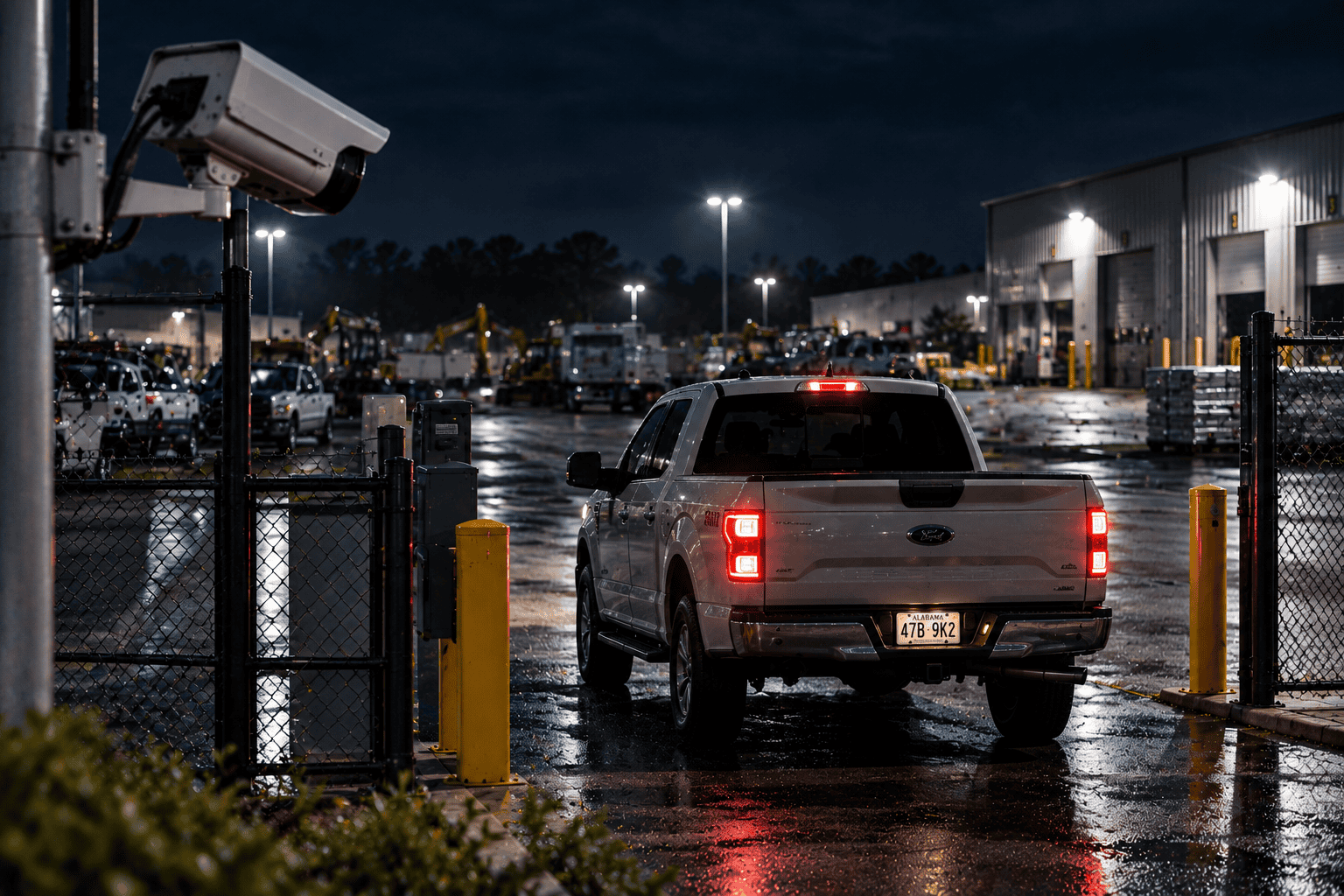
A vehicle lot camera system can look complete on a monitor during the day and still fail at the one job that matters most, capturing a readable license plate at two in the morning. Most of the time, nobody finds out until footage is pulled after an incident and the plate comes back as an unreadable white blur.
Vulcan Security Systems designs camera systems for vehicle lots across Alabama, and nighttime plate capture failure is one of the most common issues we find when we review an existing system. This article covers why these failures happen, the specific technical causes behind them, and how a system should be designed to avoid them.
The Problem With “It Looked Fine on the Monitor”
Most camera systems get evaluated during the day, or under whatever lighting happens to be available when someone walks the lot with an installer. A general view of the lot looking clear does not mean the system can actually resolve a license plate at night, and that gap rarely gets tested until it is needed for an actual investigation.
By the time that test happens, it is too late to fix. A camera that has been quietly failing to capture usable plates for months only reveals the problem the first time someone needs that footage for a police report.
The Most Common Failure Points
IR Overexposure Washing Out Plates
License plates use retroreflective material by federal standard, which means they are built to bounce light directly back toward its source. When a camera’s infrared illuminator sits close to the lens and points straight at a plate, that reflective coating throws the infrared light right back into the sensor, turning the plate into a washed out white rectangle with no visible characters. This single issue is behind the overwhelming majority of nighttime plate capture failures.
Shutter Speed and Motion Blur
Low-light conditions push many cameras toward slower shutter speeds to gather more light, but a slow shutter turns a moving vehicle’s plate into a blurred smear rather than a readable image. Capturing a plate on a vehicle in motion requires a shutter speed fast enough to freeze that movement, which most general-purpose cameras are not configured to do by default.
Poor Camera Angle Maximizing Glare
A camera mounted head-on to an entry lane maximizes the amount of reflected infrared and headlight glare bouncing straight back into the lens. A slight off-axis angle reduces that reflected light significantly while still keeping the plate clearly in frame, but very few general-purpose installations account for this.
Weak Dynamic Range in Mixed Lighting
A vehicle lot at night often has extreme contrast in one frame, headlights, dark pavement, and a lit plate all at once. Cameras without strong wide dynamic range struggle to hold detail across that range, which means the plate either gets lost in glare or the rest of the frame goes black.
No Maintenance Plan to Catch Drift
Camera settings, focus, and even physical angle can drift over months of use, and a system with no ongoing check has no way to catch that drift before it matters. A camera that captured usable plates at installation is not guaranteed to still do so a year later.
How to Design Around These Failures
Cameras intended specifically for license plate capture need a fast, fixed shutter speed, strong wide dynamic range, and an off-axis mounting angle rather than a straight, head-on view of the lane. In many cases, a dedicated license plate recognition camera paired with a separate general-coverage camera outperforms a single general-purpose camera trying to do both jobs at once. We cover the broader system design considerations in how AI video monitoring protects vehicles parked overnight.
Ongoing verification matters just as much as initial design. Proactive service and maintenance that periodically checks actual plate capture quality, not just whether a camera is online, catches drift before it becomes a blind spot discovered during an actual investigation.
What to Check on Your Current System
- Pull nighttime footage of an actual vehicle entering or exiting and check if the plate is readable, not just visible.
- Check whether entry and exit cameras are mounted head-on or at a slight off-axis angle.
- Confirm whether the camera uses a fixed fast shutter or an automatic setting that slows down at night.
- Ask whether wide dynamic range is enabled and actually configured for the lighting on your lot.
- Confirm there is a maintenance schedule that checks plate capture quality, not just camera uptime.
A Camera That Cannot Read a Plate at Night Is Not Doing Its Job
A vehicle lot camera that produces a clear image during the day but fails the moment it is actually needed has not been designed for the job it is supposed to do. Addressing shutter speed, camera angle, dynamic range, and ongoing maintenance turns a system that only looks like it works into one that actually holds up when it counts.
Vulcan tests vehicle lot systems against real nighttime conditions, not just daytime appearances. We will show you exactly what your current cameras capture after dark.
Frequently Asked Questions
Why do license plates look like a white blur on camera at night?
License plates are built with retroreflective material that bounces infrared light directly back at its source, which overwhelms a camera’s sensor when the infrared illuminator sits too close to the lens and points straight at the plate.
Does a more expensive camera automatically solve nighttime plate capture problems?
Not by itself. Price does not guarantee correct shutter speed, mounting angle, or dynamic range configuration, all of which matter more than the camera’s price point alone.
Do we need a separate camera just for license plates?
In many cases, yes. A dedicated license plate recognition camera configured specifically for that task often outperforms a single general-purpose camera trying to cover wide-area monitoring and plate capture at the same time.
How often should vehicle lot cameras be checked for plate capture quality?
A periodic check, ideally as part of a regular maintenance plan, is the only reliable way to catch drift in focus, angle, or settings before it becomes a real problem during an investigation.
Can this problem be fixed on an existing camera system, or does it require full replacement?
It depends on the cause. Angle and shutter speed issues can sometimes be corrected through reconfiguration, while a camera with genuinely weak dynamic range or IR placement may need to be replaced or supplemented with a dedicated LPR camera.