How AI Video Monitoring Is Replacing Overnight Guards at Vehicle Lots
AI video monitoring is replacing overnight guards at vehicle lots because the job those guards are being asked to do, watching a large open property through the night for unauthorized access, theft, and damage, is exactly what AI monitoring does better. It covers every corner of the lot simultaneously, never fatigues, and generates an alert the moment something is detected rather than on the next patrol loop. For most vehicle lots, the overnight guard shift is the highest cost and lowest coverage efficiency point in the entire security setup.
We install and support AI powered video security systems across Alabama, including at vehicle lots ranging from auto dealerships to fleet yards and rental operations. This guide explains how the transition from overnight guards to AI monitoring works operationally, what the coverage and cost differences look like, and what the system actually needs to do the job reliably.
Why Overnight Guards Are a Poor Fit for Vehicle Lots
A vehicle lot is a large, open, relatively dark space with high value assets spread across a wide footprint. It is the kind of environment that maximizes the weaknesses of a single human guard.
A guard can be in one place at a time. A lot with 200 vehicles spread across several acres has far more perimeter and interior space than one person can actively monitor. Patrol routes create predictable gaps. A guard walking the same route every thirty minutes is a pattern that anyone watching the property will eventually figure out. Fatigue sets in over an eight hour overnight shift. Attention drifts. And when something does happen, the guard has to locate it, assess it, and respond, all of which takes time that an organized theft operation does not need.
These are not criticisms of the guards themselves. They are structural limitations of using a single person to monitor a space built for this kind of problem. We covered the broader picture of these limitations in the hidden risks of security guards and how AI reduces liability.
What AI Monitoring Does Differently
Full Lot Coverage, All Night
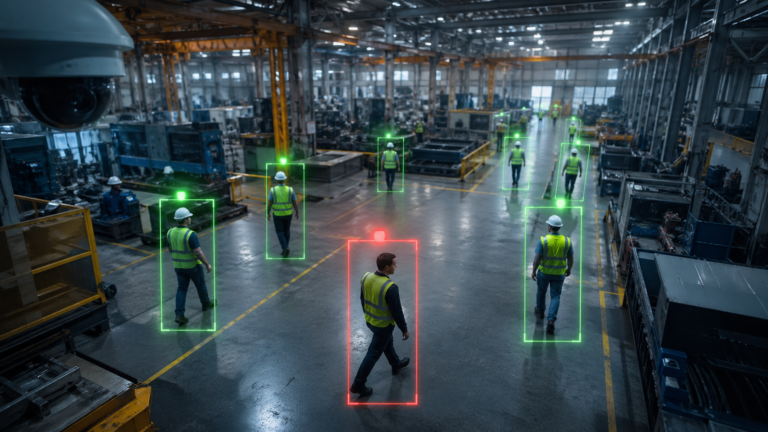
A properly designed AI monitoring system watches every camera simultaneously without any of them dropping in attention as the night wears on. The system does not have a patrol route. It has a field of view that covers the entire property at once. An event at 4 a.m. gets the same detection response as an event at 10 p.m.
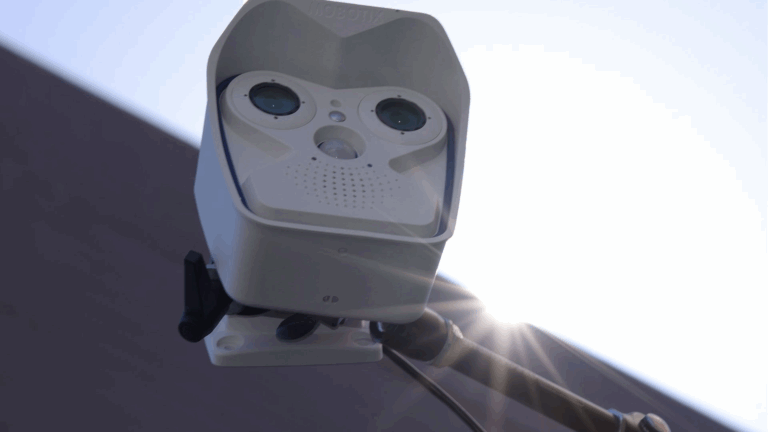
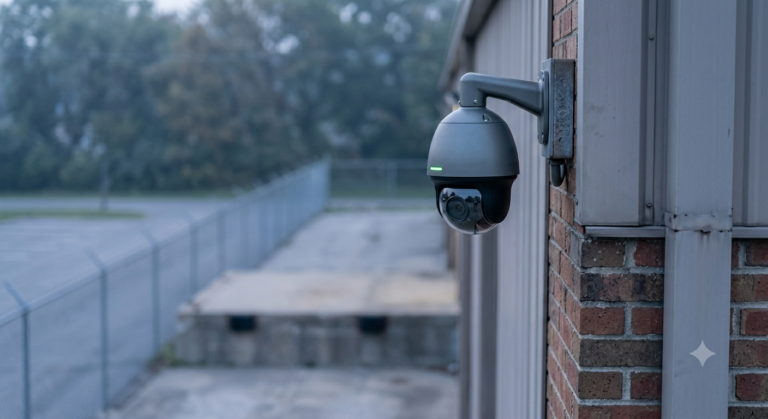
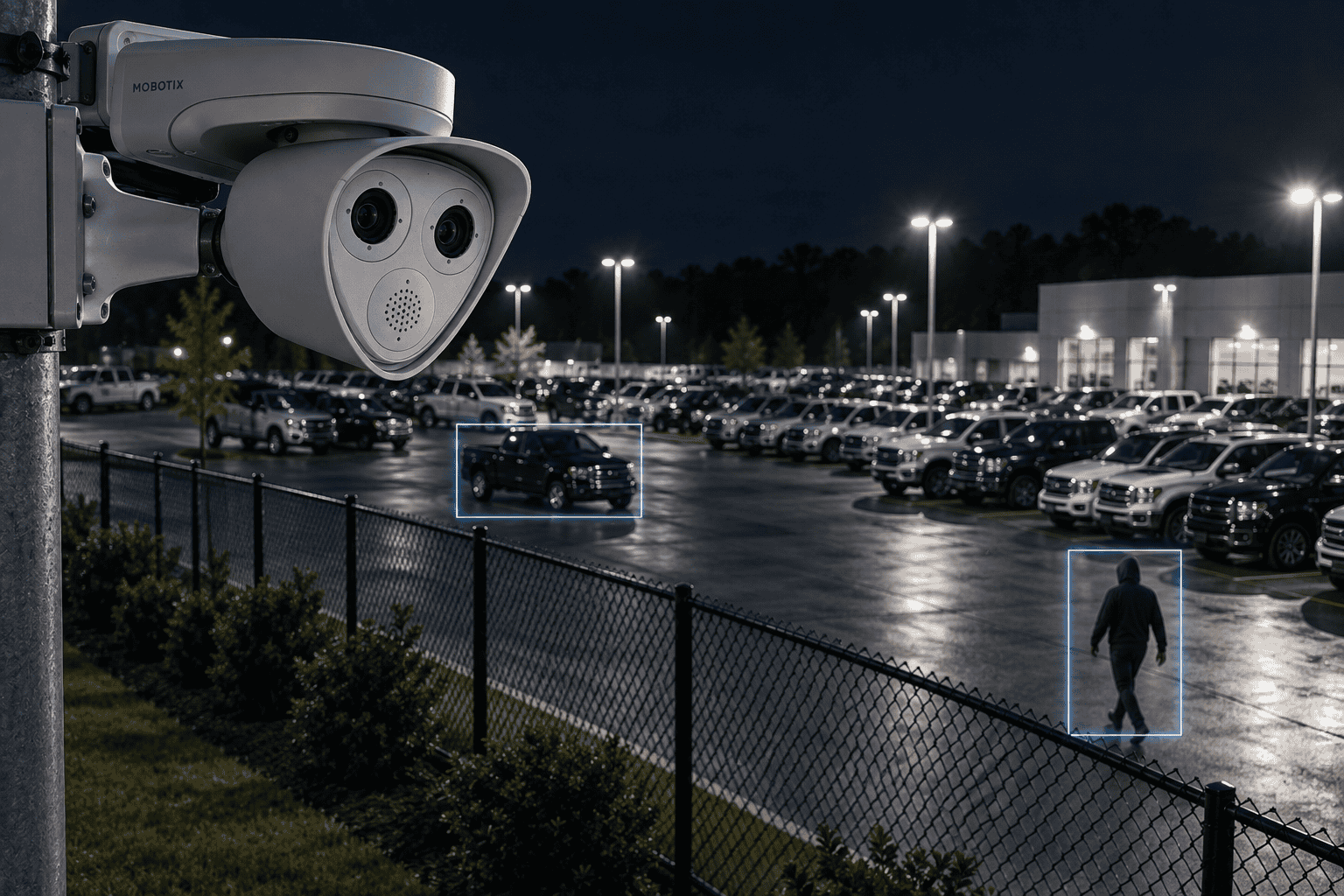
Vehicle lot video security systems are typically designed around wide field cameras covering the lot perimeter and interior zones, with AI analytics identifying people, vehicles, and activity that falls outside defined parameters for that time of night.
Immediate Detection and Alerting
When the system detects a person entering the lot after hours or a vehicle moving in a way that does not match expected patterns, it generates an alert in real time. That alert goes to a 24/7 monitoring station, to on-site personnel, or to law enforcement, depending on how the response protocol is configured. The detection-to-alert window is seconds, not the minutes it takes for a patrolling guard to come around the right part of the lot.
Audio Deterrence Before Escalation
Many vehicle lot installations include speaker systems connected to the AI monitoring platform. When an intruder is detected, the system can broadcast a verbal warning before escalating to dispatch. This alone deters a significant portion of opportunistic theft attempts. Someone who hears a direct, specific challenge over a speaker knows immediately that they have been seen and that a response is coming.
Event Documentation That Actually Holds Up
An AI monitoring system logs every detected event with timestamp, camera location, and video clip automatically. That documentation is immediate, consistent, and complete. It supports insurance claims, law enforcement investigations, and internal reviews without requiring anyone to manually pull and label footage after the fact. For auto dealerships and fleet operations where individual vehicles are high value assets, that documentation record matters significantly.
How the Transition Works in Practice
Most vehicle lots that make this transition do not go from full overnight staffing to zero overnight coverage in one step. The typical path is a reduction: the AI monitoring system handles the detection and alerting layer, and a contracted response service or local law enforcement handles physical response when an alert is triggered. The overnight guard shift is eliminated or reduced to a single on-call position rather than a staffed post on the property.
The camera placement and AI configuration are done during a site assessment that maps out the lot layout, identifies the highest risk zones, and designs coverage to eliminate the gaps that patrol routes would otherwise leave. We walk through what that looks like in how fleet companies use video monitoring to reduce loss and downtime and in our post on video security for car dealerships and rental lots after hours.
What the Cost Comparison Looks Like
A fully loaded overnight guard position at a vehicle lot, including wages, benefits, and agency margin if contracted, typically costs $45,000 to $65,000 per year. A lot running two overnight guards is spending $90,000 or more annually on coverage that still has the structural gaps described above.
An AI monitoring system covering the same lot, including cameras, installation, and a professional monitoring plan, is typically a fraction of that annual cost. The hardware investment pays back in under twelve months in most cases when measured against a single eliminated guard position, with better coverage as the outcome, not a tradeoff. You can review how we structure these projects on our security guard replacement services page.
What the System Needs to Work Reliably
The transition works when the system is properly designed for the specific lot. That means camera placement that covers perimeter entry points and interior zones without gaps, AI analytics configured to distinguish people and vehicles from environmental movement like trees, reflections, and ambient traffic, and a monitoring or response protocol with a clear escalation path when an alert is triggered.
An AI system installed without those elements is still primarily a recording system, not a prevention system. We cover that distinction in the difference between recording crime and preventing it. The technology only replaces the guard function reliably when it is set up to actually perform that function, not just to capture footage of what happened afterward.
The Bottom Line
AI video monitoring is replacing overnight guards at vehicle lots because it is better suited to the specific job. It covers a large open property completely, detects events the moment they occur regardless of where on the lot, and generates a documented response that holds up in any subsequent review. The cost is lower, the coverage is broader, and the detection is faster. For vehicle lot operators still running overnight guard shifts, the question worth asking is what exactly those shifts are accomplishing that an AI system cannot do more reliably.
If you want to see what an AI monitoring setup would look like for your lot specifically, Vulcan will walk the property and put together an honest comparison.
Frequently Asked Questions
Can AI monitoring fully replace overnight guards at a vehicle lot?
For the monitoring and detection function, yes. AI covers the entire lot simultaneously and alerts the moment an event is detected. It does not provide physical response. Most lots transition to AI monitoring with a contracted response service rather than eliminating all security presence entirely.
What happens when the AI system detects something at a vehicle lot?
The system generates an alert that routes to a monitoring station, on-site personnel, or law enforcement depending on the response protocol. Many systems also trigger an audio warning at the location of the event. The response path is configured during setup based on the lot’s preferences and local response options.
Does AI monitoring work for outdoor vehicle lots at night?
Yes. AI monitoring is particularly well suited to outdoor environments at night because the detection works on movement and defined perimeter rules rather than depending on lighting quality. Camera selection matters here, and the right hardware for a vehicle lot is different from interior commercial cameras.
How many cameras does a typical vehicle lot need?
It depends on the lot size and layout. The goal is full perimeter coverage and interior zone coverage without significant gaps. A proper site assessment determines camera count and placement before any equipment is specified, which often results in fewer cameras than clients initially expect.
Is the documentation from an AI monitoring system useful for insurance claims?
Significantly. AI monitoring systems log every detected event with a timestamp, camera identifier, and video clip automatically. That documentation is far more complete and organized than manually pulled footage and holds up well in insurance and legal contexts where establishing a clear timeline matters.