The Flock Camera Backlash: What It Means for Your Business Security System
Flock Safety, the company behind a nationwide network of license plate reading cameras, is in the middle of a serious backlash. Cities are canceling contracts, members of Congress are introducing bills to restrict the technology, and in more than one town, someone has physically cut the cameras down. None of that backlash is really about the idea of a security camera. It is about what happens when cameras become part of a shared, searchable surveillance network that operates outside any single property owner’s control.
We design and install commercial video security systems across Alabama, so when a story like this hits the news, we start fielding the same question from clients and prospects: is my camera system doing the same thing Flock does? The honest answer is almost always no, but the confusion is understandable if you do not know what actually separates the two models. This post breaks down what Flock does, why the flock camera backlash happened, and what genuinely differentiates a business security system you own from a network like Flock’s.
What Flock Safety Actually Is
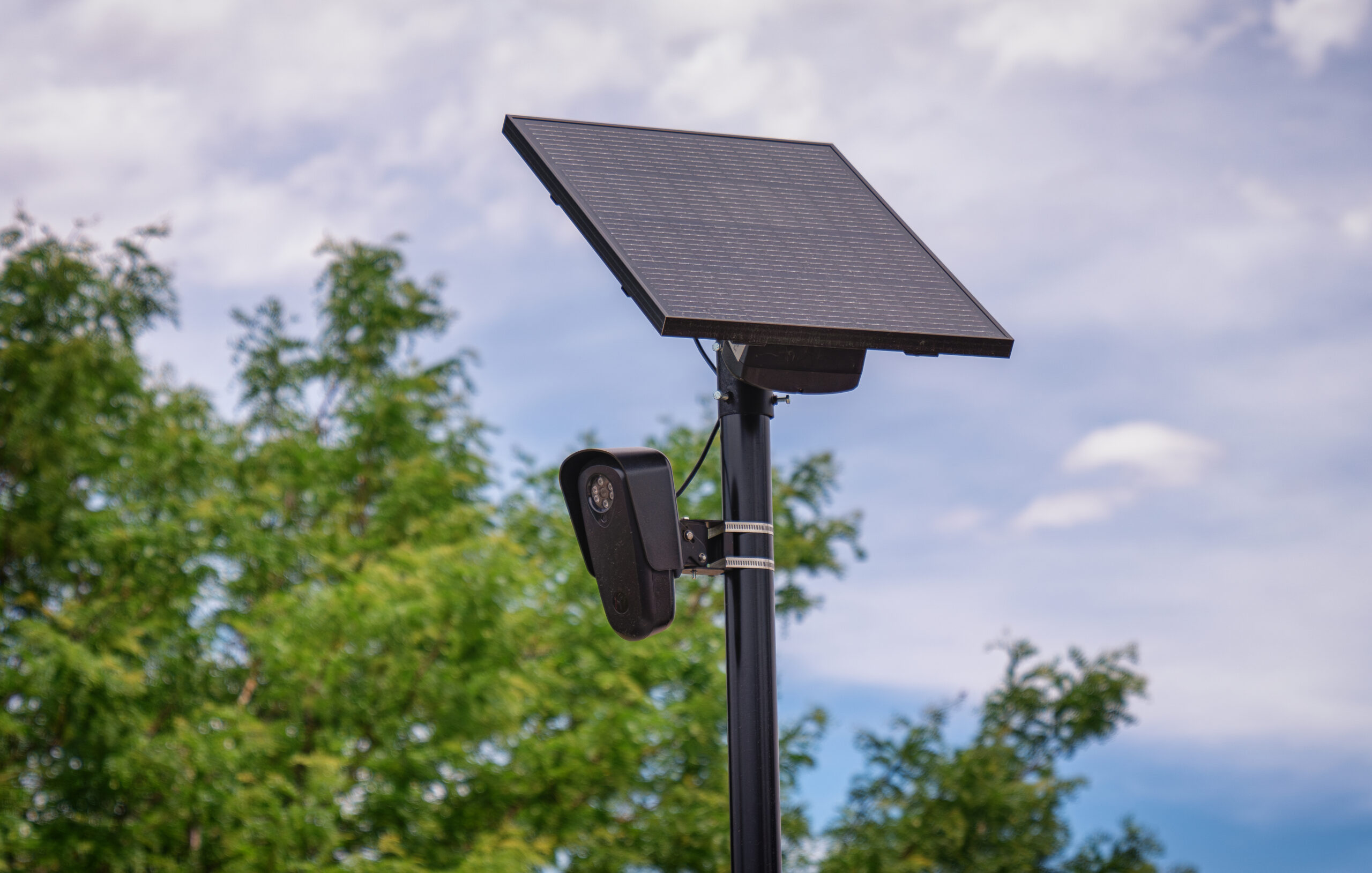
Flock Safety builds automated license plate reader (ALPR) cameras. Each camera photographs passing vehicles and captures the plate number along with details like make, model, color, and identifying features, then feeds that data into a searchable database. As of August 2026, Flock’s cameras number over 120,000 across 49 states, according to reporting on the company’s own policy changes.
The cameras are typically purchased on subscription by police departments, HOAs, and municipalities rather than by individual businesses. The part that separates Flock from a standard camera system is not the hardware. It is the network. Data captured by one agency’s cameras can potentially be searched by other agencies in other jurisdictions, which is what turns a set of local cameras into a national tracking system.
Why the Flock Camera Backlash Happened
A Super Bowl Ad Introduced Millions of People to a System They Never Knew Existed
In February 2026, Amazon’s Ring aired a Super Bowl commercial for a pet-finding feature called Search Party, which uses AI to spot a missing dog across a neighborhood’s doorbell cameras. The ad drew attention to a planned integration between Ring and Flock that would have let Ring’s “Community Requests” feature route footage searches, including for law enforcement, across a much wider camera network than most owners realized they were part of. Privacy groups, including the Electronic Frontier Foundation, called out the scale of what was being proposed. Within about two weeks, Amazon ended the planned integration, saying it would take more time and resources than expected, without directly addressing the backlash.
Reports of Misuse Eroded Trust
Investigations turned up close to 50 documented cases nationwide of officers using Flock’s system to look up plates connected to personal matters, like tracking a partner or a family member, rather than an active case. In Savannah, Georgia, the police department fired six employees over improper searches. Coverage of these incidents turned what looked like isolated misuse into a pattern that raised much bigger questions about who was actually watching the watchers.
The Physical Response
Frustration has not stayed online. Flock cameras have been vandalized or cut down in California, Oregon, Michigan, Connecticut, Illinois, and Virginia. In La Mesa, California, cameras were damaged shortly after the city council voted to keep the program despite resident objections. In Eugene, Oregon, the city removed most of its license plate readers altogether. Whatever side of the debate people land on, that level of public reaction is a signal that trust in the network, not the camera itself, has broken down.
It Is Already Happening in Alabama
This is not just a story happening somewhere else. Birmingham has been steadily expanding its own Flock camera network, including four new cameras the City Council approved for the Rockford neighborhood in December 2025. Birmingham police say they audit searches monthly and require an offense type tied to every search, but Alabama has already had its own misuse cases: a Moody police officer was fired and a Springville officer resigned after separate investigations into how they used the system. If you run a business in Birmingham or anywhere else in Alabama, this debate is not hypothetical. It is playing out in your own backyard.
Flock Is Now Changing Its Own Policies
On August 13, 2026, Flock announced policy changes taking effect January 1: shortening data retention from 30 days to 7, adding audit tools that flag unusual search behavior, requiring officers to log a case number before running a search, and giving individual departments more control over which outside agencies can query their data. Civil liberties groups called the changes a step in the right direction but said they do not fix the core issue, which is that police departments, not judges, still decide who gets access to the data.
Why This Does Not Describe Your Business Security System
Everything above describes a specific business model: a shared, subscription-based network with cameras that feed a searchable database controlled by multiple outside parties. A properly designed commercial security system works nothing like that, and the differences matter if you are trying to explain to employees, tenants, or customers why your cameras are not part of the same story.
You Own the Footage. No One Else Does.
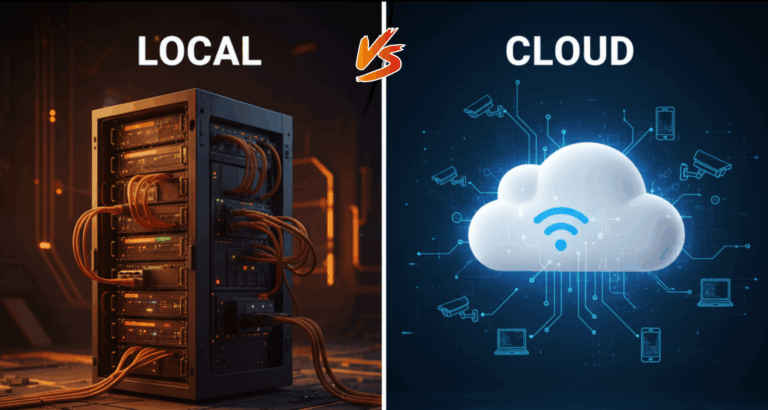
With Flock, subscribing agencies contribute to and can query a shared regional or national database. With a system built around owning your security system, footage lives on hardware you control, and nobody outside your organization can search it without going through you first. That distinction, ownership versus participation in a network, is the single biggest thing that separates the two models.
Your Cameras Cover Your Property, Not a Public Network
Flock’s cameras exist to build a record of vehicles moving through public space over time. A business system exists to do something narrower: cover your entrances, your lot, and your perimeter, with AI-powered surveillance that flags relevant activity on your property. It is not designed to track vehicles that have nothing to do with your site, and it is not contributing that data anywhere else.
No Default Sharing With Outside Agencies
Part of what made the Flock backlash so intense is that data sharing was the default, not a choice made incident by incident. A private system is not networked into any outside searchable index by design. We cover the broader risk of networked camera systems in why your security cameras could be a cybersecurity risk, but the short version here is that if you ever choose to share footage with police for a specific incident, that is a decision you make case by case. It is not a standing subscription running in the background.
License Plate Capture Without Joining a Network
Some properties, like vehicle lots and gated facilities, have a real operational reason to capture license plates. That is still possible without joining a shared surveillance network. Cameras with built-in AI-driven OCR can read plates as part of a system you own, feeding only your own access logs, not a searchable database that other companies or agencies can query. The capability and the network are two separate things. Flock’s controversy is about the network, not the underlying camera feature.
Questions to Ask Any Security Vendor Before You Sign
The Flock story is a useful prompt to ask these questions of any camera vendor, not just the ones building nationwide networks.
- Who owns the recorded footage? You or the vendor should have a clear, contractual answer, not an assumption.
- Does the system share data with any outside network or other customers by default? If the answer requires reading the fine print, that is itself a red flag.
- Can an outside agency query your cameras without going through you first? A private system should never allow that.
- What is the data retention policy, and who controls it? You should be able to set and change this yourself.
- Does the system run on infrastructure you control, or a vendor’s cloud you cannot audit? The answer changes who is really in charge of your data.
Own Your System, Not Someone Else’s Network
The flock camera backlash is about a specific business model: a shared, searchable surveillance network with inconsistent oversight. It is not a referendum on security cameras generally. A system you own, that covers your property, and that does not feed into an outside database, is a fundamentally different tool solving a fundamentally different problem, and it is worth being able to explain that difference clearly to anyone who asks, whether that is a customer walking through your lot in Birmingham or a tenant asking why your cameras are different from the ones the city just approved down the street.
If you want a security system that protects your property without turning it into part of someone else’s network, Vulcan will walk your site, explain exactly how the footage is stored and who controls it, and build a system with no surprises.
Frequently Asked Questions
What is Flock Safety and why is it controversial?
Flock Safety makes license plate reader cameras used mostly by police departments, HOAs, and municipalities. The controversy centers on the shared, searchable network the cameras feed into, reports of officers misusing the system for personal reasons, and concerns about how widely the data can be accessed across jurisdictions.
Are business security cameras the same thing as Flock’s license plate readers?
No. A business security system is typically owned by the business, covers only that property, and does not feed footage into an outside searchable network. Flock’s cameras are built specifically to contribute to a shared database across many customers and jurisdictions.
Why are people cutting down or vandalizing Flock cameras?
Public anger has focused on how the camera network tracks vehicle movement over time, reports of officers misusing search access, and concerns about which outside agencies can query the data. Vandalism has been reported in multiple states as one form of visible public pushback.
Does a Vulcan security system share footage with law enforcement or other companies by default?
No. Footage from a system Vulcan installs stays under your control. If you ever choose to share footage related to a specific incident, that is your decision to make, not a standing arrangement built into the system.
Can I still use license plate recognition on my property without joining a network like Flock’s?
Yes. AI-powered cameras with built-in OCR can read license plates as part of a system you own, useful for gated lots or controlled access points, without contributing that data to any outside network or database.