The Premium Case: Why Serious Businesses Don’t Buy Cheap Security
Serious businesses choose premium security systems because the cost of a system failing when it actually matters is almost always higher than the cost of buying it right the first time. A cheap camera that fails during a break in, misses a fire risk, or gets compromised by an attacker does not just cost the price of a replacement. It costs the very thing the system was supposed to protect.
We sell premium AI powered video security systems, so we are upfront that we have a stake in this argument. That said, the pattern is consistent across every property we walk: the businesses that treat security as a real investment are the ones that do not get burned when something actually happens. This guide makes the direct case for why premium is not overkill when the risk is real.
Cheap Security Fails Exactly When You Need It Most
The failure pattern shows up consistently across every vulnerability category we have written about in this series.
- Budget cameras fail at night, the exact time most break ins happen. The causes and fixes are covered in why security cameras fail at night and how to fix it.
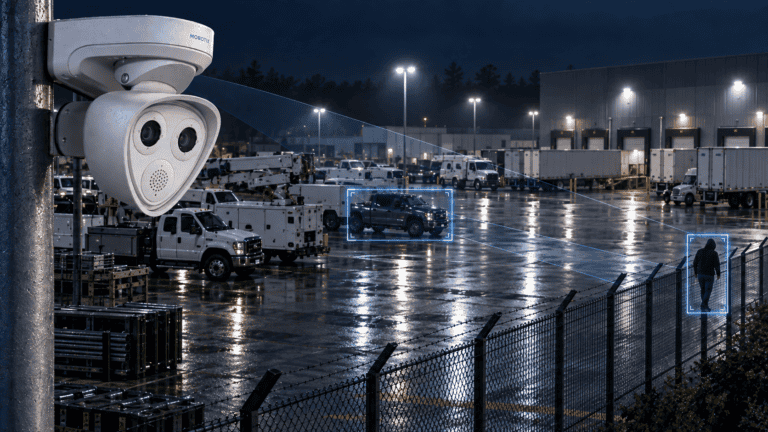
- Without thermal and AI detection, fires and intrusions are caught later, not earlier. We explain how early detection works in AI and thermal cameras: stopping break ins and fires early.
- Poorly secured cameras can become the easiest way into your business network. The specific risks are detailed in why your security cameras could be a cybersecurity risk.
- Many budget systems lock you into one vendor without giving you real control over your hardware or footage, covered in what it means to own your security system.
- Cheap cameras wear out faster, and the total replacement cost typically exceeds what a premium system would have cost installed once, broken down in the real lifespan of a security camera.
None of these are edge cases. They are the predictable, documented result of buying the cheapest available option and treating security as a commodity purchase.
What Premium Actually Buys You
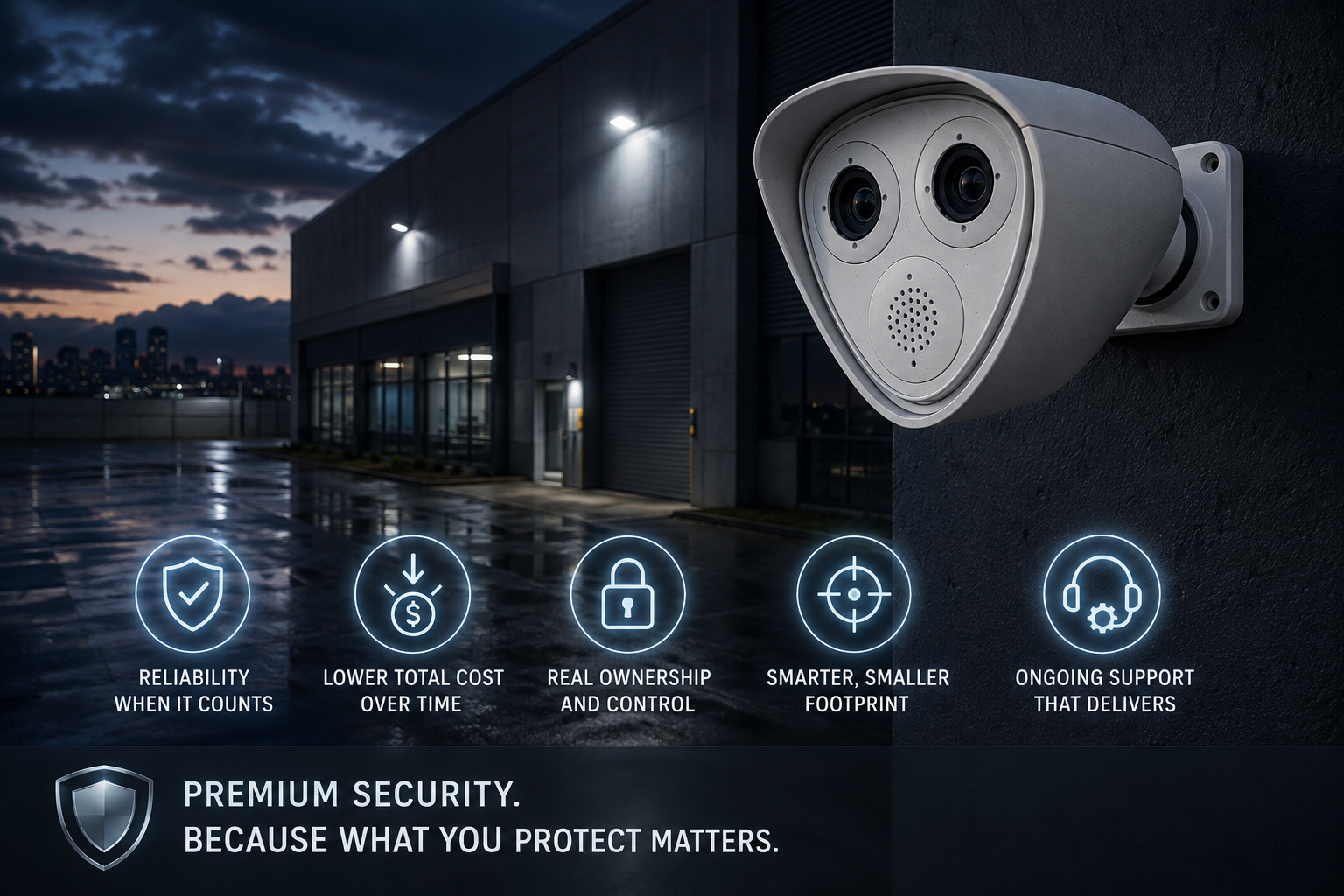
Reliability When It Counts
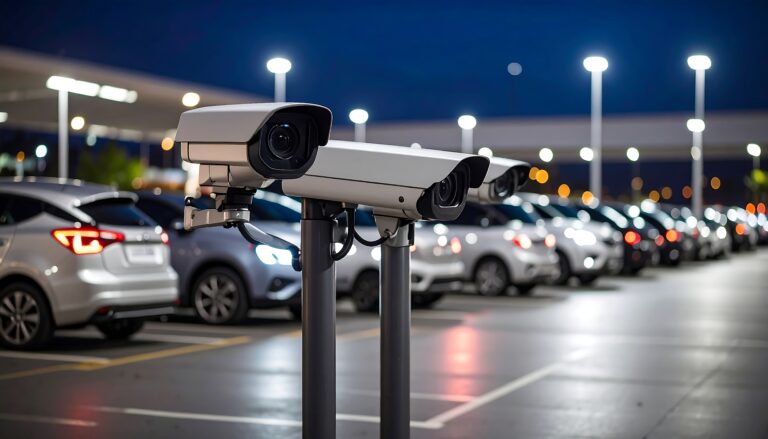
A premium system is engineered to perform under the conditions that matter most: in the dark, in bad weather, during a real incident, not just during a controlled demo. Commercial grade IP video cameras built for demanding environments use higher grade sensors, better housings, and architecture designed to stay operational when the conditions are worst. That reliability is not a bonus feature. It is the entire point of having a security system in the first place.
Lower Total Cost Over Time
A premium camera installed once usually costs less over five to ten years than a budget camera replaced two or three times, once you account for labor, downtime, and lost coverage during each replacement cycle. We broke down the full math in the real lifespan of a security camera. The total cost of ownership calculation almost always favors the higher upfront investment.
Real Ownership and Control
Premium does not have to mean locked in. Open, standards based systems give you control over your own hardware, your own footage, and your choice of service provider, which we explained in what it means to own your security system. You can see how we structure our pricing to reflect that transparency rather than burying the real cost in mandatory service contracts.
A Smarter, Smaller Footprint
Premium does not automatically mean more cameras or a larger project. It often means fewer, better placed cameras with wider fields of view that actually cover the property, a point we made in detail in why fewer cameras can mean better coverage. The result is a system that costs less to maintain, is easier to monitor, and produces more useful footage when you need it.
Ongoing Support That Matches the Hardware
Premium systems paired with proactive service maintenance and remote support stay in better shape over their full service life. Firmware stays current, connections stay healthy, and issues get caught before they become failures. That ongoing relationship is part of what the investment actually covers.
Premium Security Is Not for Every Business, and That Is Fine
This is not an argument that every business needs a top tier system. A small storefront with low after-hours risk, good lighting, and no regulatory exposure may be fine with a modest setup. Premium security earns its cost when the stakes are real: valuable inventory, equipment or materials that are targets for theft, regulatory or liability requirements around video evidence, or operations where a single incident could mean a major loss or a legal dispute.
If your business falls into that category, the cheap option is not actually the safe choice. It just looks like one on paper, until something happens.
How to Tell If You Are a Good Fit for a Premium System
- Would a break in, fire, or major incident cost you significantly more than the difference between budget and premium hardware?
- Do you have after hours exposure, high value inventory, or equipment that is difficult or expensive to replace?
- Do you face regulatory requirements around video surveillance footage, retention, or access?
- Have you already replaced cameras once or twice due to early failures?
- Do you need footage that would actually hold up as evidence in a legal or insurance matter?
If you answered yes to more than one of those, premium security is not a luxury purchase. It is the version of the math that actually adds up when you run it honestly.
Invest In Your Businesses Protection
Cheap security systems fail at the moments they were supposed to protect you: at night, during a fire, during a break in, or under a cyberattack. Premium systems cost more upfront and consistently less over time, while doing the job they were purchased to do. For a business with real risk on the line, the calculation is not a close one.
If you want an honest read on whether a premium system makes sense for your business, Vulcan will walk the property and give you a straight answer either way, including if the answer is that you do not need it.
Frequently Asked Questions
Is premium security worth it for a small business?
It depends on the risk involved, not the size of the business. A small business with valuable inventory, after hours exposure, or regulatory requirements around video footage can benefit just as much as a larger operation. Size is less relevant than what a security failure would actually cost.
Does premium always mean more cameras or a bigger system?
Not usually. Premium often means fewer, better placed cameras with wider fields of view, better sensors, and AI analytics, which can add up to a smaller system that performs better and costs less to maintain over time.
How do I know if my current system is actually premium or just expensive?
Look at build quality, manufacturer support track record, whether the architecture is decentralized, whether firmware is actively maintained, and whether the system gives you real ownership and portability of your footage, not just the price you paid for it.
What is the real risk of sticking with a cheap system?
The risk is that the system fails exactly when you need it most: during a break in, a fire, or a cyberattack. The cost of that failure, including lost goods, insurance disputes, legal exposure, and the replacement system you end up buying anyway, is almost always more than what was saved upfront.
How does Vulcan’s pricing compare to budget security providers?
We are not the cheapest option and we do not try to be. We position roughly 10 to 15 percent below national enterprise brands while using commercial grade hardware and providing hands on local service. You can review how we structure our pricing at our pricing page.